
Drought Damaged Lawn Recovery in Northern Virginia: What to Save, Seed, or Sod This Fall
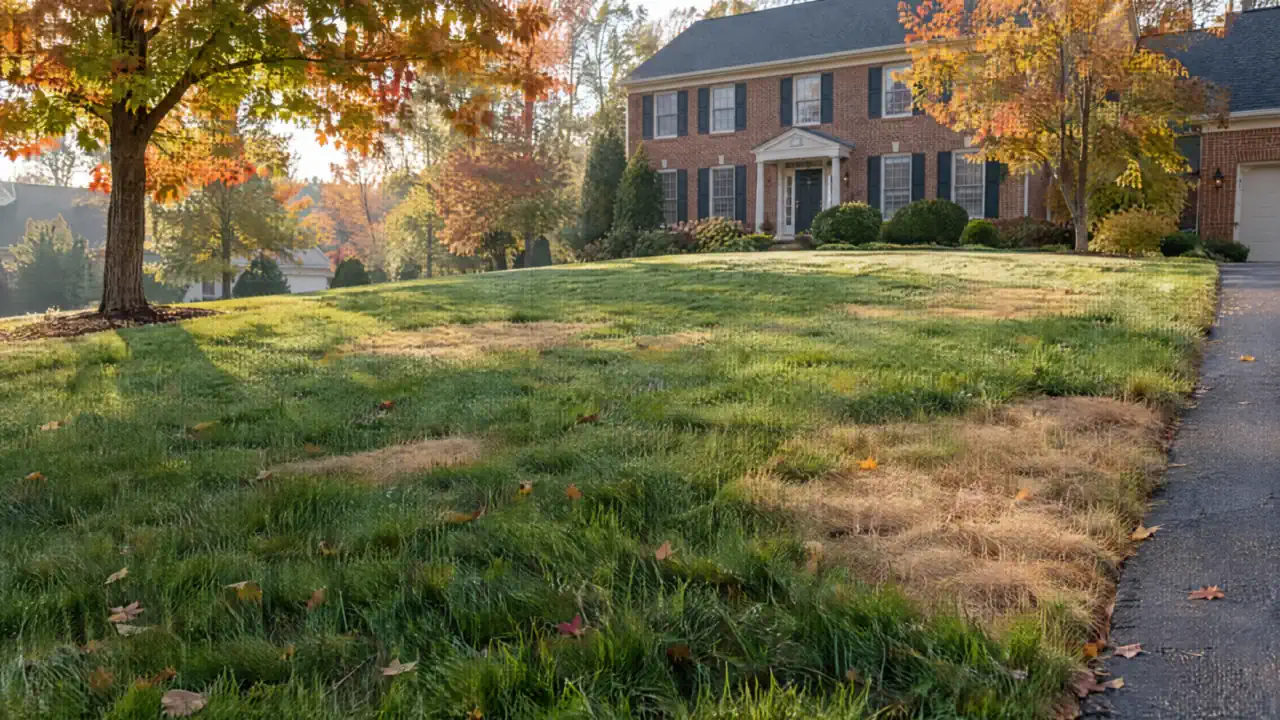
Drought damaged lawn recovery in Northern Virginia comes down to one honest question this October: is the brown grass in your yard sleeping, or is it gone? After a drought warning that hung over the region from January until the state finally downgraded it to a drought watch on October 2, 2026, plenty of Fairfax, Loudoun, and Prince William lawns came out the other side looking like a patchwork quilt. If you are staring at a drought damaged lawn right now, you are in very good company. Some of that patchwork will fill back in on its own. Some of it will not, no matter how nicely you ask.
The short answer: if a brown area has had several soaking rains and still shows no new green blades at the base, treat it as dead and make a plan now. Small dead patches can still be seeded in mid October if you move fast. Large dead areas, roughly a third of the lawn or more, usually recover faster and more reliably with sod, or with a properly timed renovation next fall. Everything still alive just needs a smart fall feeding, a high mowing deck, and you resisting the urge to “fix” it with a bag of everything from the big box store.
Lawn Theory is a veteran-owned crew working lawns across Northern Virginia, and this fall our walkthroughs have looked a lot like triage. This guide walks you through the same process we use: confirm what survived, decide what to seed, sod, or wait on, and set the lawn up so the next dry summer hurts a lot less. If you would rather have someone else do the squinting at grass crowns, our lawn care and landscaping team is happy to walk it with you.
Key Takeaways
- Brown does not automatically mean dead. Tall fescue and Kentucky bluegrass go dormant in drought and often recover once real rain returns.
- August and September 2026 brought heavy rain to much of Northern Virginia, so grass that is still brown in mid October has had its chance. Assume it is dead and plan accordingly.
- Use the tug test and the crown check before you spend a dollar on seed.
- Small dead patches can still be seeded in mid October, but the Extension window for our region is closing, so the odds drop every week you wait.
- If more than 30 to 40 percent of the lawn is dead, weedy, or bare, sod or a full renovation usually beats overseeding.
- Fall fertilization helps the survivors rebuild roots. Keep it modest and follow a soil test.
- Leaves, compaction, and wet-weather disease are the three things most likely to sabotage drought recovery in November.
How the 2026 Drought Damaged Lawns Across Northern Virginia
Here is the quick recap so you know what your grass just lived through, and why lawn recovery after drought looks so uneven this year. Virginia’s Department of Environmental Quality kept a drought warning in place for Northern Virginia from January into the fall, then downgraded it to a drought watch on October 2 after weeks of sustained rain, according to reporting from FFXnow. Reservoirs and streamflow are back to normal. Groundwater is still lagging, and the regional drought watch from the Metropolitan Washington Council of Governments still asks residents to use water thoughtfully.
For a drought damaged lawn, that translates into a very specific situation. The grass spent most of the year short on water, then got a late summer soaking. Cool-season turf is built for exactly this kind of whiplash, up to a point. Virginia Tech turfgrass specialist Mike Goatley notes in Fall Lawn Recovery Strategies that dormant turf often revives after significant rain, and that a lawn which stays brown after a meaningful soaking is the one that needs a renovation plan. That is your diagnostic rule of thumb, straight from the people who study this for a living.
Why some drought damaged lawns bounced back and others did not
Two lawns on the same street can look completely different right now. The usual culprits behind a drought damaged lawn on Northern Virginia properties:
- South and west facing slopes that bake all afternoon and shed rain before it soaks in.
- Compacted clay that turned into pottery in July. Our guide to clay soil and the $10 soil test explains why roots struggle to go deep in it.
- Strips along driveways, sidewalks, and curbs where pavement radiates heat.
- Thin, young turf from a spring seeding that never built deep roots.
- Mowing short during the heat, which removes the leaf area grass needs to shade its own crowns.
- Grubs or disease stacking on top of drought stress, which we cover in why is my lawn turning brown in Northern Virginia.
Dormant vs Dead: How to Tell If Your Drought Damaged Lawn Will Grow Back
This is the part where you get to play lawn detective. Every drought damaged lawn has a mix of sleeping grass and dead grass, and the trick is sorting one from the other. Grab a coffee and walk the yard in the morning, when green shoots are easiest to spot.
The tug test
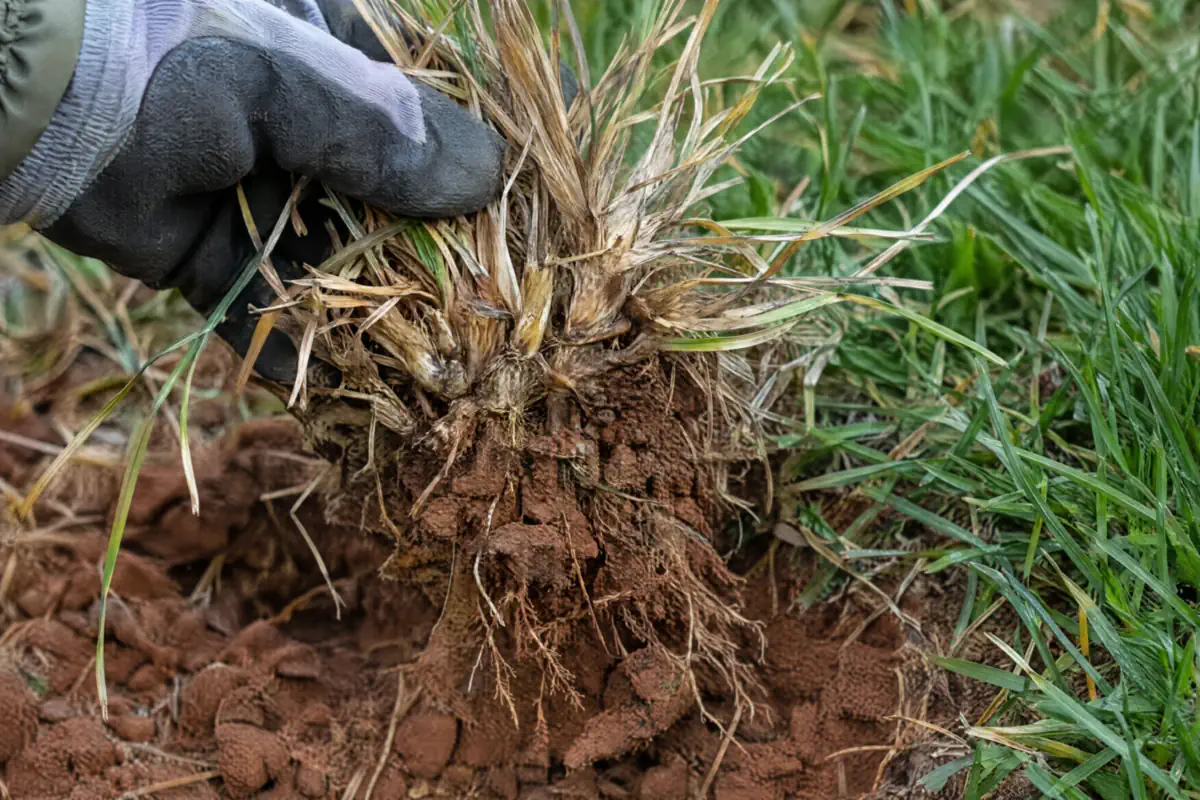
The tug test is the fastest way to check a drought damaged lawn. Grab a small handful of brown grass and pull gently. Dormant grass is still anchored by living roots, so it resists. Dead grass slides out with almost no effort, roots and all. If an area pulls up like a cheap rug, it is not coming back.
The crown check
The crown check confirms what the tug test suggests. Part the blades and look at the crown, the pale nub at the base of the plant where new leaves emerge. A living crown is firm and slightly white or greenish inside. A dead crown is dry, papery, and crumbles when you pinch it.
The rain test (you already ran it)
Here is the good news about our very rainy August and September: nature already ran the experiment for you. If a patch has had multiple soaking rains since late summer and still shows zero new green at the base, you can stop hoping. Dormant tall fescue typically starts pushing new leaves within a couple of weeks of good moisture. Patches that have stayed straw colored through all that rain are dead, or they were never healthy turf in the first place.
| What you see | Most likely status | What to do now |
|---|---|---|
| Green blades mixed into brown, crowns firm | Dormant and recovering | Mow high, fertilize modestly, keep leaves off |
| Uniform brown, grass resists the tug test | Probably dormant, give it 1 to 2 weeks | Recheck after the next good rain |
| Brown, lifts out easily, crowns crumble | Dead | Seed small spots now or plan sod |
| Bare soil with crabgrass or nutsedge filling in | Dead turf replaced by weeds | Plan seed or sod; crabgrass dies at first frost and leaves bare dirt |
| Brown in irregular rings or patches with lesions on blades | Disease, not just drought | Get a diagnosis before you seed |
One sneaky trap: crabgrass and other summer weeds love moving into drought gaps, and from the street they look like a lawn that recovered. They are not. When the first hard frost hits, crabgrass dies and leaves bare soil behind. If your “recovered” area is mostly wide, light green blades with seed heads, our weed and lawn problem identifier can help you confirm what you are looking at.
Your Drought Damaged Lawn Repair Options for Mid October
Once you know what is dead, repairing a drought damaged lawn depends on how much is dead and how quickly you want results. Think of it as a menu, not a single recipe.
Option 1: Overseed small dead patches right now
Overseeding is the cheapest way to repair a drought damaged lawn with limited damage. Virginia Cooperative Extension puts the prime fall seeding window for Northern Virginia at the last week of August through mid September, with acceptable results as late as mid October. That means we are right at the edge. Seeding a few dead patches this week is still a reasonable bet. Seeding the whole yard this week is a gamble with worse odds than a Commanders’ fourth down conversion.
If you go this route:
- Rake out the dead material so seed can touch soil.
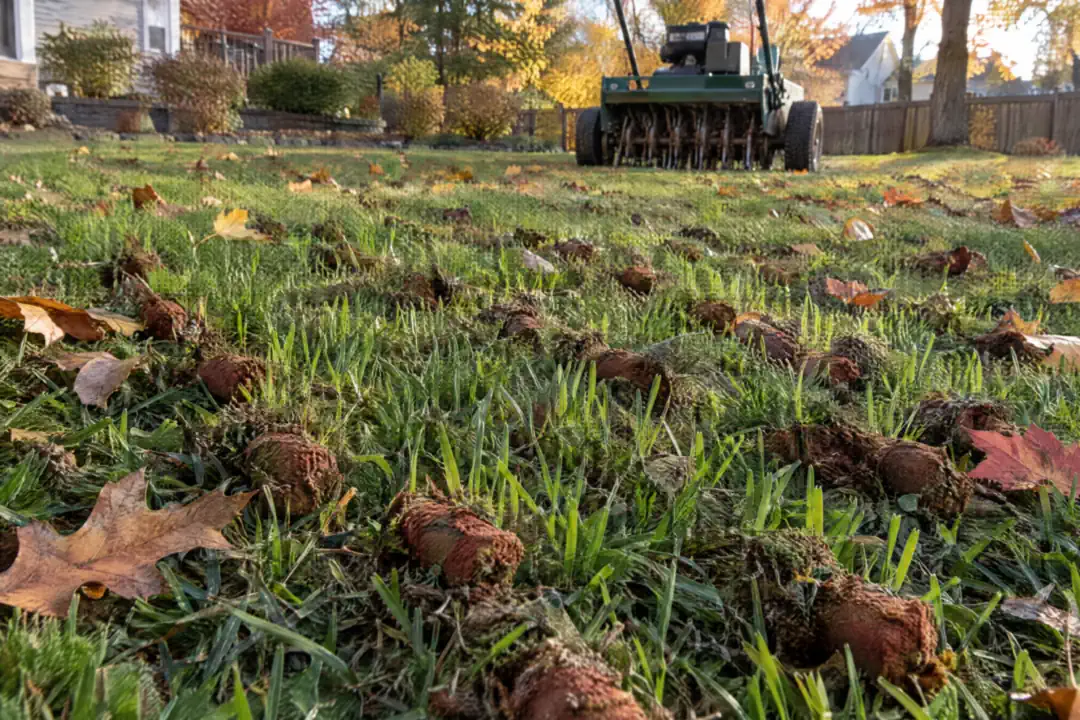
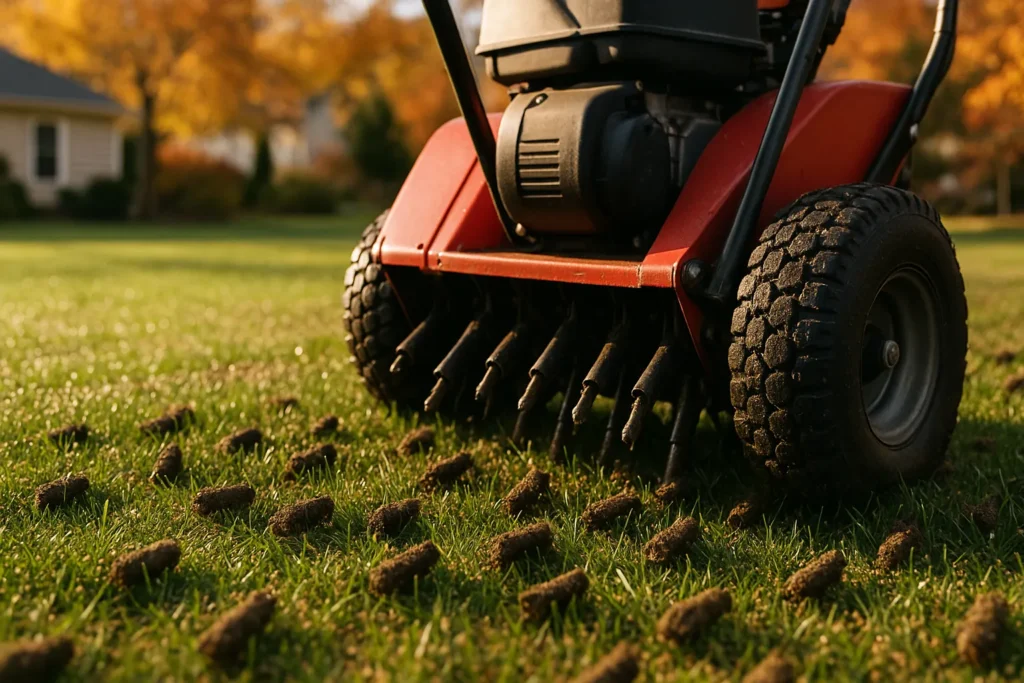
- Loosen compacted spots, or core aerate if the area is large. Our post on when to aerate and overseed explains why core plugs beat spike tools in clay.
- Use a quality tall fescue blend. Our grass seed calculator helps you buy the right amount instead of three random bags.
- Keep the top half inch of soil consistently damp until germination.
- Keep fallen leaves off new seedlings, because a wet leaf mat smothers baby grass fast.
Skip any fall product labeled as crabgrass pre-emergent on areas you are seeding. Goatley’s guidance is blunt on that point: those products block your grass seed too. And hold off on broadleaf weed killers until new grass has been mowed two or three times, as covered in how to control weeds after overseeding.
Option 2: Sod for large dead areas
When a big section of a drought damaged lawn is gone, sod is the fastest way back to green. Lawn Theory uses a simple rule on our sod installation and lawn renovation projects: if more than 30 to 40 percent of the yard is bare soil, weeds, or dead grass, full sod renovation typically outperforms overseeding. Our best install window runs from early September through mid October, and sod can often still go down later in fall while the ground is workable and farms are harvesting, as long as you keep up with watering.
The win with sod is that you skip the fragile seedling stage entirely, so a wet November or an early freeze is far less of a threat. The tradeoff is cost. Professional tall fescue sod from Lawn Theory starts at $2.60 per square foot installed, including prep, and our sod cost calculator gives you a ballpark before anyone shows up with a pallet. For the full comparison, see sod vs seed in Northern Virginia.
Option 3: Dormant seeding or a spring patch
If you miss the window, you still have moves. Dormant seeding means spreading seed once soil is too cold for it to germinate, so it sits in place and sprouts in spring. Spring seeding works for small patches, but it is a tougher road because young grass then faces its first summer with shallow roots. Our fall lawn renovation calendar has a full Plan B section on both options, including the honest tradeoffs.
Option 4: Plan a full renovation for next fall
Sometimes the smartest way to repair a drought damaged lawn is patience. If the lawn is mostly weeds now, a thoughtful renovation timed for late August next year, with a soil test, core aeration, and the right seed blend, will outperform a rushed October job. In the meantime, keep the bare soil from washing away and keep the weeds from seeding.
| Situation | Best fix this fall | Why |
|---|---|---|
| A few dead patches under about 10 percent of the lawn | Overseed now | Small areas are easy to keep moist and protect |
| Scattered thinning across the whole yard | Core aeration and overseeding | Thickens surviving turf while soil is loose |
| 30 to 40 percent or more dead, weedy, or bare | Sod renovation | Skips the fragile seedling stage before winter |
| Mostly weeds, soil never tested | Plan a renovation for next fall | Fix soil and weeds first, then seed in the prime window |
How to Help a Drought Damaged Lawn Recover Before Winter
Your living grass did a lot of hard work this year. Here is how to help the survivors rebuild roots before winter, so your drought damaged lawn heads into spring with a head start.
Feed it, but do not overdo it
Feeding is the backbone of lawn recovery after drought. Fall is the main event for fertilizing cool-season grass in Virginia, because roots keep growing long after the leaves slow down. Virginia Tech’s guidance for new seedings is no more than 0.7 pound of nitrogen per 1,000 square feet per active growing month, beginning once grass is mowable. For established turf, follow a soil test rather than guessing. Our lawn fertilization and weed control program is built around exactly that timing.
Mow high and keep the blade sharp
Keep tall fescue at 3 to 4 inches and never remove more than a third of the blade at once. Virginia Tech’s Daniel Sandor told WTOP this summer that taller mowing really does reduce turf stress, and it also shades out weed seedlings. A dull blade shreds tips and invites disease, so sharpen it before the last few cuts of the year.
Water smart while the drought watch continues
Most established lawns need little supplemental water this time of year, and the region is still asking for voluntary conservation. Focus water on new seed or sod only. If your irrigation system is running for new seed, remember the clock is ticking on sprinkler winterization in Northern Virginia, so plan to switch to hand watering once freezing nights show up. Our irrigation and sprinkler systems team can tune zones so the new patch gets water and the rest of the yard does not.
Get leaves off the turf every week
Leaves are the silent enemy of a drought damaged lawn in November. A thick, wet leaf layer is the fastest way to undo your recovery work, especially on new seed. Mulch light leaf cover with the mower and remove heavy layers. If your canopy is dropping faster than you can keep up, our leaf removal and seasonal cleanup visits are timed to the actual leaf drop on your street.
Test the soil before you spend more money
A soil test is cheap insurance before you repair a drought damaged lawn. A soil test through Virginia Cooperative Extension tells you whether you need lime, phosphorus, or nothing at all. Drought plus clay often leaves pH and nutrients out of balance, and seed sown into the wrong pH struggles no matter how much you water it.
Drought Damaged Lawn Mistakes to Avoid This Fall
We see the same handful of mistakes on every drought damaged lawn we walk. Avoid these and you are already ahead of most of the neighborhood.
- Dumping heavy fertilizer on a drought damaged lawn’s dead patches. Fertilizer cannot revive dead crowns. It just feeds the weeds moving in.
- Seeding a drought damaged lawn without soil contact. Throwing seed on top of thatch and dead grass is basically bird feeding with extra steps.
- Spike aerating clay. Spike tools can compact clay further. Core aeration pulls real plugs.
- Overwatering new seed in a wet fall. Goatley warns that gray leaf spot and Pythium blight can attack recovery seedings when conditions stay persistently wet, and the National Weather Service is forecasting a wetter than normal fall and winter.
- Ignoring the trees. A drought damaged lawn usually means drought stressed trees too. Drought stress on trees and shrubs often shows up the following year as dieback. If a favorite oak or dogwood looked rough this summer, have our tree and shrub care team take a look before spring.
- Using weed and feed on new seed. Most combination products prevent seed from establishing.
Drought Proofing Next Year’s Lawn
Recovery is half the job. The other half is making sure next summer does not leave you with another drought damaged lawn. A few upgrades that pay off on Northern Virginia properties:
- Annual fall core aeration and overseeding to keep turf dense and roots deep. Lawn Theory’s aeration and overseeding service starts at $250 for a typical lawn.
- The right grass for the site. Turf-type tall fescue handles our transition zone heat better than most, and shade areas need shade-tolerant blends.
- Better irrigation coverage, or a smart controller that waters deeply and less often.
- Drainage and grading fixes for slopes that shed every drop of rain. Our drainage solutions and grading work often fixes the dry slope and the soggy low spot at the same time.
- Mulched beds and native plantings in spots where grass will always struggle, like steep hot slopes.
Not sure how your drought damaged lawn stacks up overall? Our free Grade My Lawn quiz gives you a quick score and a to-do list, and the NoVA lawn care calendar generator builds a month-by-month plan for your yard.
Frequently Asked Questions
Will my lawn recover from the 2026 drought on its own?
Much of a drought damaged lawn already has. Dormant tall fescue and Kentucky bluegrass usually green up within a couple of weeks of soaking rain. Any area that stayed brown through the wet late summer of 2026 is very likely dead and will not fill back in on its own, especially tall fescue, which spreads slowly.
Is it too late to seed a drought damaged lawn in mid October?
Not quite, but it is close. Virginia Cooperative Extension considers mid October the latest acceptable seeding date for Northern Virginia. Small patches seeded now can still establish. For large areas, sod or a planned renovation next fall is the safer bet.
How long does it take a lawn to recover from drought?
Lawn recovery after drought is faster than most people expect for living grass. Dormant grass typically shows new growth within one to three weeks of consistent moisture. Full density takes longer, often through the following spring, especially where turf thinned out. Seeded patches need roughly a full growing season to match the surrounding lawn.
Should I fertilize a drought damaged lawn?
Fertilize living grass in fall, when roots are most active, at modest rates guided by a soil test. Do not fertilize dead areas and do not push heavy nitrogen on stressed turf. Feeding new seed should start once the grass is mowable.
Is sod or seed better for a drought damaged lawn?
For a drought damaged lawn, seed is cheaper and works well for thin areas and small patches during the fall window. Sod costs more but gives you a finished lawn immediately and handles a late fall install better. If more than 30 to 40 percent of the yard is dead, sod usually wins.
Can I water my lawn during the drought watch?
The current regional drought watch is a voluntary conservation request rather than a ban, but always check your own water provider for rules that apply to your address. Prioritize new seed and sod, water early in the morning, and skip established turf that is already recovering.
Ready to Bring Your Lawn Back?
Here is the bottom line on drought damaged lawn recovery: confirm what is alive, seed only what you can protect this late in the season, sod the big dead zones, and set the survivors up with a smart fall feeding. Do that, and by spring the drought of 2026 will be a story you tell, not a lawn you stare at.
If you would rather skip the guesswork, Lawn Theory will walk your property, tell you honestly what will recover and what will not, and hand you a written, line-item quote within 24 to 48 hours. We serve homeowners across Fairfax County, Loudoun County, and Prince William County. Get your free estimate or call (703) 650-5655, and we will help you turn that patchwork quilt back into a lawn.
Keep Reading: Lawn Care
 Lawn Care
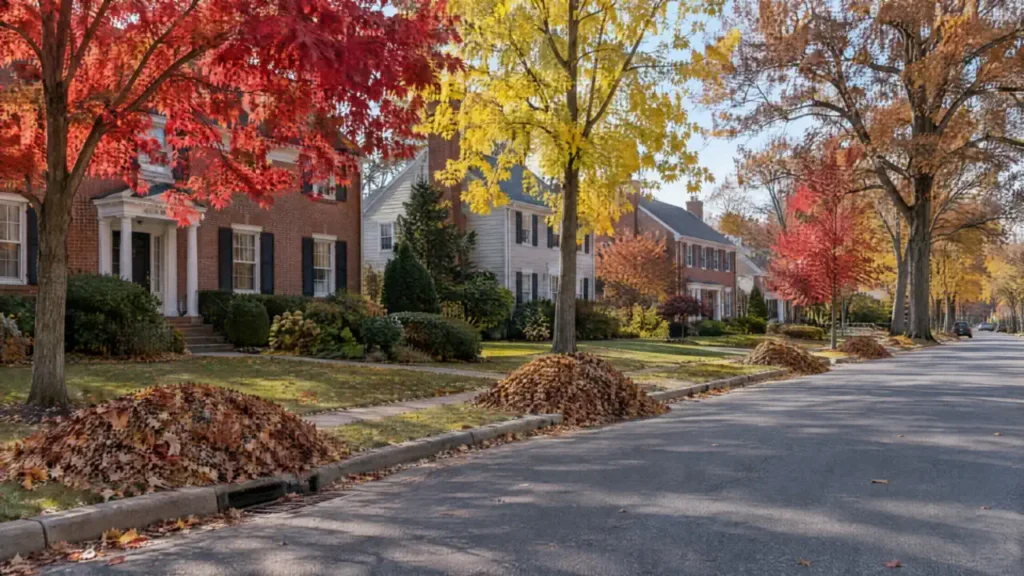
Leaf Collection in Northern Virginia: Mulch, Bag, or Set Out for Fairfax, Arlington, and Alexandria Pickup
Leaf collection in Northern Virginia for 2026: Fairfax County, Arlington, and Alexandria vacuum pickup rules, when to mulch leaves instead, and Alexandria's…
 Lawn Care
Fall Planting in Northern Virginia: Trees, Shrubs, and Mulch Done Right
Fall is the best time to plant trees and shrubs in Northern Virginia, but most failures trace to the first twenty minutes…
 Lawn Care
The Fall Lawn Renovation Calendar for Northern Virginia: Dates, Seeding Rates, and Soil Temperature
Virginia Cooperative Extension puts the Northern Virginia seeding window at the last week of August through mid-September. Here are the exact dates,…
Want this handled by the crew that wrote the guide?
Veteran-owned. Licensed & insured. Free walkthroughs across Northern Virginia — quotes in 24–48 hours.
Get Your Free Estimate