
Home / Build & Outdoor Living / Patios & Hardscapes
Patios & Hardscapes
Patios & hardscapes engineered for Northern Virginia's clay soil and freeze–thaw winters
Lawn Theory builds paver, flagstone, and natural stone patios on excavated, compacted bases sized for our region — not a thin layer of sand over dirt. The result is a patio that still sits flat, drains correctly, and looks sharp a decade after the crew leaves.
The Short Answer
A paver patio in Northern Virginia starts at $35 per square foot installed (from $9,500 for a typical patio) — final price depends on material tier, base depth, and site access — natural stone like flagstone or travertine runs higher, standard concrete pavers lower. Because most ground-level patios sit below the 16.5-inch threshold that triggers a Virginia building permit, the real driver of cost and durability isn't paperwork — it's the compacted aggregate base underneath, which is exactly where Northern Virginia's clay soil and freeze–thaw cycles punish shortcuts. Most single-patio projects run 1–3 weeks from excavation to final joint sand, once any HOA or land-disturbance review clears.
- $35 /sq ftpaver patios, starting at
- 1–3 weekstypical build, excavation to joint sand
- Engineered basecompacted for NoVA clay and freeze–thaw
- 24–48hwritten, line-item quote
What's Included
Every Patio Build Includes
No shortcuts under the surface — the base is the part you'll never see and the part that determines whether your patio lasts.
- Excavation & grading to proper depth with positive drainage away from your home.
- Compacted aggregate base installed in lifts, engineered for NoVA clay and freeze–thaw.
- Material of your choice — pavers, flagstone, travertine, bluestone, or stamped concrete.
- Edge restraint & polymeric jointing sand to lock the field in place long-term.
- Permit & HOA coordination handled for you where required, sequenced so your build doesn't stall.
- Final walkthrough & cleanup — jobsite restored, joints sealed if selected, no debris left behind.
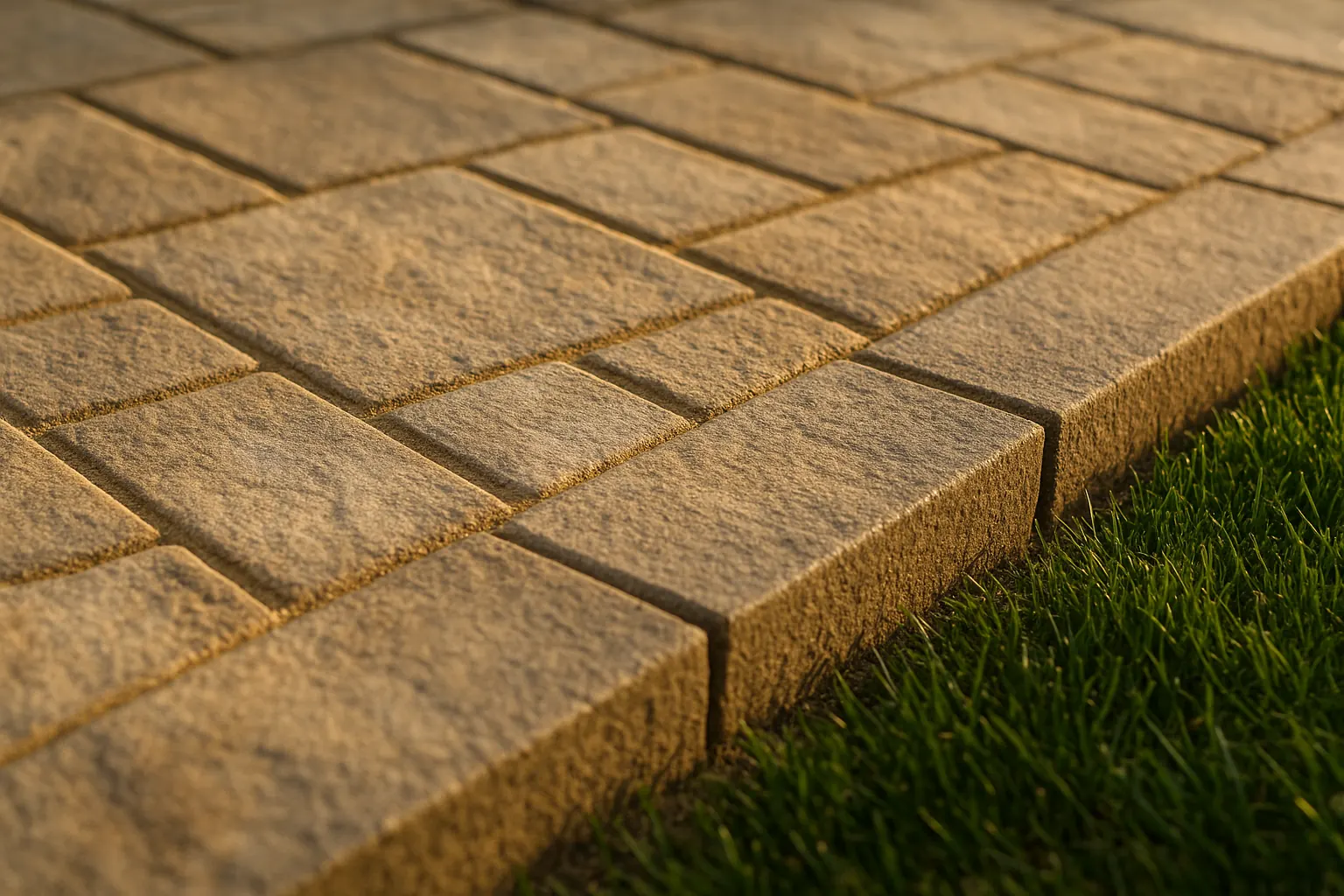
Pavers vs. Poured Concrete in Northern Virginia
Our clay soil and freeze–thaw cycles favor interlocking pavers over a rigid poured slab. When clay swells and shrinks through the winter, a slab cracks — and the repair is either a visible scar or a full re-pour. Pavers on a compacted base flex with the ground beneath them; if a corner ever settles, we lift and relevel just that section in an afternoon, not a demolition project.
Concrete costs less on day one. Pavers usually win on ten-year cost, curb appeal, and repairability — which is why most of our Northern Virginia patio builds are paver or natural stone.
How We Work
From Idea to Finished Patio in Three Steps
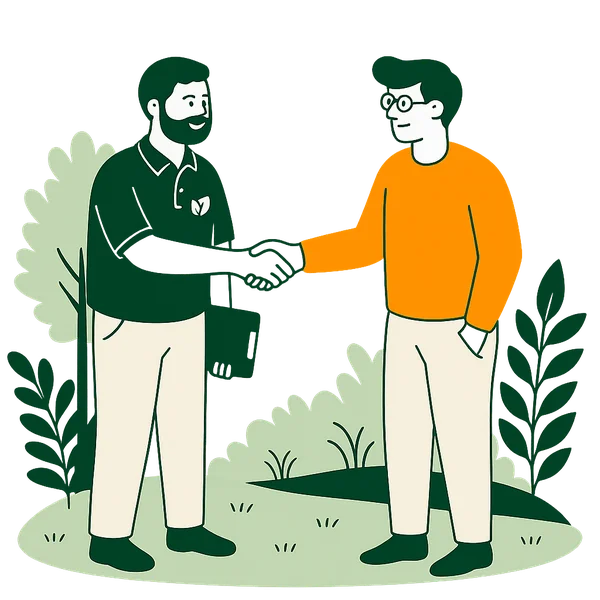
Consultation
We walk your yard, talk through material and layout options, and check for drainage, slope, and access issues before anything is quoted.
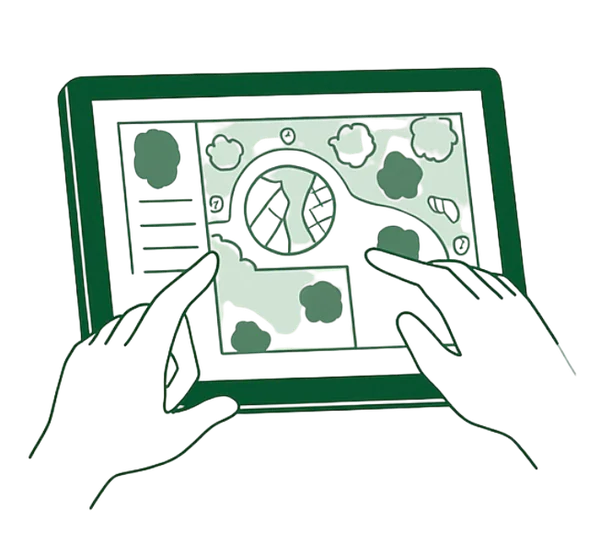
Proposal
A detailed, itemized quote within 24–48 hours — material, base spec, drainage plan, and any permit or HOA steps we'll handle for you.
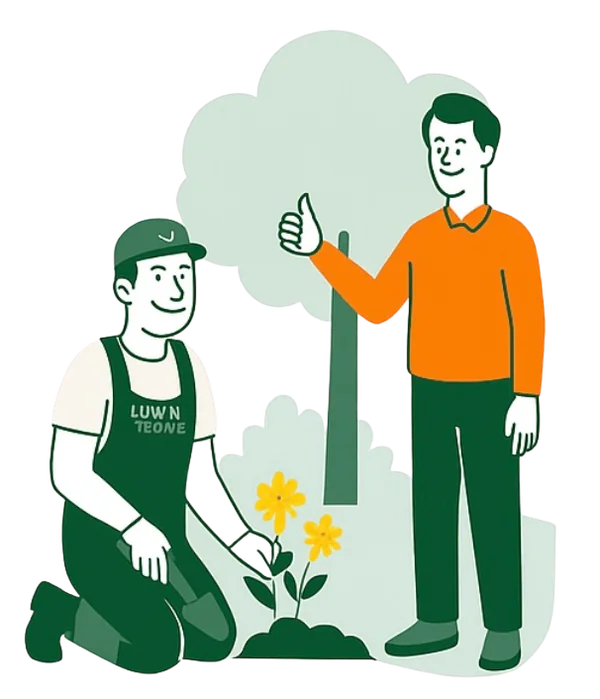
Implementation
Excavation, compacted base, and precise installation — most single-patio projects finish in 1–3 weeks once approvals clear.
Local Knowledge
Built For How Northern Virginia Actually Behaves
- Most ground-level patios skip the building permit. Virginia's Uniform Statewide Building Code exempts on-grade concrete, paver, and stone patios under 16.5 inches high — but a roof or cover over the patio, or significant grading, can trigger a separate review.
- Land-disturbance review still applies in Fairfax County. Even a permit-exempt patio can require Land Development Services sign-off if excavation, grading, or tree removal is involved — we sequence this so it doesn't stall your build.
- HOA approval is separate from county permitting. Loudoun and Prince William HOAs often require their own architectural review packet before we break ground — we've filed enough of these to know what each community wants to see.
- Clay soil demands a deeper compacted base. Northern Virginia's clay expands and contracts through freeze–thaw cycles far more than sandy soil — a shallow base is the #1 cause of the sunken, uneven patios we get called to fix.
Why Lawn Theory
Why Homeowners Choose Us For Patios & Hardscapes
Base-First Building
We engineer the compacted base to NoVA clay and freeze–thaw conditions — the part that determines whether a patio lasts 5 years or 25.
Disciplined, Spec-Driven Builds
The same attention to spec and sequencing that defines a good build plan — no shortcuts, no guessing on grade.
Every Major Material
Pavers, flagstone, travertine, bluestone, or stamped concrete — matched to your home's architecture, not a one-size catalog.
Fast, Real Quotes
A detailed, itemized proposal in 24–48 hours — not a vague ballpark you have to chase down.
Where We Build
Proudly Serving Five Northern Virginia Counties
Every county has its own dedicated Patios & Hardscapes page. Pick a county to see the areas we serve.
Serving Fairfax County
What Neighbors Say
Real Feedback From Recent Patio Builds
"Our old concrete patio had a crack running clean across it after one winter. Lawn Theory tore it out, went deep on the base, and the paver patio they built hasn't shifted an inch through two more winters."
"They handled our HOA paperwork in Loudoun County without us lifting a finger. Quote came back in two days, and the flagstone patio looks better than the rendering."
"Straightforward crew, no upselling, explained exactly why they were digging as deep as they did before pouring the base. Three years later, still flat, still draining right."
Pairs Well With
Complete The Outdoor Living Space
FAQ
Patios & Hardscapes — Common Questions
How much does a patio cost in Northern Virginia?
Paver patios start at $35 per square foot installed, so a typical 300 sq ft patio starts around $10,500 — final price depends on material tier, base depth, and site access. Natural stone like flagstone or travertine runs higher; standard concrete pavers and stamped concrete run lower. The biggest cost driver is base depth and site access, not the surface material itself.
Do I need a permit to build a patio in Virginia?
Usually not. Virginia's building code exempts ground-level patios — concrete, paver, brick, or stone — that sit under 16.5 inches above grade and aren't designed to support a structure. Adding a roof, cover, or raised deck over the patio changes that. Some counties, including Fairfax, may still require land-disturbance review if grading or tree removal is significant.
Are pavers or poured concrete better for our clay soil?
Pavers generally win here. Northern Virginia's clay expands and contracts through freeze–thaw cycles, which can crack a rigid poured slab. Interlocking pavers on a compacted base flex with the ground, and if a section ever settles, we can lift and relevel just that area instead of replacing the whole patio.
Will I need HOA approval for a new patio?
Many communities in Loudoun, Prince William, and parts of Fairfax County require an architectural review packet before any hardscape work begins, separate from county permitting. We've filed enough of these across the region to know what most HOAs want to see, and we sequence approvals so they don't delay your build.
How long does a patio installation take?
Most single-patio projects take 1–3 weeks from excavation to final jointing sand, once any required permits or HOA approvals clear. Larger multi-level hardscape projects with retaining walls, steps, or lighting can run several weeks longer.
What patio materials do you install?
We install every major patio material used in Northern Virginia: interlocking concrete pavers, natural flagstone, travertine, bluestone, brick, and stamped or poured concrete. Material choice affects cost per square foot, but the base underneath is built the same rigorous way regardless of what's on top.
How do you prevent our patio from settling or sinking later?
We excavate to proper depth and install a compacted aggregate base in lifts rather than a shallow gravel layer, sized specifically for Northern Virginia clay. Edge restraint and polymeric jointing sand lock the field in place, and correct grading routes water away from the patio and your foundation instead of pooling on the surface.
Free Interactive Tool
Patio Cost Calculator
Pick your square footage and material for an instant installed-cost range.
Free Interactive Tool
Paver Materials Calculator
Enter your patio size for an instant paver, base gravel, and sand estimate.
Ready When You Are
Get Your Free Patio & Hardscape Estimate
Detailed, itemized quotes in 24–48 hours. No pressure, no generic ballparks.