
The Short Answer
A properly engineered paver driveway in Northern Virginia starts at $22/sq ft for stamped concrete, $30/sq ft for standard paver, and $45/sq ft for premium paver or natural stone — most full two-car driveways start around $22,000 once base excavation, drainage, and edge restraints are included. The base is what actually matters: a 10–14 inch compacted aggregate base with proper edge restraint outlasts a poured concrete slab in our clay soil, because it flexes with freeze–thaw cycles instead of cracking. Most residential driveway rebuilds take 1–3 weeks from demo to final sand-and-seal, and if you're changing the entrance location onto a public road, VDOT or county right-of-way permitting adds to the timeline — replacing an existing entrance in the same footprint usually does not.
- $22 /sq ftdriveways, starting at
- 10–14 in. basecompacted aggregate that flexes, not cracks
- 1–3 weeksdemo to final sand-and-seal
- 24–48hwritten, line-item quote
Every Driveway & Entrance Project Includes
No shortcuts under the surface. Every job — from a small entrance accent to a full driveway rebuild — gets the same engineered foundation.
- Design & material selection — paver, stamped concrete, or natural stone matched to your home's style and budget.
- Full demo & haul-away — removal of the existing surface, old base material, and debris disposal.
- 10–14 inch engineered base — compacted aggregate rated for daily vehicle loads and NoVA clay.
- Drainage & grading — surface water routed away from your foundation and garage slab.
- Edge restraints & entrance accents — pillars, aprons, and banding that frame the entry.
- Polymeric sand & sealing — locks joints against weeds and washout, optional sealer on request.
- Permit handling — VDOT or county right-of-way paperwork when the entrance touches a public road.
- Written warranty — coverage on workmanship and base construction, in plain language.
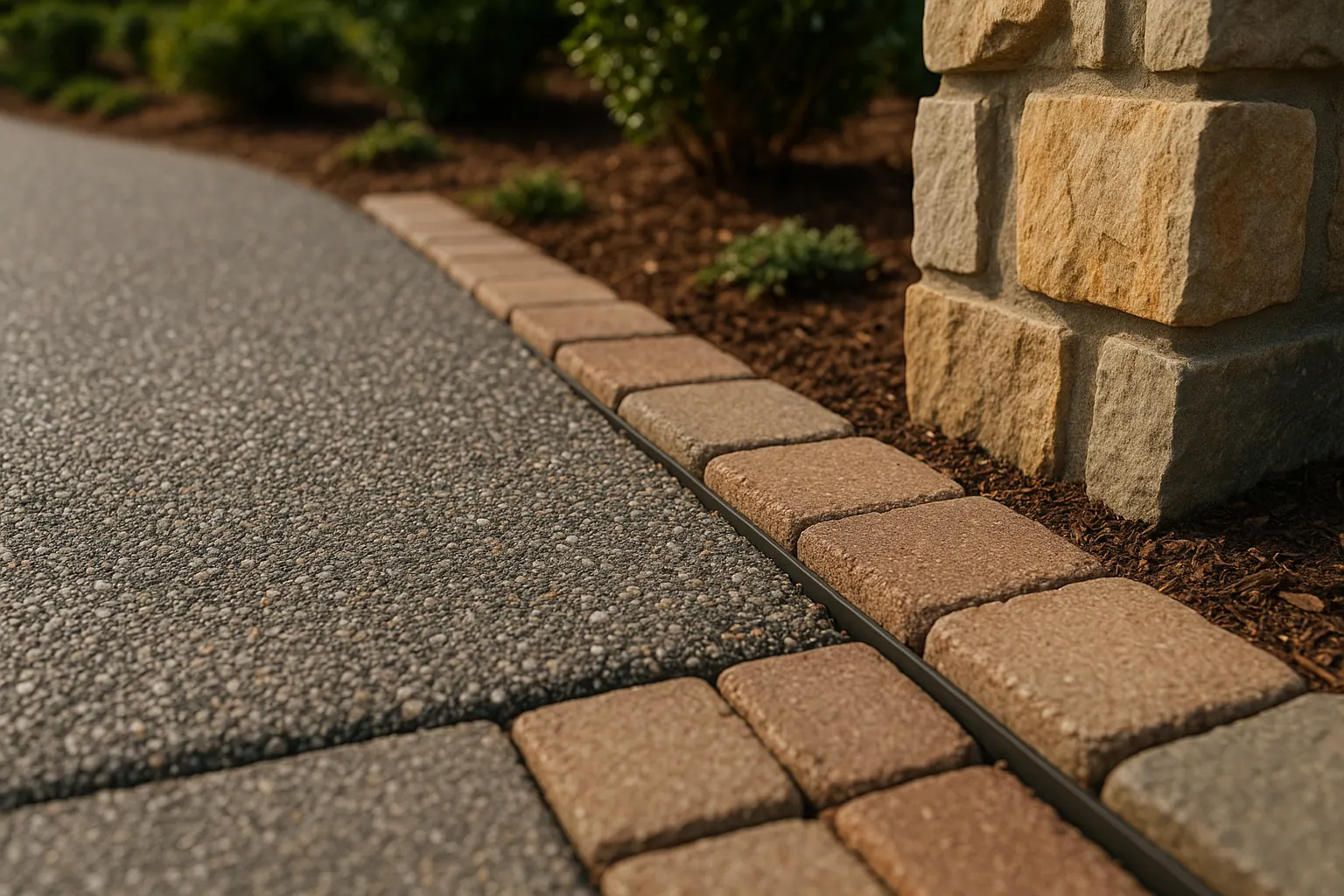
The Details Matter
The Difference Is Under the Surface
Anyone can lay pavers on sand. What separates a driveway that lasts 30 years from one that heaves and settles in three winters is the base: depth, compaction, and edge restraint sized to your soil and your vehicles.
We cut every base to 10–14 inches depending on soil conditions, compact it in lifts, and set driveway-rated pavers with edge restraints anchored below frost depth — not just pinned to the surface. That's the engineering that keeps clay soil from pushing your driveway apart every freeze–thaw cycle.
Our Driveway Build Process
From first walkthrough to final sand sweep, here's exactly what happens.

Design
We walk the site, measure slope and access, and talk through material, pattern, and entrance accents that fit your home.

Base Engineering & Quote
You get a written proposal with base depth, material, drainage plan, and a firm price — no vague allowances.

Demo, Base & Install
Remove the old surface, excavate to load-rated depth, compact the base, set pavers, then sand, seal, and clean up.
Building Driveways & Entrances in Northern Virginia
- VDOT & county right-of-way permitsChanging where your driveway meets a public road requires a VDOT (or county, in Fairfax/Arlington's maintained system) land-use permit, with a minimum application fee around $100 plus review. Replacing an entrance in its existing footprint is usually exempt or handled as a same-location renewal.
- Clay soil & freeze–thawNoVA's expansive clay swells and contracts through winter freeze–thaw cycles. Poured concrete and thin asphalt crack under that movement; a properly compacted paver base flexes with it and stays intact for decades.
- HOA architectural reviewMost planned communities in Loudoun, Fairfax, and Prince William counties require HOA approval of material and color before a driveway or entrance change — we provide the drawings your ARC packet needs.
- Typical timelinesMost residential driveway rebuilds run 1–3 weeks depending on square footage and demo complexity; entrance accents and apron work can often be done in a few days.
Built to Outlast the Warranty
Engineered Base, Every Time
10–14 inch compacted base sized to your soil and vehicle load — not a generic 4-inch sand bed.
Permits Handled For You
We manage VDOT and county right-of-way paperwork so your project doesn't stall waiting on approvals.
5.0★ Reputation
13 Google reviews and counting from Northern Virginia homeowners who saw the base before the surface went down.
Firm, Written Quotes
Material, base depth, and price in writing before we break ground — no surprise change orders.
Where We Build
Proudly Serving Five Northern Virginia Counties
Every county has its own dedicated Driveways & Entrances page. Pick a county to see the areas we serve.
Serving Fairfax County
What Northern Virginia Homeowners Say
"Our old asphalt driveway had frost heaves every spring. Lawn Theory tore it out, put in a real base, and it's been flat through two winters now."
"They handled the VDOT permit for our new entrance location without us lifting a finger. Showed up on schedule and the paver work is flawless."
"Got quotes from four companies. Lawn Theory was the only one who actually explained why the base depth mattered instead of just quoting a price per square foot."
Complete the Outdoor Living Picture
Frequently Asked Questions
Do paver driveways really last longer than asphalt or concrete in Northern Virginia?
Yes. When built on a proper 10–14 inch compacted base with driveway-rated pavers and edge restraints, paver driveways outlast asphalt by decades and don't crack under NoVA's clay soil movement the way poured concrete does.
How much does a new driveway cost in Northern Virginia?
Stamped concrete starts at $22/sq ft, standard paver at $30/sq ft, and premium paver or natural stone at $45/sq ft. A typical two-car driveway starts around $22,000 depending on size, material, and base conditions.
Do I need a permit to replace or relocate my driveway entrance?
If you're changing the entrance location onto a public road, yes — a VDOT or county right-of-way land-use permit is required, with a minimum application fee around $100. Replacing an entrance in its existing footprint is usually simpler and often exempt.
What's the difference between asphalt, concrete, and paver driveways?
Asphalt is cheapest up front but needs sealing every 2–3 years and softens in summer heat. Poured concrete cracks under NoVA's freeze–thaw cycles. Pavers cost more initially but last 30+ years, flex with soil movement, and can be repaired one stone at a time instead of replacing whole slabs.
Will you protect my existing landscaping during driveway construction?
Yes. We fence off root zones near mature trees, protect irrigation lines we know about, and only remove plantings that are directly in the excavation path — everything else stays.
How long does a typical driveway or entrance project take?
Most residential driveway rebuilds take 1–3 weeks depending on size and demo complexity. Entrance accents, aprons, and pillar work alone can often be completed in just a few days.
Do I need HOA approval for a new driveway or entrance in my neighborhood?
Most planned communities across Loudoun, Fairfax, and Prince William counties require architectural review committee approval of material, color, and layout before work begins. We provide the drawings and specs your HOA packet needs.
Ready When You Are
Get Your Free Driveway & Entrance Quote
Firm pricing, real base engineering, and a crew that shows up when they say they will — serving all of Northern Virginia.