
Closing Out the Lawn Season in Northern Virginia: Last Mow Height, Final Fertilizer, and Virginia’s Rules
The last mow of the season is the lawn care equivalent of tucking your grass into bed, and like most bedtimes, there is a right way and a “why is everyone crying” way. Cut too tall and the turf mats down under snow and wet leaves. Cut too short and you scalp the crowns that need to survive January. Pair that with a smart final fertilizer application and a few Virginia rules most homeowners have never heard of, and November becomes one of the most important months of the lawn year in Fairfax, Loudoun, and Prince William.
The short answer: keep mowing tall fescue at your normal 3 to 4 inches until growth slows, then drop the deck about half an inch to one inch for the last mow of the season, landing around 2.5 to 3 inches without ever removing more than a third of the blade. Get leaves off first. Make your final fertilizer application by mid November while the grass is still green, use a phosphorus-free product unless a soil test says otherwise, and sweep any granules off the driveway, because Virginia law literally prints that instruction on the bag.
Lawn Theory manages lawns across Northern Virginia, and late fall is when we see the biggest gap between lawns that coast into spring and lawns that limp into it. This guide covers the last mow of the season, the final fertilizer, Virginia’s fertilizer rules, and the small chores that set you up for April. If you would rather hand it off, our lawn care and landscaping team handles the whole close-out.
Key Takeaways
- Keep mowing as long as the grass grows. If the mower is still collecting clippings, the season is not over.
- For the last mow of the season, lower tall fescue about half an inch to one inch, to roughly 2.5 to 3 inches, and never cut more than one third of the blade.
- Clear leaves before the last mow. A wet leaf mat over long grass is an invitation to snow mold.
- Make the final fertilizer application by mid November while turf is green and the ground is not frozen.
- Virginia bans phosphorus in lawn maintenance fertilizer unless a soil test shows a need or you are establishing a new lawn.
- Every lawn fertilizer bag sold in Virginia must tell you not to apply near water or storm drains, not to apply before heavy rain, and to sweep product off hard surfaces.
- Winterize the mower: stabilize or drain fuel, clean the deck, and sharpen the blade before storage.
When Is the Last Mow of the Season in Northern Virginia?
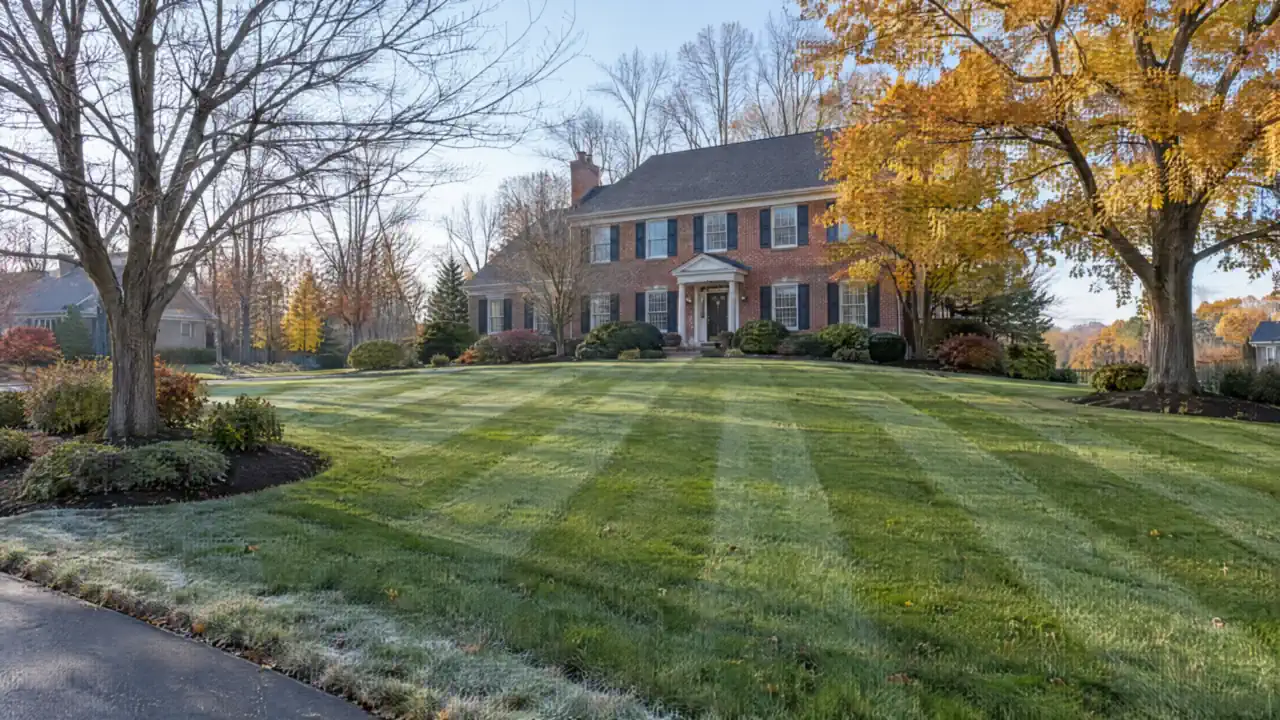
There is no calendar date for the last mow of the season, and anyone who tells you “Thanksgiving, always” is guessing. Cool-season grasses like tall fescue slow down as soil temperatures fall toward 50°F, and in most Northern Virginia neighborhoods that happens sometime between mid November and early December. A warm fall pushes it later. An early cold snap pulls it earlier.
How to tell your lawn is done growing
- Clippings are basically gone. If a full pass over the lawn barely puts anything in the bag, growth has stalled.
- A week passes and the lawn looks the same. Measure a spot with a ruler. No change means you are close.
- Nights are consistently near freezing. Frost-heavy mornings are a strong hint the season is winding down.
- The neighborhood oaks are finally bare. Not scientific, but in Northern Virginia it tends to line up.
Until those signs show up, keep mowing on your normal schedule. Skipping the last few cuts leaves grass too long heading into winter, which causes more problems than it solves.
The Best Height for the Last Mow of the Season
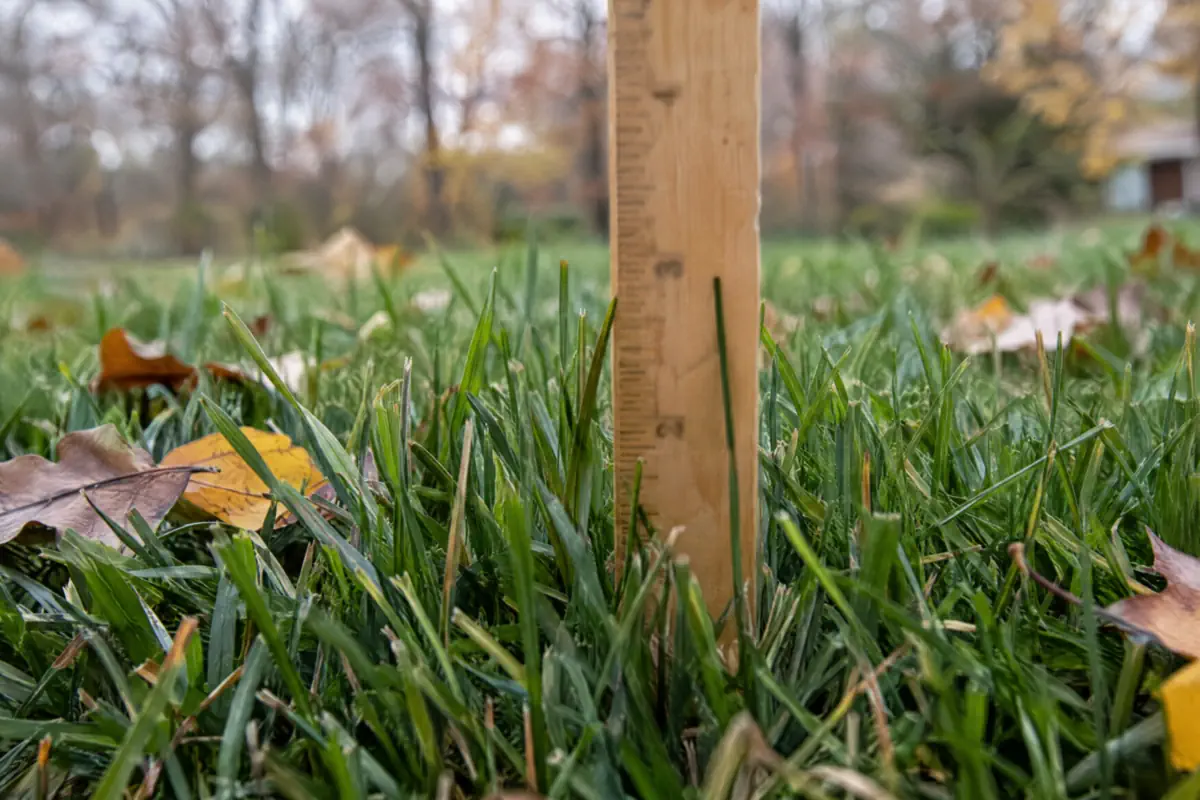
During the growing season, tall fescue in Northern Virginia does best at 3 to 4 inches. That height shades the soil, keeps roots deeper, and crowds out weeds. For the last mow of the season, most turf specialists recommend going slightly shorter than your summer height, roughly half an inch to one inch lower, which puts most tall fescue lawns at about 2.5 to 3 inches.
Why shorter, but not too short
| Last mow height for tall fescue | What happens over winter |
|---|---|
| 4 inches or taller | Blades flop and mat under snow and leaves, raising the risk of snow mold and vole tunnels |
| 2.5 to 3 inches | Upright, healthy turf that dries quickly and greens up cleanly in spring |
| Under 2 inches | Crowns exposed to cold and drying wind, slower spring recovery, more room for weeds |
The one-third rule still applies
If your grass is sitting at 4.5 inches, do not slam the deck down to 2.5 in a single pass. That removes nearly half the blade and stresses the plant right before winter. Instead, step the height down over your last two or three mows, removing no more than a third each time. Your lawn will thank you by not turning brown and sulky in March.
Last mow of the season checklist
- Blow or mulch leaves off the turf before the final cut. Our guide to leaf collection in Northern Virginia covers county pickup rules if you are raking to the curb.
- Sharpen the blade. A clean cut heals faster and resists disease.
- Mow when the grass is dry, so you are not tearing wet blades or compacting soggy clay.
- Bag or mulch clippings evenly. Do not leave clumps sitting on the turf all winter.
- Trim edges and clear beds so nothing tall is left to collapse over the lawn.
Last Mow of the Season by Grass Type
Most Northern Virginia lawns are tall fescue, but not all of them. Here is how the last mow of the season shifts by grass type.
| Grass type | Normal mowing height | Last mow of the season | Notes |
|---|---|---|---|
| Tall fescue | 3 to 4 inches | About 2.5 to 3 inches | Step down gradually; most common lawn in Northern Virginia |
| Kentucky bluegrass blends | 2.5 to 3.5 inches | About 2 to 2.5 inches | Often mixed with fescue; follow the dominant grass |
| Fine fescue (shade mixes) | 3 to 4 inches | Keep near normal height | Struggles if cut short in shade |
| Zoysia and other warm-season grasses | 1 to 2 inches | Stop when the lawn goes dormant and brown | Turns tan after the first frosts; no final fertilizer in fall |
If you are not sure what grass you have, a quick look in late fall usually settles it: tall fescue stays green into December, while zoysia turns tan after the first frosts.
The Final Fertilizer Application: Timing and Rates
Here is the secret most homeowners miss: fall is the main event for feeding tall fescue in Virginia. Top growth slows in November, but roots keep growing and storing energy. A well-timed final fertilizer application builds those root reserves, which is a big reason fall-fed lawns green up earlier and thicker in spring.
When to apply the final fertilizer
Aim to make your final fertilizer application by mid November, while the grass is still green and actively taking up nutrients, and well before the ground freezes. Virginia Cooperative Extension’s Lawn Fertilization in Virginia programs spread cool-season nitrogen across September, October, and November, with the November application smaller than the early fall ones. Our fall lawn renovation calendar breaks down those monthly rates in detail.
How much nitrogen to use
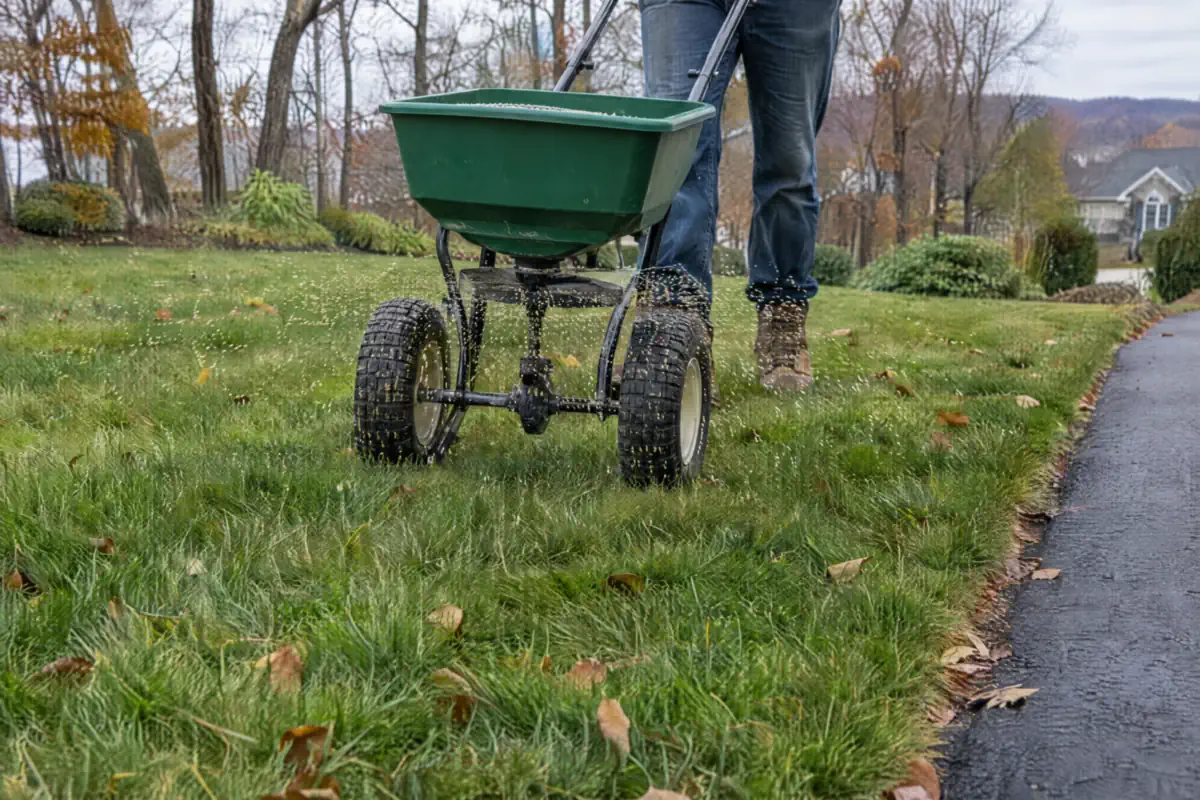
For most quick-release products, the final application should stay around half a pound of nitrogen per 1,000 square feet, following your soil test and the product label. More is not better. Excess nitrogen in late fall can wash into storm drains and local streams, and it does not make your lawn any greener in spring.
Final fertilizer mistakes to avoid
- Fertilizing frozen or snow-covered ground. Nutrients cannot soak in and are far more likely to run off.
- Applying right before a heavy rain. The label tells you not to, and the runoff risk is real.
- Using last spring’s leftover weed and feed. Most combination products are not what late-fall turf needs.
- Skipping the soil test. Lime and nutrient needs vary a lot on Northern Virginia clay. Our post on clay soil and the $10 soil test explains why.
Not sure how often your lawn should be fed overall? Our guide on how often to fertilize a lawn in Northern Virginia lays out a full-year plan.
Virginia’s Lawn Fertilizer Rules, Explained in Plain English
Virginia regulates lawn fertilizer more than most homeowners realize, largely to protect local streams and the Chesapeake Bay. Here is what the Code of Virginia’s fertilizer chapter actually says, minus the legalese.
Rule 1: No phosphorus in lawn maintenance fertilizer
Since December 31, 2013, lawn maintenance fertilizer sold or used in Virginia must contain zero percent phosphorus. That is why the middle number on most bags reads zero. Phosphorus is still allowed when a soil test shows a need, or when you are establishing a new lawn with seed or sod, which is where starter fertilizers come in.
Rule 2: Nitrogen rates must match state standards
Lawn maintenance fertilizer has to be labeled so that, when applied as directed, it delivers nitrogen at rates consistent with Virginia’s Nutrient Management Standards and Criteria. Following the label is not just good practice, it is how the system is designed to work.
Rule 3: Read the required warnings on the bag
Every lawn fertilizer label in Virginia must include three plain-language instructions:
- Do not apply near water, storm drains, or drainage ditches.
- Do not apply if heavy rain is expected.
- Sweep any product that lands on the driveway, sidewalk, or street back onto your lawn or garden.
Rule 4: Professionals have extra requirements
Contractor-applicators who fertilize lawns for hire must meet state training and certification requirements, and larger operators file annual reports. If you hire a lawn company, it is fair to ask whether they follow Virginia’s nutrient management standards.
| Virginia fertilizer rule | What it means for your final fertilizer |
|---|---|
| Zero phosphorus in maintenance fertilizer | Use a product with a zero middle number unless a soil test says otherwise |
| Phosphorus allowed for new lawns | Starter fertilizer is fine for fall seeding or sod |
| Nitrogen rates tied to state standards | Follow the label rate, do not double up |
| Do not apply near water or before heavy rain | Check the forecast and keep a buffer around ditches and drains |
| Sweep product off hard surfaces | Blow or sweep granules back onto the turf |
Other Lawn Season Close-Out Chores
The last mow of the season is the headline, but a few quick jobs make spring dramatically easier.
- Late-season broadleaf weed control. Fall is a great time to treat dandelions and other perennial weeds while they are pulling energy into their roots. If you seeded this fall, wait until new grass has been mowed two or three times, as explained in how to control weeds after overseeding.
- Lime if your soil test calls for it. Fall and winter applications have time to work into the soil before spring.
- Winterize irrigation. If you have not already, read our guide to sprinkler winterization in Northern Virginia before the first hard freeze.
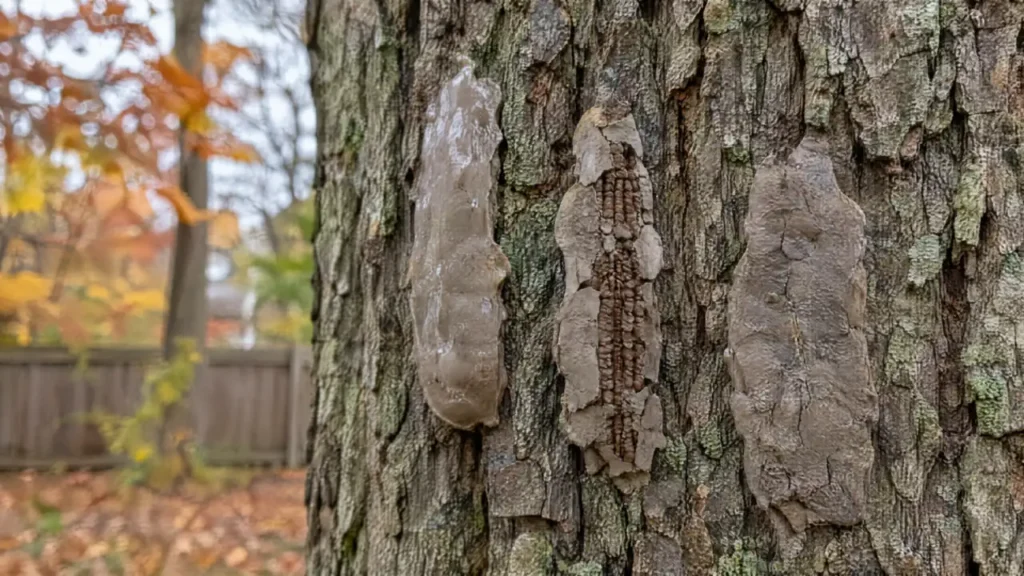
- Check trees for pests. While you are walking the yard, scrape any spotted lanternfly egg masses you find on trunks and fences.
- Plan next fall’s aeration. If your lawn thinned out this year, book aeration and overseeding early for late August.
Winterize your mower
- Run the engine dry or add fuel stabilizer, depending on your manual.
- Clean grass and leaf buildup off the deck.
- Sharpen or replace the blade so you start spring with a clean cut.
- Store battery packs indoors, away from freezing temperatures.
- Check tire pressure, belts, and the air filter.
What Happens in Winter, and What You Should Not Do
After the last mow of the season, your lawn needs very little from you. Keep foot traffic light on frozen turf, since walking on frosted grass breaks blades and leaves footprints that linger. Avoid piling snow from the driveway onto the same spot all winter. And resist the urge to water unless a long, dry, mild spell sets in. Our guide on watering your lawn in winter explains when it helps. For the bigger picture, see our winter lawn care guide and early spring lawn success starts in winter.
Want a month-by-month plan for your own yard? Our free NoVA lawn calendar generator builds one in about a minute, and the Grade My Lawn quiz shows where your lawn stands heading into winter.
Frequently Asked Questions
What height should the last mow of the season be?
For tall fescue in Northern Virginia, drop your mower about half an inch to one inch below your normal 3 to 4 inch height, landing around 2.5 to 3 inches. Step down gradually and never remove more than one third of the blade in a single mow.
When should I stop mowing my lawn in Virginia?
Keep mowing until the grass stops growing, which in Northern Virginia usually happens between mid November and early December. If your mower still collects clippings, the lawn is still growing and needs another cut.
Is it too late to fertilize my lawn in November?
Not if the grass is still green and the ground is not frozen. Make your final fertilizer application by mid November at a modest rate, following your soil test and the label. Skip it once the ground freezes.
Can I use fertilizer with phosphorus on my lawn in Virginia?
Only in specific cases. Virginia bans phosphorus in lawn maintenance fertilizer, but allows it when a soil test shows a need or when you are establishing a new lawn from seed or sod.
Should I bag or mulch clippings on the last mow of the season?
Either works if clippings are light and evenly spread. If leaves and clippings are heavy, bag them so nothing mats down over the turf during winter.
Does cutting grass short prevent snow mold?
A moderately shorter last mow of the season helps, because long grass mats under snow and holds moisture. Scalping does not help and stresses the lawn. Clearing leaves matters just as much as height.
Close Out the Season the Right Way
The last mow of the season, a smart final fertilizer, and a little respect for Virginia’s fertilizer rules add up to a lawn that wakes up greener and thicker in spring. Keep it a little shorter, keep it clean, feed it once more before the ground freezes, and put the mower away sharp.
If you would rather spend November watching football than pushing a spreader, Lawn Theory’s lawn fertilization and weed control program starts at $89 per application, with full-season plans from $449, and every program starts with a soil test. We serve homeowners across Fairfax County, Loudoun County, and Prince William County. Get your free estimate or call (703) 650-5655 for a written, line-item quote within 24 to 48 hours.
Keep Reading: Lawn Care
 Lawn Care
Spotted Lanternfly Egg Masses in Northern Virginia: Find Them, Destroy Them, and Clean Up the Sooty Mold
Spotted lanternfly egg masses are showing up across Northern Virginia. How to find and destroy them this winter, and how to safely…
 Lawn Care
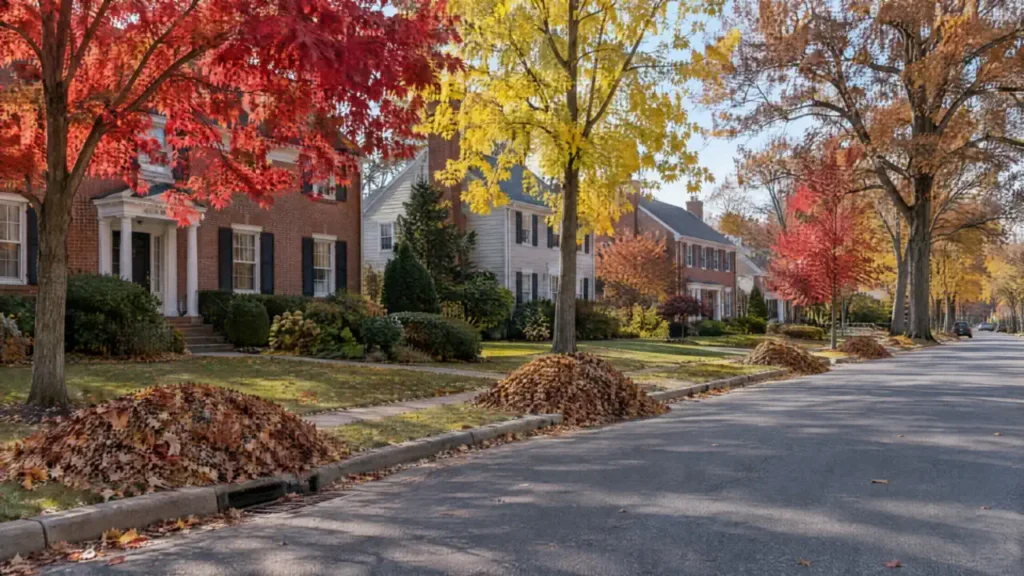
Leaf Collection in Northern Virginia: Mulch, Bag, or Set Out for Fairfax, Arlington, and Alexandria Pickup
Leaf collection in Northern Virginia for 2026: Fairfax County, Arlington, and Alexandria vacuum pickup rules, when to mulch leaves instead, and Alexandria's…
 Lawn Care
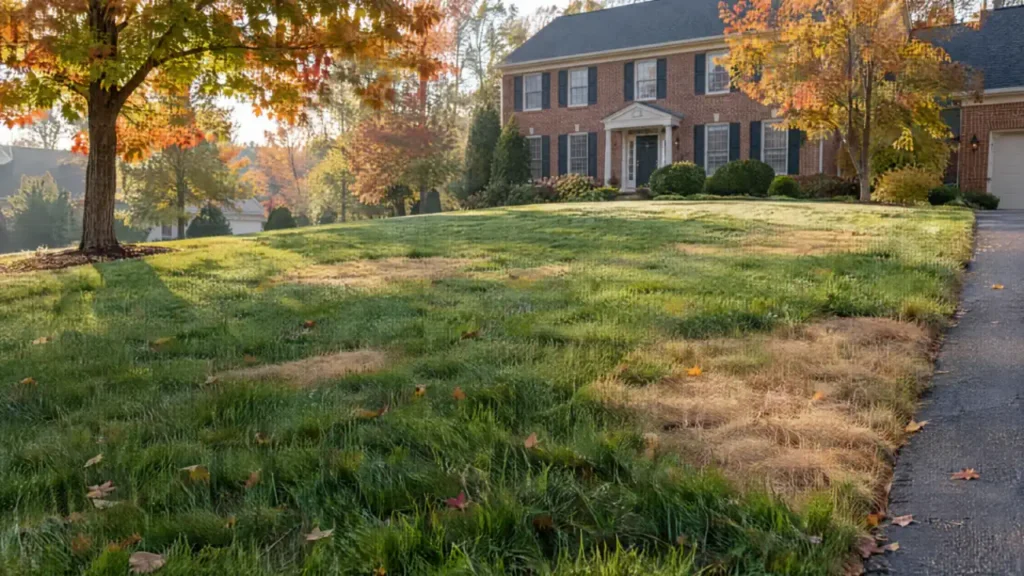
Drought Damaged Lawn Recovery in Northern Virginia: What to Save, Seed, or Sod This Fall
Drought damaged lawn in Northern Virginia? How to tell dormant from dead grass after the 2026 drought, what you can still seed…
Want this handled by the crew that wrote the guide?
Licensed & insured. Free walkthroughs across Northern Virginia — quotes in 24–48 hours.
Get Your Free Estimate