
Fire Pit Rules in Northern Virginia: Gas vs Wood, Costs, and Backyard Safety
Fire pit rules in Northern Virginia are one of those topics where everybody has an opinion and almost nobody has read the actual code. Your neighbor swears you need a permit. Your brother-in-law swears you do not. The guy at the hardware store says “you’re fine” while ringing up a steel bowl the size of a satellite dish. Meanwhile, the real answer depends on which county you live in, whether your fire pit burns wood or gas, and whether it is portable or built into your patio.
The short answer: in most of Northern Virginia, a small wood-burning backyard fire at a single-family home or townhouse is allowed without a permit, as long as you burn only clean, seasoned firewood, keep it attended, keep water or an extinguisher ready, and respect the setback distances. Fairfax County and Arlington County apply a 25 foot setback to open recreational fires and a 15 foot rule to portable fire pits and chimineas, with an exception for one- and two-family homes. Loudoun County caps permanent wood fire pits at 36 inches across. And anything with a gas line or a chimney needs building or mechanical permits throughout the region.
Lawn Theory designs and builds fire pits and outdoor fireplaces across Northern Virginia, so we deal with these rules on every project. This guide breaks down the local rules county by county, helps you choose between gas and wood, and explains what actually drives the cost of a backyard fire pit, so you can plan one that is legal, safe, and genuinely enjoyable on a chilly November night.
Key Takeaways
- A recreational fire in Fairfax County must stay within 3 feet across and 2 feet high and sit at least 25 feet from structures and combustible material. No permit is required.
- Portable fire pits and chimineas follow a 15 foot rule in Fairfax, Arlington, and Loudoun, but one- and two-family homes are exempt from that operating distance. Officials still strongly encourage it.
- Apartments and condos are a different story. Fire pits on balconies or within 15 feet of multifamily buildings are generally prohibited.
- Loudoun County limits permanent wood fire pits to 36 inches in diameter and expects a spark screen, an extinguisher, constant attendance, and clean seasoned wood.
- Prince William County requires zoning approval for permanent fire pits and barbecue structures.
- Gas fire pits avoid smoke and sparks, but gas lines require permits and licensed installation everywhere in Northern Virginia.
- Burn bans override everything, and HOAs can be stricter than the county.
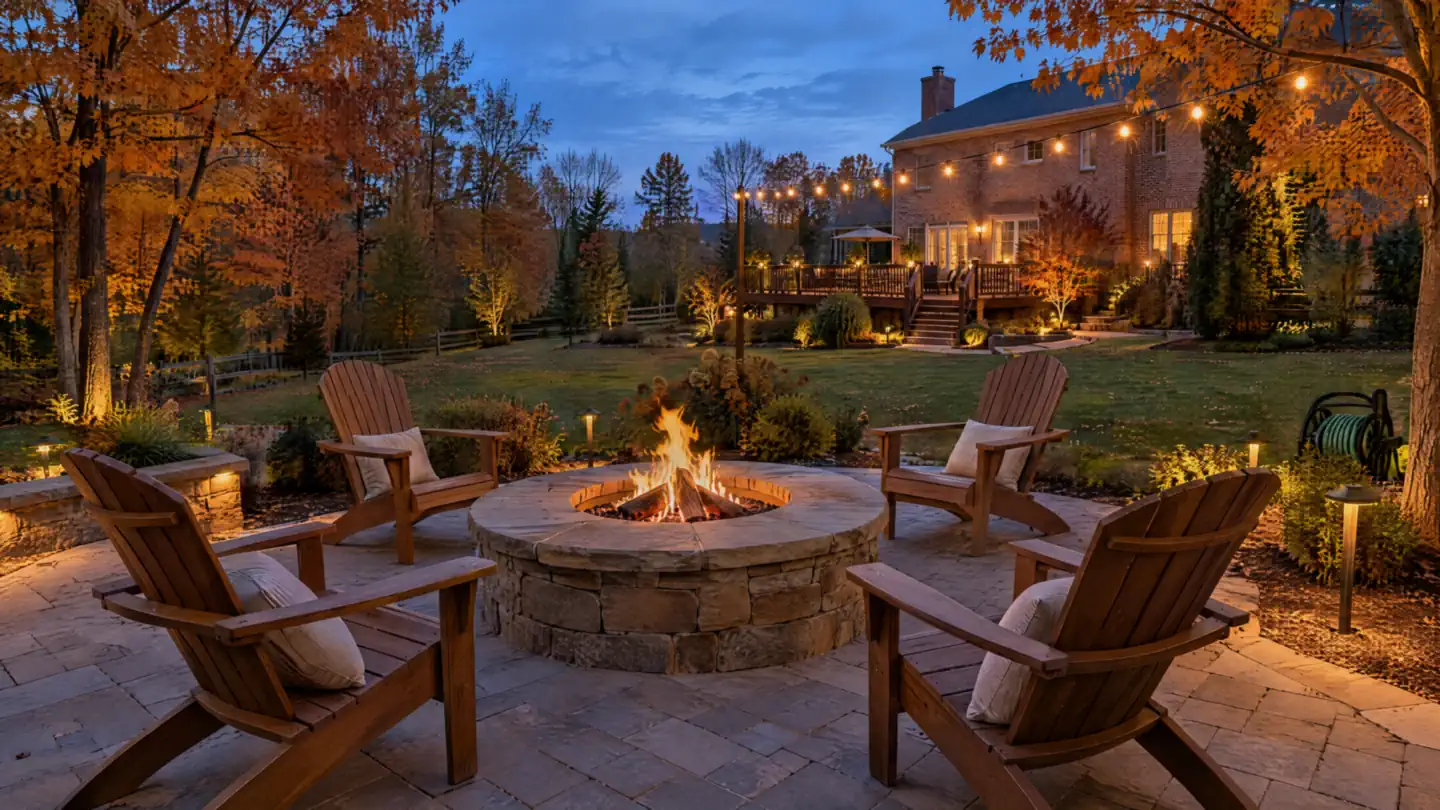
Are Fire Pits Legal in Virginia? How Fire Pit Rules in Northern Virginia Work
Are fire pits legal in Virginia? Yes, backyard fire pits are legal in Virginia, but the Commonwealth leaves most fire pit rules to local fire marshals. Northern Virginia jurisdictions enforce the Virginia Statewide Fire Prevention Code, sometimes with local amendments, so the same basic ideas show up everywhere: size limits for open fires, setbacks from buildings, clean fuel only, constant attendance, and a way to put the fire out.
The trick is that the code treats three kinds of fire differently:
- Recreational fires: an open fire, roughly 3 feet across and 2 feet high or smaller, used for pleasure, cooking, or warmth.
- Portable outdoor fireplaces: chimineas, steel fire pits, fire bowls, and similar solid-fuel devices made for outdoor use.
- Bonfires: anything larger than a recreational fire, which requires a permit from the fire marshal.
Gas fire pits are their own category, which is one reason the gas vs wood fire pit decision matters so much here. They do not burn solid fuel, so the wood-burning rules focus less on them, but the gas line itself falls under building and mechanical permitting.
Fire Pit Rules in Northern Virginia, County by County
Here is what the official sources say about fire pit rules in Northern Virginia for each jurisdiction we serve. Always confirm with your local fire marshal before you build, because rules can change and some towns add their own.
Fairfax County fire pit rules
The core of Fairfax County fire pit rules sits in the county’s Recreational Fires Guidelines which apply in the county and the towns of Clifton, Herndon, and Vienna. A recreational fire may not exceed 3 feet in diameter or 2 feet in height, needs no permit, and must be at least 25 feet from any structure or combustible material. Burn only dry, seasoned firewood, never trash or treated wood, attend the fire until it is completely out, and keep a 4-A rated extinguisher or a charged garden hose ready.
Portable devices follow the county’s Portable Fireplaces guideline. Chimineas, fire pits, and similar devices must be used according to the manufacturer’s instructions and at least 15 feet from structures or combustible material, but devices used at one- and two-family dwellings are exempt from that distance. The county still strongly encourages 15 feet, and it strongly discourages using them on or under combustible decks. Burn only properly split hardwood dried 6 to 12 months, and dispose of ashes in a covered metal can. Questions about Fairfax County fire pit rules go to the Fire Inspections Branch at 703-246-4849.
Arlington County fire pit rules
Arlington’s open burning and warming fire rules allow warming fires with dry, seasoned wood in an approved container, such as a chiminea, fire pit, or fire bowl, as long as someone attends the fire and a way to put it out is on hand. Recreational fires need 25 feet of clearance from structures and combustibles, and portable outdoor fireplaces follow the 15 foot rule, with the same exception for one- and two-family dwellings. Burning leaves and yard waste is prohibited, and bonfires need a permit and 50 feet of clearance.
Arlington’s fire pit rules are stricter for multifamily buildings. Apartment and condo balconies are off limits for open-flame devices unless the building is sprinklered. The Fire Prevention Office is at 703-228-4644.
Loudoun County fire pit rules
Loudoun’s Open Burning page treats portable fireplaces and chimineas as something other than open burning. They should not be operated within 15 feet of a structure or combustible material, and single-family homes are exempt from that distance but encouraged to follow it. Permanent fire pits should sit at least 15 feet from structures, may not exceed 36 inches in diameter, since a 42 inch pit is treated as open burning, and need a wire mesh cover, an extinguishing method, constant attendance, and clean seasoned wood. Using fire pits within 15 feet of apartments, condos, or businesses is unlawful.
Open burning is always prohibited in subdivisions, which is one more reason to keep your pit small and compliant under Loudoun’s fire pit rules. Call the Fire Marshal’s Office at 703-737-8600 with questions, and check town rules if you live in Leesburg, Purcellville, or another incorporated town.
Prince William County fire pit rules
Prince William County’s fire pit rules start with the Fire Marshal’s Office, which says recreational fires, up to 3 feet across and 2 feet high and used for pleasure, cooking, or warmth, do not require a permit, and that bonfires do. The county also notes that construction of permanent barbecue structures and fire pits requires approval from the Zoning Department, so a built-in pit needs paperwork before the first stone goes down. Most open burning is not permitted from May through September, though recreational fires are an exception. Call the Fire Marshal’s Office at 703-792-6360 to confirm how your setup is classified.
Alexandria and the rest of the region
The City of Alexandria enforces the Virginia Statewide Fire Prevention Code through its own Fire Marshal’s Office. Because the city has dense rowhouse and condo neighborhoods, confirm placement and fuel rules with the city before you build or buy, and expect multifamily buildings to prohibit balcony fire pits. The same advice applies in the cities of Fairfax, Falls Church, and Manassas.
| Jurisdiction | Open recreational fire | Portable fire pit or chiminea | Permanent built-in pit | Gas line |
|---|---|---|---|---|
| Fairfax County | Max 3 ft wide, 2 ft high, 25 ft setback, no permit | 15 ft setback, single-family exempt but encouraged | Follow setbacks and manufacturer rules | Permits required |
| Arlington County | 25 ft setback, dry seasoned wood only | 15 ft setback, one and two family homes exempt | Approved container, attended | Permits required |
| Loudoun County | Open burning banned in subdivisions | 15 ft setback, single-family exempt but encouraged | Max 36 in wide, spark screen, 15 ft recommended | Permits required |
| Prince William County | Max 3 ft wide, 2 ft high, no permit | Confirm classification with Fire Marshal | Zoning approval required | Permits required |
| City of Alexandria | Confirm with Fire Marshal | Confirm with Fire Marshal | Confirm with Fire Marshal | Permits required |
Want a faster gut check on the fire pit rules for your address? Our free permit and HOA checker flags what usually applies, and our guide to patio, deck, and retaining wall permits in Northern Virginia covers the rest of the backyard.
Burn Bans, HOAs, and the Fire Pit Rules in Northern Virginia People Forget
Even a perfectly placed pit can be off limits on the wrong day, and these are the details that trip people up most.
- Burn bans: fire marshals and the Governor can restrict outdoor burning during dry, windy weather. Arlington’s guidance notes that a ban can include permanent and portable fireplaces and pits. After the long 2026 drought that left so many of us dealing with a drought damaged lawn, take those alerts seriously.
- The spring 4 p.m. burn law: from February 15 through April 30, Virginia restricts burning brush, leaves, and debris near woodland to the hours of 4 p.m. to midnight. Spring is wildfire season here, so be extra cautious with any fire near trees.
- HOAs: many Northern Virginia HOAs, especially master-planned communities in Loudoun and Prince William, require design approval, and some restrict or ban wood-burning fire pits outright. Gas is often the HOA-friendly path.
- Smoke and neighbors: you may not maintain a fire that endangers another person’s property, and fire marshals can order a smoky fire put out. Burning leaves is never the move. Rake them for leaf collection in Northern Virginia instead.
- Ashes: cool and dampen ashes, then store them in a covered metal can away from decks, porches, and garages. Hot ashes in a plastic bin start real fires every winter.
Gas vs Wood Fire Pit: Which Is Right for Your Backyard?
Now the fun part: the gas vs wood fire pit debate. Once you understand the fire pit rules in Northern Virginia, picking a fuel gets a lot easier. Both options make great evenings. They just make different kinds of evenings.
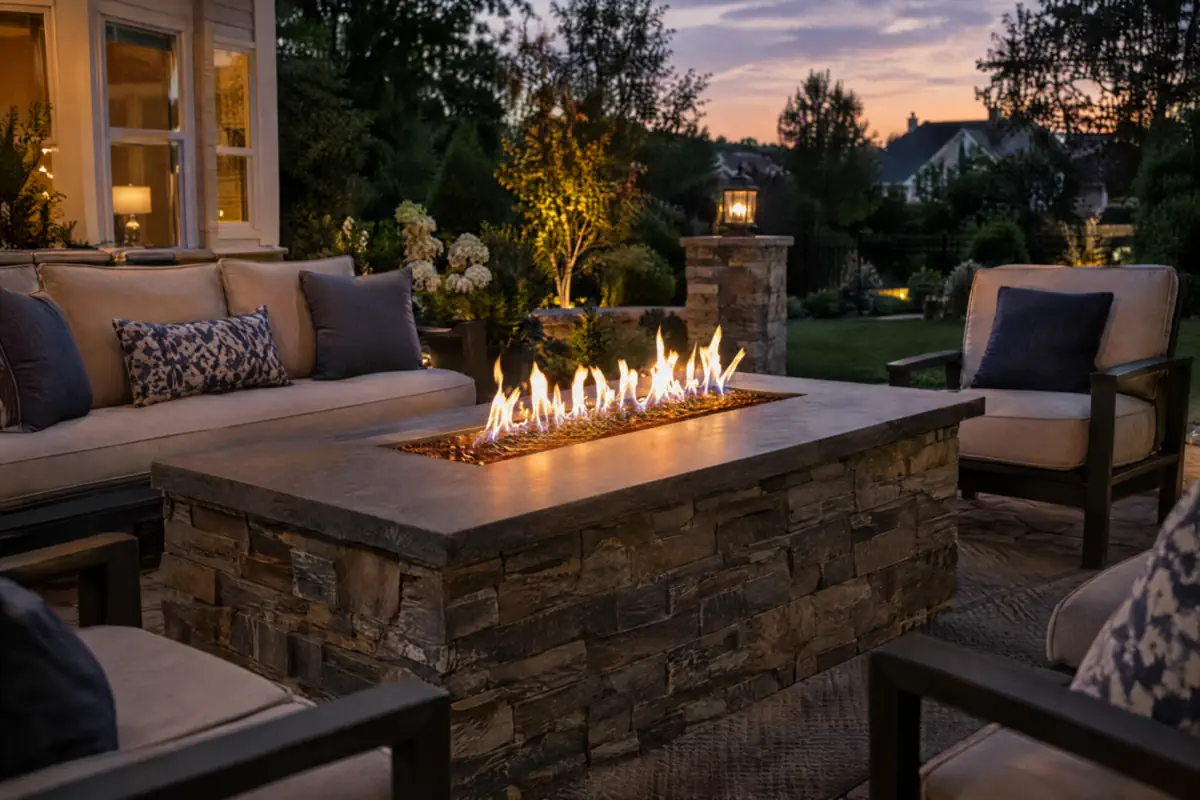
Wood-burning fire pits: the real campfire experience
- Pros: crackle, smell, real heat, s’mores done properly, and a lower starting price.
- Cons: smoke that drifts toward the neighbors, sparks, ash cleanup, a firewood pile to manage, setback requirements, and burn ban exposure.
- Best for: larger lots with room for the 25 foot recreational fire setback, and households that want a true campfire.
Gas fire pits and fire tables: instant, clean, and HOA friendly
- Pros: flip a switch and go, no smoke, no sparks, no ash, adjustable flame, and easier placement near seating and covered patios when installed to the manufacturer’s clearances.
- Cons: higher upfront cost, a permitted gas line or a propane tank to manage, and less radiant heat than a big wood fire.
- Best for: tighter lots, townhouses, HOA communities, and anyone who wants a fire on a Tuesday without hauling logs.
Natural gas vs propane
Natural gas means a permanent line from your house and never running out mid-conversation. Propane avoids trenching but needs a tank and refills. As a rough guide, a standard 20 pound propane tank holds around 430,000 BTUs, so a burner rated at 50,000 BTUs on high runs roughly eight to nine hours per tank. Check your burner’s rating to estimate your own run time.
| Factor | Wood fire pit | Gas fire pit |
|---|---|---|
| Ambience | Crackle, smoke, real campfire | Clean flame, no smoke |
| Heat | Strong radiant heat | Moderate, adjustable |
| Setbacks | Strictest rules apply | Follow manufacturer clearances |
| Permits | Usually none for small pits, zoning for built-ins in Prince William | Gas line permits required |
| Burn bans | Often restricted | May also be restricted, check alerts |
| HOA approval | Sometimes restricted | Usually easier |
| Lawn Theory starting price | From $3,500 built | From $6,500 built |
Still torn on gas vs wood fire pit? Our free fire feature selector asks a few questions about your yard and habits and points you to the best fit.
What Drives Backyard Fire Pit Cost in Northern Virginia
Lawn Theory builds wood-burning fire pits from $3,500, gas fire pits from $6,500, and full outdoor fireplaces from $18,000. Where your fire pit cost in Northern Virginia lands depends on a handful of real cost drivers.
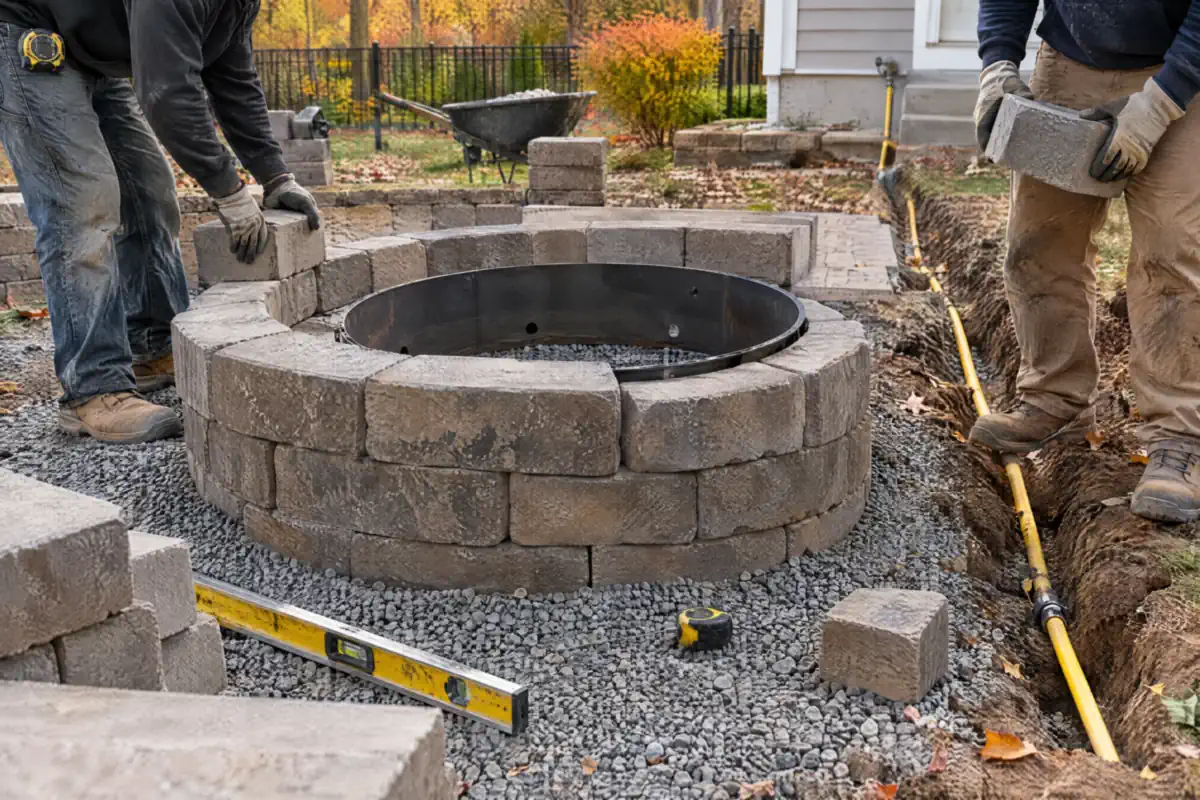
- Size and design: a simple paver ring costs far less than a raised fire table with a seat-height ledge.
- Materials: natural stone and cultured stone veneers cost more than block, and premium caps and fire glass add up.
- Base and footing: clay soil that heaves in winter needs a properly compacted base or reinforced footing.
- Gas line length and trenching: the farther the pit sits from your meter, the more line, trenching, and restoration you pay for.
- Permits and inspections: gas, mechanical, and structural permits add time and fees, and HOA review adds lead time.
- The patio around it: a pit dropped into lawn is cheap, but most people want a proper patio. Our guide to paver patio cost factors in Northern Virginia and the patio cost calculator help you budget that piece.
- Seating and lighting: built-in retaining and seating walls and outdoor lighting installation turn a fire pit into a full outdoor room.
- Access: tight side yards and steep lots mean more hand labor.
Most single-feature projects take one to three weeks to build once permits clear, so plan four to eight weeks ahead of the season you want to use it. Planning a bigger backyard upgrade? Fire pits pair naturally with patios and hardscapes, outdoor kitchens, and pergolas and pavilions. Our article on how to design a functional outdoor living space shows how to lay it all out so people actually use it.
Fire Pit Safety Checklist Beyond the Fire Pit Rules in Northern Virginia
Fire pit rules set the minimum. Here is the fuller safety list we walk through with every client:
- Place the pit on a noncombustible surface like pavers, stone, or gravel, never on a wood deck.
- Keep it clear of overhanging branches, fences, sheds, and the house.
- Check wind direction before lighting, and skip windy nights.
- Burn only dry, seasoned hardwood. No trash, no treated lumber, no leaves.
- Never use gasoline or lighter fluid to start or revive a wood fire.
- Keep a hose or 4-A extinguisher within reach every time.
- Use a spark screen on wood pits, and keep kids and pets back.
- Drown, stir, and feel for heat before you head inside. Embers that look dead are often not.
- Store cooled ashes in a covered metal can, away from the house.
Frequently Asked Questions
What are the fire pit rules in Northern Virginia, and do I need a permit?
A small wood-burning recreational fire generally does not need a fire permit in Fairfax, Arlington, or Prince William counties. Bonfires do. Any fire feature with a gas line or chimney requires building or mechanical permits, and Prince William County requires zoning approval for permanent fire pits.
How far does a fire pit need to be from my house?
In Fairfax and Arlington counties, an open recreational fire must be at least 25 feet from structures and combustible material. Portable fire pits and chimineas follow a 15 foot rule, with one- and two-family homes exempt, though officials still encourage 15 feet. Loudoun recommends 15 feet for permanent pits.
Can I use a fire pit on my deck?
It is strongly discouraged. Fairfax County discourages operating fire pits on or under combustible decks, and most manufacturers prohibit it. On apartment and condo balconies, fire pits are generally prohibited. If you love your deck, put the fire pit on a paver pad nearby.
Do fire pit rules allow a gas fire pit during a burn ban?
It depends on the ban. Some burn bans restrict all outdoor fires, including permanent and portable fireplaces and pits. Check your county fire marshal’s announcement before lighting any fire during dry, windy conditions.
Can my HOA be stricter than county fire pit rules?
Yes. HOA covenants can go beyond county fire pit rules. Many Northern Virginia HOAs require design approval for fire features, and some restrict or ban wood-burning fire pits. Gas fire pits are often easier to get approved. Always check your community’s architectural guidelines before buying or building.
How much does a backyard fire pit cost in Northern Virginia?
Lawn Theory builds wood-burning fire pits from $3,500, gas fire pits from $6,500, and outdoor fireplaces from $18,000. Size, stone, gas line distance, permits, and the patio around the pit drive the final fire pit cost in Northern Virginia.
Build a Fire Pit That Is Legal, Safe, and Actually Used
The best fire pit rules in Northern Virginia advice comes down to this: know your county, respect the setbacks, choose the fuel that fits your lot and your HOA, and build on a proper base so the pit still looks great in ten winters. Get those right and your backyard becomes the place everyone wants to be from October through March.
Lawn Theory handles design, permits, HOA submissions, gas lines, and stonework from start to finish, and we serve Fairfax County, Loudoun County, Prince William County, Arlington, and Alexandria. Military members, veterans, and first responders can ask about our Hero Discount. Get your free estimate or call (703) 650-5655, and we will send a written, line-item quote within 24 to 48 hours. S’mores are on you.
Keep Reading: Outdoor Building
 Outdoor Building
Landscape Lighting Design for Northern Virginia Homes: A Practical Planning Guide
A practical planning guide to landscape lighting design for Northern Virginia homes: the three layers, nine core techniques, low-voltage system design, color…
 Outdoor Building
Do You Need a Permit for a Patio, Deck, or Retaining Wall in Northern Virginia?
Do you need a permit for a patio, deck, or retaining wall in Northern Virginia? Verified Fairfax, Loudoun, and Prince William thresholds…
 Outdoor Building
Paver Patio Cost Factors in Northern Virginia: What Actually Moves the Number
Paver patio cost in Northern Virginia is driven by size, base engineering, material tier, and site access. Here is what raises each…
Want this handled by the crew that wrote the guide?
Veteran-owned. Licensed & insured. Free walkthroughs across Northern Virginia — quotes in 24–48 hours.
Get Your Free Estimate