
Spring Pressure Washing Checklist for Northern Virginia Homeowners
Spring in Northern Virginia is a time of renewal, but it also reveals the toll that winter has taken on your home’s exterior. Months of freezing temperatures, ice, road salt, and dormant organic growth leave behind a layer of grime that diminishes your property’s curb appeal and, if left untreated, can cause lasting damage to siding, concrete, wood, and roofing materials. For homeowners across Loudoun County, Fairfax County, Prince William County, Arlington, and Alexandria, spring pressure washing is not just a cosmetic upgrade it is essential preventive maintenance that protects your biggest investment.
This comprehensive spring pressure washing checklist covers every exterior surface on your property, the optimal timing for each service, the specific challenges Northern Virginia’s Potomac basin climate creates, cost expectations, and how to decide between DIY and professional service. Whether you own a new construction home in Ashburn, a 1960s colonial in Vienna, a townhouse in Arlington, or a historic brick rowhouse in Old Town Alexandria, this guide will help you plan your spring exterior cleaning for maximum impact and value.
As a veteran-owned pressure washing and exterior cleaning company based in Loudoun County, Lawn Theory has cleaned thousands of Northern Virginia homes. We know the region’s unique climate challenges, home styles, and HOA requirements inside and out. Use this guide to build your spring cleaning plan, and contact us at (703) 650-5655 for a free estimate on any service.
Why Spring Is the Ideal Time for Pressure Washing in Northern Virginia
Northern Virginia’s climate creates a perfect storm for exterior surface deterioration. The region sits in USDA Hardiness Zone 7a, experiencing humid summers with temperatures regularly exceeding 90°F, cold winters with multiple freeze-thaw cycles, and spring pollen seasons that rank among the worst in the nation. This combination means your home’s exterior surfaces are under constant assault from biological growth, chemical exposure, and physical weathering.
During winter, several processes damage your exterior surfaces. Freeze-thaw cycles cause concrete to expand and contract, opening micro-cracks that trap dirt and moisture. Road salt tracked onto driveways and garage floors eats into concrete surfaces. Mold, mildew, and algae that went dormant in cold temperatures survived on your siding, roof, and wood surfaces — waiting for spring warmth and moisture to explode in growth. Tree sap, fallen leaves, and organic debris accumulated in gutters, on decks, and against siding all winter.
When spring arrives in Northern Virginia — typically mid-March through April — temperatures rise above 50°F consistently, activating dormant biological growth. The infamous Northern Virginia pollen season begins, coating every outdoor surface in yellow-green dust. Spring rains wash accumulated pollutants down surfaces and into concrete pores. This is the critical window for pressure washing: after the last hard freeze (typically mid-March in our region) but before summer’s heat accelerates mold and algae reproduction.

Addressing these issues in spring provides several advantages. First, you remove winter damage before it becomes permanent. Road salt left on concrete through summer becomes nearly impossible to extract. Mold that is actively growing is easier to kill than established colonies. Second, spring cleaning prepares your outdoor living spaces — decks, patios, and pool areas — for the season when you use them most. Third, your home looks its best during the real estate season, when curb appeal matters most for property values. Finally, spring cleaning provides a clean baseline that professional treatments can maintain through the rest of the year.
For homeowners in Loudoun County’s HOA communities like Brambleton, Ashburn Village, and Broadlands, spring pressure washing often aligns with community maintenance schedules and inspection periods. Fairfax County homeowners in established neighborhoods like Burke Centre, McLean, and Vienna face mature tree canopies that deposit extraordinary amounts of pollen and organic matter. Prince William County properties, particularly in Gainesville, Bristow, and Woodbridge, contend with the region’s characteristic red clay soil that stains concrete during spring rains. Arlington and Alexandria homeowners must navigate historic preservation considerations while still maintaining clean exteriors.
House Washing: Removing Winter Buildup from Your Siding
Your home’s siding is the largest exterior surface and the most visible indicator of overall property maintenance. After a Northern Virginia winter, siding surfaces typically show a combination of mold and mildew (appearing as dark spots or streaks), pollen accumulation (yellow-green film), pollution deposits (gray film from I-66, I-495, and Route 7 traffic), cobwebs and insect residue, and oxidation on aluminum and vinyl surfaces.
Professional house washing uses soft-wash technology — low pressure (under 500 PSI) combined with biodegradable cleaning solutions that kill organic growth at the cellular level. This is categorically different from high-pressure washing, which can crack vinyl siding, force water behind wall systems, damage mortar joints on brick, strip paint, and void manufacturer warranties.
The right approach depends on your siding material. Vinyl siding, the most common material in newer Loudoun and Prince William County developments, responds excellently to soft washing. The cleaning solution kills mold and mildew, while low-pressure rinsing removes debris without risk. Brick homes, prevalent in Fairfax County neighborhoods like Vienna, Burke, and McLean, require attention to mortar joints and may need specialized brick cleaning solutions to address efflorescence (white mineral deposits). Hardie board (fiber cement), popular in mid-range and upscale new construction across all five counties, is durable but porous and benefits from soft washing to prevent stain absorption. Historic painted wood siding in Arlington’s Lyon Village and Alexandria’s Old Town requires the gentlest approach — very low pressure and pH-neutral solutions to protect both paint and aged wood.
Professional house washing in Northern Virginia starts at $299 — final price depends on home size and siding type. For most homes, the investment pays for itself in prevented damage and maintained property value. Lawn Theory’s house washing service includes a full exterior assessment, landscape protection, custom cleaning solution application, low-pressure rinse, and final walkthrough inspection.
Internal link opportunities: Link to your main house washing service page (/professional-house-washing-services/) and each county-specific location page.
Driveway and Walkway Cleaning: Eliminating Salt, Oil, and Algae
Driveways and walkways are your property’s welcome mat, and after a Northern Virginia winter, they typically look anything but welcoming. The primary culprits are road salt residue, which leaves white crystalline deposits and accelerates concrete deterioration through chemical attack on the calcium hydroxide in concrete. Oil and transmission fluid leaks from vehicles parked during cold months leave dark stains that become permanent if not addressed in spring. Red clay soil, particularly in Prince William County and western Loudoun County, splashes onto concrete during rain, leaving reddish-brown discoloration. Algae and moss, dormant during winter, begin visible growth in spring’s warming temperatures, creating slippery hazards on walkways.
The spring cleaning approach for driveways and walkways involves several steps. First, a pre-treatment phase where targeted degreasing agents are applied to oil stains and specialized solutions address salt residue and organic growth. Next, commercial surface cleaners provide even, streak-free cleaning at appropriate PSI — typically 2,500-3,000 PSI for concrete driveways, lower for pavers and decorative surfaces. Edge detail work addresses growth along landscape borders and expansion joints. Finally, an optional sealing treatment protects the cleaned surface for 3-5 years.
For Northern Virginia homeowners considering driveway sealing, spring is the optimal time. Sealant requires surface temperatures above 50°F and 24-48 hours without rain to cure properly. Applying sealant to a freshly cleaned surface ensures maximum adhesion and protection. In our experience serving Loudoun County, Fairfax County, and Prince William County homeowners, sealed driveways resist staining dramatically better and last 3-5 years longer than unsealed surfaces.
Professional driveway cleaning costs start at $199 — final price depends on driveway size and stain severity. Sealing adds $200+ — final price depends on square footage. For properties with long driveways — common in Great Falls, Hamilton, and rural Loudoun County — pricing scales with square footage from $0.20 per square foot.
Deck and Patio Restoration: Preparing for Outdoor Living Season
For Northern Virginia homeowners, decks and patios are extensions of living space from April through October. Spring cleaning these surfaces is not optional — it is the difference between a welcoming outdoor living area and a dingy, potentially hazardous space.
Wood decks in Northern Virginia face particular challenges. The region’s humidity promotes mold, mildew, and algae growth in the wood grain. UV exposure during summer months causes graying and surface deterioration. Freeze-thaw cycles open the wood grain, allowing moisture penetration and accelerating decay. After winter, wood decks typically show gray weathering, dark mold spots (especially on the underside of railings and between deck boards), and raised wood fibers.
Professional deck cleaning involves low-pressure washing with wood-specific cleaning solutions that brighten the wood grain without causing damage. After cleaning, a wood brightener restores the wood’s natural pH balance and prepares it for staining or sealing. For homeowners in Loudoun County communities like Willowsford, Stone Ridge, and Belmont Country Club, where large elevated decks are standard features, professional cleaning is strongly recommended over DIY methods that risk wood damage.
Composite and Trex decking, increasingly popular in newer Northern Virginia developments, require different treatment. These materials should never be cleaned with high pressure or chlorine-based solutions. Professional soft washing with composite-safe cleaners removes mold and staining without voiding manufacturer warranties or causing surface damage.
Patios present their own spring cleaning needs. Concrete patios develop algae in shaded areas, particularly common in mature-tree neighborhoods across Fairfax County. Paver patios in Prince William County and Loudoun County communities may show joint sand erosion and weed growth that needs addressing. Natural stone patios — flagstone, bluestone, and travertine — found in upscale Arlington and Alexandria properties require pH-neutral cleaning to avoid etching.
Pool deck cleaning deserves special attention for safety. Algae growth on pool surrounds creates dangerous slip-and-fall conditions. Professional cleaning kills algae at the root and treats the surface to resist regrowth. For community pools in HOA neighborhoods and private pools throughout the region, spring cleaning should be completed before the pool opens in late May.
Deck cleaning starts at $250 patio cleaning from $250 — final price depends on size, material, and condition. Many homeowners save by bundling deck and patio cleaning together.
Gutter Cleaning and Brightening: Protecting Your Home from Water Damage
Gutter cleaning is perhaps the most overlooked spring maintenance task, yet one of the most important for protecting your home from water damage. Northern Virginia’s deciduous trees — primarily white oaks, red maples, tulip poplars, and sweetgums — deposit massive amounts of debris into gutter systems during fall. Winter storms add branches, ice, and shingle granules. By spring, most gutters are partially to completely clogged.
Clogged gutters cause a cascade of problems. Water overflows the gutter system, running down fascia boards and causing wood rot. Overflow water pools at the foundation, potentially causing basement leaks, foundation erosion, and soil washout. Ice dams in winter — caused by clogged gutters preventing proper drainage — can force water under roofing materials and into wall cavities. Mosquitoes breed in standing water within clogged gutters, creating health concerns.
Professional gutter cleaning includes hand removal of all debris, downspout flushing to confirm clear drainage, system testing with water flow, and inspection for damage or deterioration. Gutter brightening — cleaning the exterior faces of gutters to remove dark oxidation streaks (called “tiger stripes”) — dramatically improves curb appeal and is included in premium gutter cleaning packages.
Spring gutter cleaning is ideally performed after pollen season ends (typically late April in Northern Virginia) but before summer thunderstorm season begins. This timing ensures your gutters are clear when they are needed most — during summer’s intense rainfall events.
For homes in heavily wooded areas — Burke Centre, Mantua, and Lake Braddock in Fairfax County; Lake Ridge and Montclair in Prince William County; Donaldson Run and Glencarlyn in Arlington — gutter cleaning is typically needed 2-3 times per year, with spring being the most critical cleaning.
Professional gutter cleaning in Northern Virginia starts at $175 — final price depends on home size, gutter linear footage, and accessibility. Gutter brightening adds $100+. The investment prevents thousands of dollars in potential water damage repairs.
Roof Cleaning: Addressing Winter Algae and Moss Growth
Roof cleaning is often the highest-return spring maintenance investment a Northern Virginia homeowner can make, yet many homeowners do not realize their roof needs professional attention until dark streaks and discoloration are highly visible. Those dark streaks — caused by Gloeocapsa magma, a blue-green algae that feeds on the limestone filler in asphalt shingles — are not just cosmetic. The algae literally consumes your roofing material, reducing shingle lifespan by up to 10 years and decreasing your home’s energy efficiency by reducing the shingles’ ability to reflect UV radiation.
Northern Virginia’s humid climate creates ideal conditions for Gloeocapsa magma colonization. The algae thrives at temperatures between 60-110°F with regular moisture exposure — exactly the conditions from May through October in the Potomac basin. Moss and lichen, which require cooler, wetter conditions, are more common on north-facing roof sections and in heavily shaded areas throughout the region.
Professional roof cleaning using soft-wash methods is the only manufacturer-approved approach for removing algae, moss, and lichen from roofing materials. High-pressure washing — which some uninformed contractors offer — strips protective granules from asphalt shingles, cracks tiles, and voids manufacturer warranties from GAF, Owens Corning, CertainTeed, and others.
Spring is an excellent time for roof cleaning in Northern Virginia. The algae is emerging from winter dormancy and is most vulnerable to treatment. Temperatures are comfortable for technicians to work safely. The cleaning provides protection heading into summer’s peak growth season. And the improved appearance enhances curb appeal during the spring real estate market.
Roof cleaning costs in Northern Virginia start at $450 — final price depends on roof size, pitch, and material type. For homes with cedar shake (common in McLean and Great Falls), slate (found in historic Alexandria and Arlington properties), or complex multi-level roof systems, costs may be higher due to the specialized care required.
Window Cleaning: Maximizing Natural Light After Winter
After a Northern Virginia winter, exterior windows accumulate a layered film of pollution, pollen, mineral deposits, and organic residue that significantly reduces natural light transmission. Clean windows can increase natural light inside your home by up to 30%, reducing energy costs and improving your living environment.
Professional exterior window cleaning addresses several specific issues. Road grime from nearby highways (I-66, I-495, Route 7, Route 28) deposits a fine particulate film on glass surfaces. Pollen — the Potomac region produces some of the highest pollen counts in the nation — coats windows in a yellow-green film each spring. Hard water deposits from sprinkler overspray leave mineral etching that, if not treated promptly, can permanently damage glass. Construction dust from ongoing development throughout the region adds another layer of surface contamination.
Professional window cleaning uses a combination of techniques depending on the home. Pure water-fed pole systems allow ground-level cleaning of upper-story windows without ladders. Traditional squeegee technique provides streak-free results on accessible windows. Specialized mineral deposit removers address hard water staining without scratching glass. Screen cleaning and frame detailing complete the service.
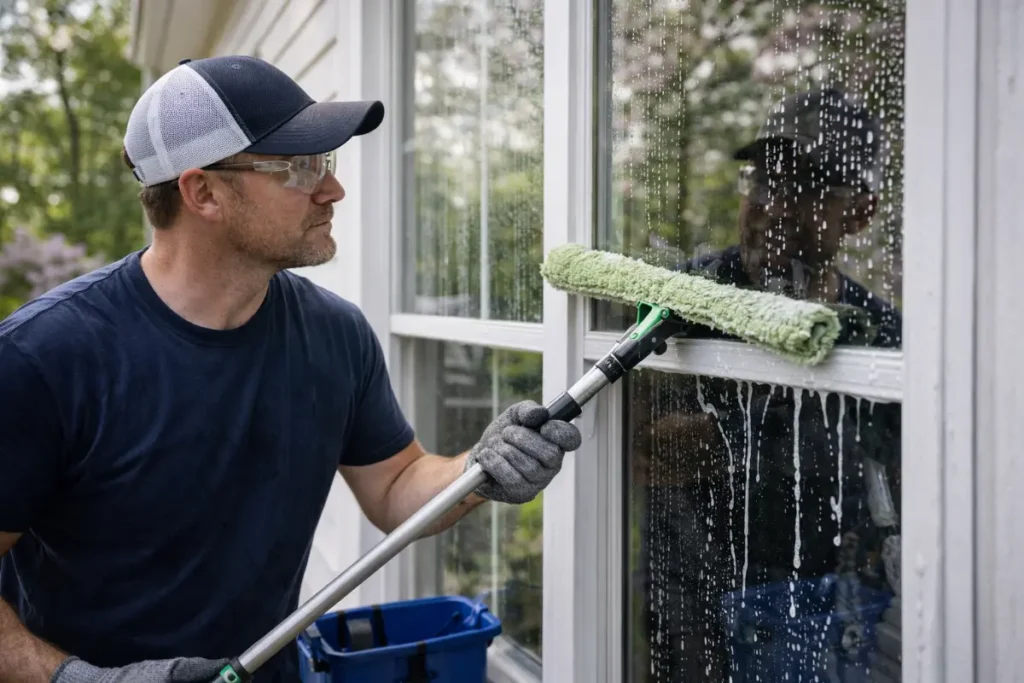
Exterior window cleaning in Northern Virginia starts at $10 per window, with most homes starting at $250 for a complete exterior cleaning. Spring cleaning is ideally performed after pollen season peaks but before summer entertaining season. Many homeowners combine window cleaning with house washing for the best value and overall curb appeal impact. See us on Instagram & Linkedin.
FREQUENTLY ASKED QUESTIONS
When should I start spring pressure washing in Northern Virginia?
The ideal time to begin spring pressure washing in Northern Virginia is after the last hard freeze — typically mid-March — and before summer heat sets in. For most exterior surfaces, April through May is the sweet spot. However, for pollen-sensitive surfaces like windows and vehicles, you may want to wait until late April or early May after peak pollen season ends. Lawn Theory recommends scheduling house washing and driveway cleaning for April, deck and patio cleaning for late April through May, and gutter cleaning for late April.
What order should I pressure wash my home’s exterior?
Work from the top down: start with roof cleaning (if needed), then house washing/siding, then gutters, then windows, then elevated surfaces like decks, and finally ground-level surfaces like driveways, patios, and walkways. This prevents dirty water from upper surfaces from re-staining lower surfaces that have already been cleaned. Lawn Theory’s full exterior cleaning service follows this optimal sequence automatically.
How much does a complete spring pressure washing cost in Northern Virginia?
A complete spring pressure washing for a typical Northern Virginia home — including house washing, driveway cleaning, deck cleaning, and gutter cleaning — starts at $900 — final price depends on home size and property scope. Individual services range from $150 (sidewalk cleaning) to $750 (roof cleaning). Many homeowners prioritize 2-3 services per spring and rotate through the full list over multiple years. Lawn Theory offers bundled pricing that saves 10-15% versus individual service pricing.
Can I pressure wash my own home or should I hire a professional?
While DIY pressure washing is possible for simple flat surfaces like driveways, professional service is strongly recommended for house siding, roofs, decks, and windows. The risks of DIY include siding damage from excessive pressure, water intrusion behind walls, wood grain damage on decks, personal injury from ladder use, and voided manufacturer warranties. Professional equipment, cleaning solutions, and trained technique deliver dramatically better results with zero risk of property damage.
Does spring pressure washing help with allergies?
Yes. Removing pollen, mold, and mildew from your home’s exterior surfaces reduces the allergen load around your property. Clean gutters prevent mold-breeding standing water. Clean windows allow you to keep windows open without bringing exterior contaminants inside. Many Northern Virginia residents with seasonal allergies report noticeable improvement after professional exterior cleaning.
Is pressure washing safe for my landscaping?
Professional pressure washing companies like Lawn Theory use biodegradable, plant-safe cleaning solutions and protect landscaping during the cleaning process. We pre-wet plants, cover sensitive areas, and rinse thoroughly after cleaning. Our eco-friendly solutions break down naturally and pose no threat to established landscaping, pets, or local waterways.
How long do spring pressure washing results last?
Results vary by surface and conditions. House washing typically lasts 12-18 months. Sealed driveways stay clean for 2-3 years. Deck cleaning with stain/seal treatment lasts 2-3 years. Gutter cleaning results last 3-6 months depending on tree coverage. Roof cleaning treatments can last 2-4 years. Northern Virginia’s humid climate means surfaces get dirty faster than in drier regions, making regular maintenance important.
Call (703) 650-5655 now or request a free estimate today.
Keep Reading: Pressure Washing
 Pressure Washing
 How Much Does Pressure Washing Cost in Northern Virginia? (2026 Homeowner Guide)
Pressure washing cost in Northern Virginia is set by square footage, surface type, buildup and access, not a flat rate. Here is…
 Pressure Washing
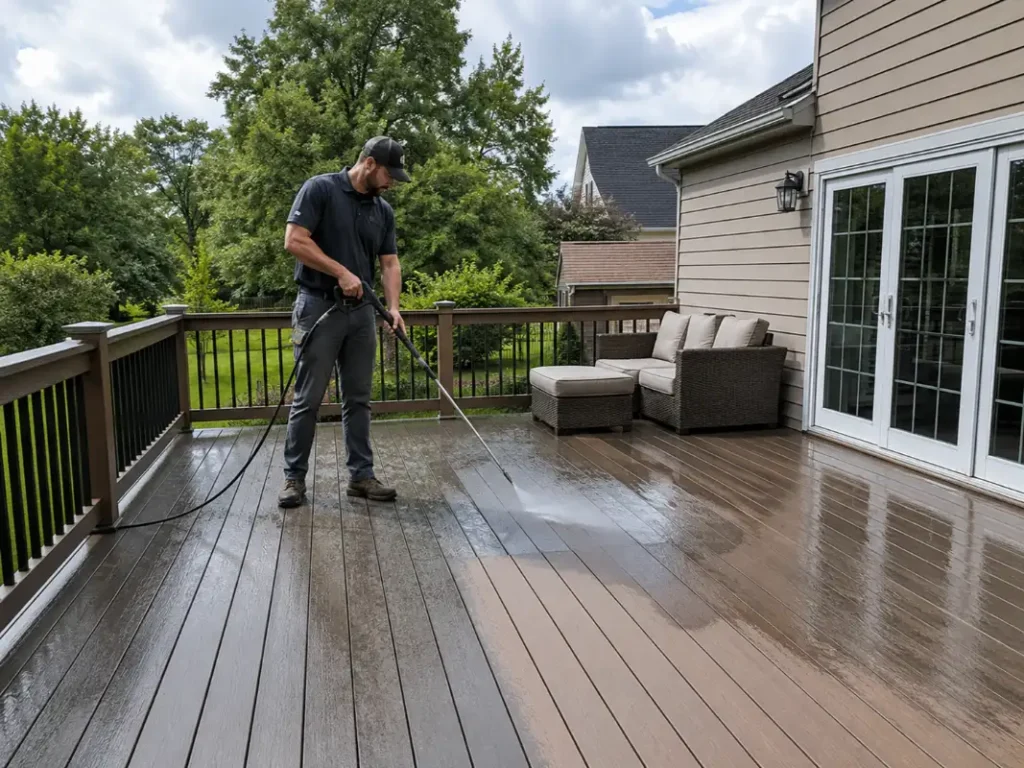
 Trex Composite Deck Cleaning in Northern Virginia: Why the Method Totally Changes Compared to Wood
Picture this: your neighbor hires a pressure washing company to clean their beautiful new Trex Transcend deck in Brambleton. The crew shows…
 Pressure Washing
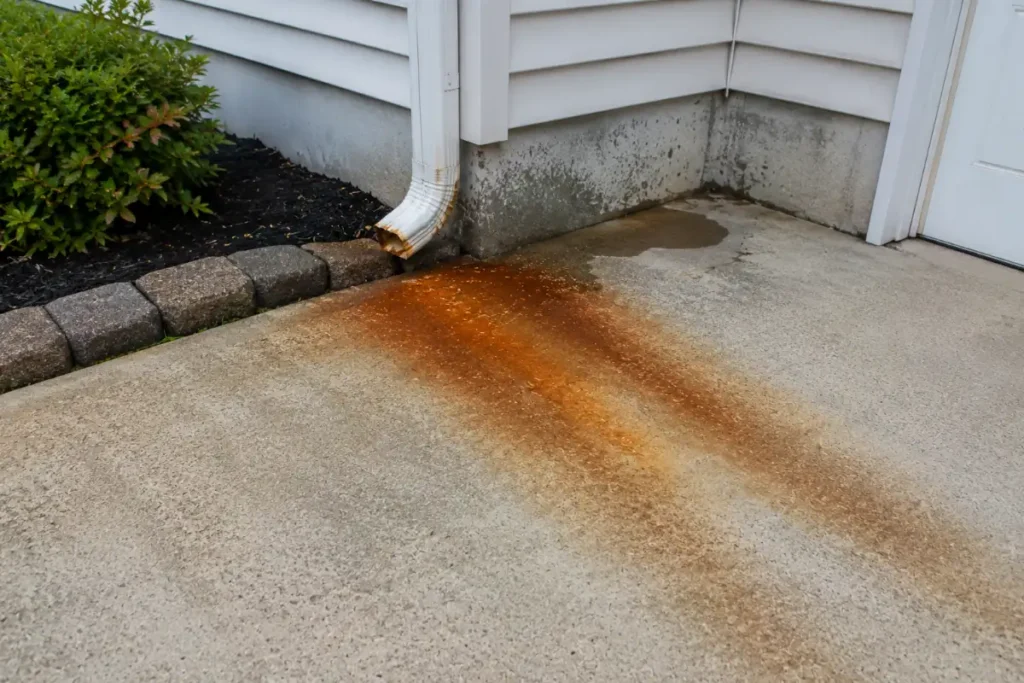
 Sprinkler Rust Stains on Your Northern Virginia Property: Why They Happen and How to Actually Fix Them
You designed your irrigation system to keep your lawn green and your landscaping thriving. Nobody told you it would also paint your…
Want this handled by the crew that wrote the guide?
Veteran-owned. Licensed & insured. Free walkthroughs across Northern Virginia — quotes in 24–48 hours.
Get Your Free Estimate