
How to Prepare Your Deck for Summer in Northern Virginia: The Complete Cleaning and Restoration Guide
As spring arrives in Northern Virginia, your deck emerges from winter dormancy looking decidedly worse for wear. Months of freezing temperatures, snow weight, moisture accumulation, and organic growth have taken their toll. Dark stains from mold and mildew cover the wood or composite surface. Gray weathering dulls the wood grain. Debris accumulates in corners and gaps. Your outdoor living space — which should be an inviting extension of your home looks neglected and uninviting.
Prepare Your Deck for Summer involves more than cosmetic cleaning. Proper spring restoration includes a thorough assessment for winter damage, specialized cleaning appropriate to your deck’s material, optional brightening and sealing treatments, and safety inspections of railings and stairs. This comprehensive guide walks you through the complete process, from assessment through final finishing touches.
Call (703) 650-5655 or request a free estimate today
Why Spring Deck Preparation Matters
Northern Virginia’s climate inflicts specific damage on decks during the winter-spring transition. The region’s freeze-thaw cycles create particular challenges. Water that penetrates wood during wet winter months expands as it freezes, opening the wood grain and causing checking (surface cracking) and cupping (edge-curling of deck boards). Composite decking suffers less structural damage but can develop permanent staining from winter mold growth.
Tree pollen, the heaviest in Northern Virginia during March and April, coats deck surfaces and feeds mold growth. Spring rains followed by warm sun create temperature fluctuations that accelerate organic growth. By May, when entertaining season begins, untreated decks can be hazardously slippery from algae and mold.
Your deck’s appearance directly reflects on your home’s overall curb appeal and your commitment to property maintenance. HOA communities throughout Loudoun County (Brambleton, Ashburn Village, Broadlands) and Fairfax County (Burke Centre, Reston) often require deck maintenance compliance inspections during spring months. A neglected deck can trigger HOA violations and associated fines.
Assessing Your Deck’s Condition After Winter
Before committing to any treatments, conduct a thorough deck inspection. Walk the entire surface checking for soft spots (sign of rot), raised nails or screws (frost heave from freeze-thaw cycles), splintered boards (raised wood grain from moisture exposure), and loose railings or balusters (critical safety issue). Check underneath the deck for water pooling, damaged joists, or rust on metal fasteners.
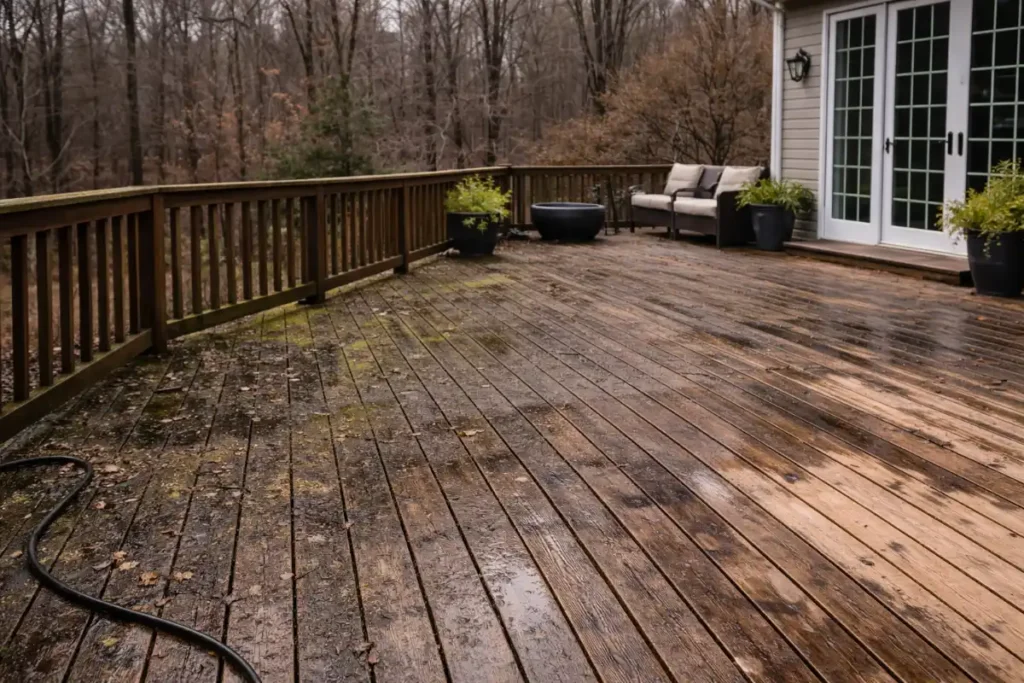
Look at the wood color. Gray weathering is normal and cosmetic. Dark spots are mold/mildew and need treatment. Soft wood (wood that dents easily with thumb pressure) indicates rot and may require board replacement — don’t delay on this as rot spreads rapidly. Pay special attention to deck boards oriented in directions that trap moisture (north-facing sections, undersides of railings, corners where water naturally collects).
For elevated decks like those common in Arlington (Donaldson Run, Glencarlyn) and older Fairfax homes, check support posts and ledger board connections. Winter water damage can compromise structural integrity, creating safety hazards that must be addressed immediately.
Wood Deck Cleaning: Step-by-Step Professional Process
Professional wood deck cleaning uses low-pressure soft washing combined with wood-specific cleaning solutions. The process begins with a pre-treatment of biodegradable cleaners that target mold and mildew at the cellular level. The solution dwells for 10-15 minutes while breaking down organic growth. Lawn Theory’s proprietary wood-cleaning solution is pH-balanced to protect wood fibers while killing mold spores and algae colonies.
After dwell time, professional-grade low-pressure rinsing removes all debris and cleaning residue. This is NOT high-pressure washing — professional deck cleaners use 500-1,500 PSI at most, far below the pressure that damages wood grain. The goal is gentle, thorough removal without splinter-causing physical force. Our technicians adjust pressure and nozzle angle based on wood type, grain direction, and damage presence.
After cleaning, many homeowners apply wood brightener to restore the wood’s natural pH balance and enhance grain appearance. Brighteners also open the wood pores, preparing the surface for stain or sealant application. The brightening process typically requires 24-48 hours of dry weather to fully cure.
For composite decks in Prince William County communities like Dominion Valley and Piedmont, wood cleaning solutions would actually harm the material. We use composite-safe brighteners specifically formulated to enhance appearance without discoloring or degrading the engineered material.
Composite and Trex Deck Cleaning
Composite and Trex decking materials require completely different treatment from wood. These products are engineered plastic-wood composites that are more durable than wood but can be damaged by aggressive cleaning methods. The plastic components can discolor permanently if exposed to bleach or oxygen-based cleaners, so material-appropriate solutions are critical.
Professional composite deck cleaning uses soft washing with composite-safe cleaning solutions (never bleach, which can discolor the material irreversibly). Water temperature should be lukewarm or cool, never hot (which can warp composite decking). Pressure should not exceed 500 PSI. Most professional cleaners recommend gentle hand-scrubbing of heavily soiled areas rather than pressure alone.
Composite decking is more stain-resistant than wood and typically requires less maintenance. However, mold and algae still grow on composite surfaces in Northern Virginia’s humid climate, so professional cleaning every 1-2 years is recommended. Many composite manufacturers recommend soft washing in their warranty documentation.
Deck Brightening and Restoration Chemistry
After cleaning, many homeowners notice the wood or composite surface is still somewhat dull. Professional deck brightening restores luster and prepares the surface for sealing or staining. Wood brighteners are mild acids (typically sodium percarbonate based) that restore the wood’s natural appearance by removing surface oxidation and opening pores.
The brightener is applied after cleaning and allowed to dwell for 5-10 minutes while the mild acid chemistry works. This process is safe for all common deck woods (pressure-treated, cedar, redwood, pine) when applied by trained professionals. A gentle rinse completes the process, revealing wood grain detail that was obscured by weathering and oxidation.
Results are typically dramatic — wood that appeared permanently stained is restored to natural appearance. The brightening process also preps the wood surface for maximum stain and sealant adhesion, extending the lifespan of protective coatings by 6-12 months.
Staining and Sealing: Choosing the Right Finish
After cleaning and brightening, you face the choice: stain, seal, or both? Sealants protect wood by waterproofing the surface and resisting UV damage. Clear sealants preserve the wood’s natural appearance. Stains (often opaque or semi-transparent) provide color while offering protection. Semi-transparent stains and oil-based finishes are popular in Northern Virginia for their natural appearance and ease of reapplication. Solid color stains provide more complete UV protection and durability, lasting 3-4 years versus 2-3 for semi-transparent.
For freshly cleaned wood decks, waiting 48-72 hours before staining/sealing allows the wood to reach optimal moisture content (12-18% is ideal). Professional application ensures even coverage and proper drying/curing conditions. Moisture during application or curing can trap water under the finish, causing later staining and peeling. Quality deck stain typically lasts 2-3 years in Northern Virginia’s climate, after which re-staining is needed.
Composite decking rarely needs staining but benefits from clear protective sealants that enhance color and protect against UV fading. Some composite manufacturers void warranties if non-approved finishes are applied, so verify compatibility before treating.

Railing and Stair Safety Considerations
Railings and stairs require particular attention because they receive the most foot traffic and moisture exposure. Horizontal stair treads develop slippery algae that creates safety hazards — particularly dangerous for children and elderly visitors. Railing posts and balusters develop mold on shaded north-facing sides, accumulating staining that accelerates wood deterioration if left untreated.
Professional cleaning addresses these areas with the same soft-wash techniques but with extra attention to safe slip-resistance. Anti-slip tape or professional slip-resistant sealants can be applied to stair treads after cleaning for added safety. Several slip-resistant products are available that don’t compromise aesthetic appearance while providing measurable traction improvement.
Common Deck Problems in Northern Virginia
Northern Virginia’s climate creates specific deck challenges. The high humidity and tree coverage in established neighborhoods promote rapid mold and algae growth — Burke Centre, McLean, and Oakton in Fairfax County; Stone Ridge and Willowsford in Loudoun County; and Lake Ridge in Prince William County all experience accelerated deck deterioration. Winter freeze-thaw cycles cause wood splitting and cupping. Spring pollen feeds mold growth. Summer heat and UV exposure accelerate wood grain raising and fading.
Proper spring cleaning and sealing provides excellent ROI in these communities. Decks that are professionally maintained every 1-2 years last 15-20 years. Neglected decks often require major board replacement or complete reconstruction within 8-10 years. Communities that enforce HOA deck maintenance standards show significantly better long-term property values.
Professional vs DIY Deck Cleaning: Risk Analysis
DIY deck cleaning with rental pressure washers is tempting but risky. Most homeowners lack experience with proper pressure PSI, nozzle angles, and safety technique. Mistakes result in wood damage (splintering, grain raising, gouging), incomplete organic growth removal, and personal injury from ladder falls or pressure washer kickback.
Rental pressure washers typically operate at 2,500-4,000 PSI — far exceeding the 500-1,500 PSI safe for wood decks. Many homeowners, unfamiliar with pressure adjustment, inadvertently damage boards within minutes. Professional deck cleaning delivers superior results with zero damage risk. Professionals know proper pressure settings for each material, understand wood grain direction and how to clean without damaging it, have insurance for liability, and can address any damage discovered during the process.
Investment in Professional Deck Restoration
Professional deck cleaning in Northern Virginia starts at $250 — final price depends on deck size, material, and condition. Most residential decks range 200-400 square feet and start at $300 for cleaning plus brightening. Adding stain or sealant starts at $500 additional depending on deck size and material type.
While professional deck restoration is an investment, it’s minimal compared to replacing boards (often necessary with neglected decks) or replacing the entire deck structure ($3,000-$8,000 for a typical deck). Regular professional cleaning extends deck lifespan by 5-10 years, making the ROI obvious. A deck cleaned and sealed annually will outlast one cleaned every 3-4 years by an entire decade.
FREQUENTLY ASKED QUESTIONS
When should I clean my deck in Northern Virginia?
Spring (April-May) is ideal for deck cleaning in Northern Virginia. This allows time for complete drying before summer entertaining season. Fall cleaning (September-October) is also popular to remove summer buildup. Avoid winter cleaning due to freezing risks.
Can I use a pressure washer on my wood deck?
Not high pressure. Professional deck cleaning uses 500-1,500 PSI maximum — far below rental pressure washer capacity (typically 2,500+ PSI). High pressure damages wood grain, splinters boards, and creates gouges. Always hire professionals for wood deck cleaning.
What’s the difference between wood stain and sealant?
Sealants are transparent and protect wood by waterproofing the surface. Stains provide color while offering protection. Oil-based stains are popular for natural appearance; solid stains provide more UV protection. Both need reapplication every 2-3 years.
How much does professional deck cleaning cost?
Professional deck cleaning starts at $250 — final price depends on size and condition. Adding brightening, staining, or sealing starts at $500 additional. This is minimal compared to deck replacement costs.
Should I seal my deck after cleaning?
Yes. Sealing protects wood from UV damage and moisture intrusion. Stain + sealant provides both color and protection. Re-seal every 2-3 years in Northern Virginia’s climate for optimal longevity.
What’s the cost of professional deck staining?
Professional staining starts at $500 for a residential deck depending on size and stain type. Semi-transparent stains are popular for natural appearance; solid stains provide more durability.
How long until I can use my deck after cleaning?
After soft-wash cleaning, decks need 48-72 hours to dry completely before foot traffic. After staining/sealing, allow 3-7 days curing time depending on product before full use.
Keep Reading: Exterior Cleaning
 Exterior Cleaning
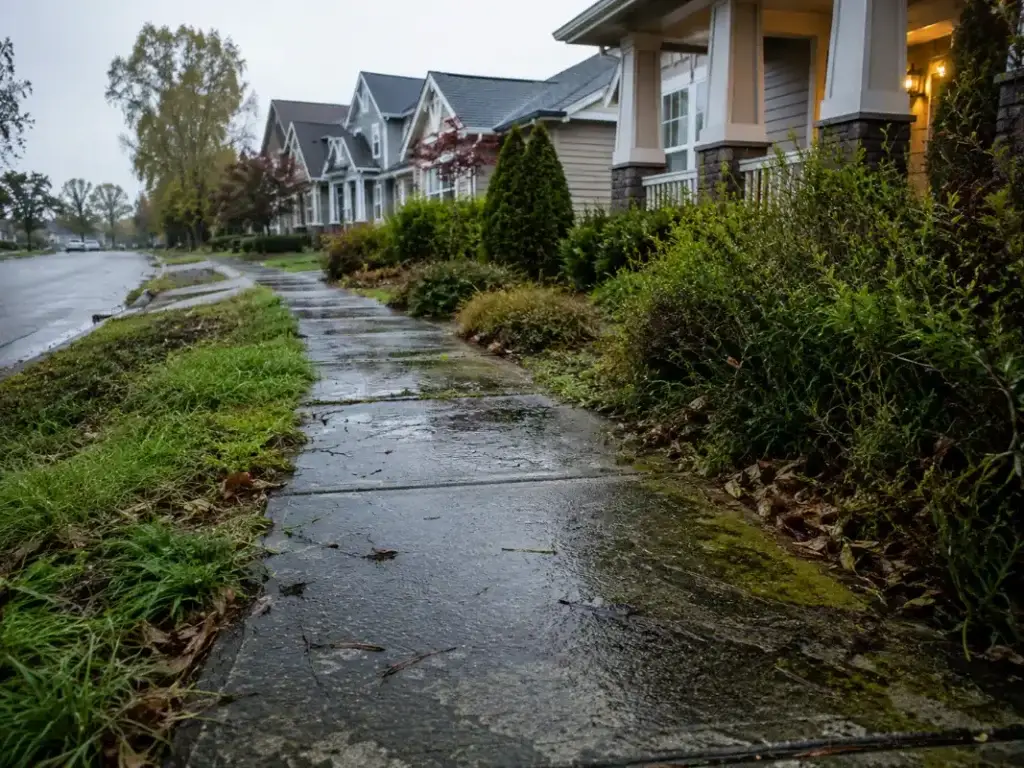
 Slippery Sidewalks and HOA Violations in Northern Virginia: How Algae Becomes a Legal Liability Problem
There are two ways to learn this lesson. The easy way: read this article, schedule a sidewalk cleaning appointment, and spend your…
 Exterior Cleaning
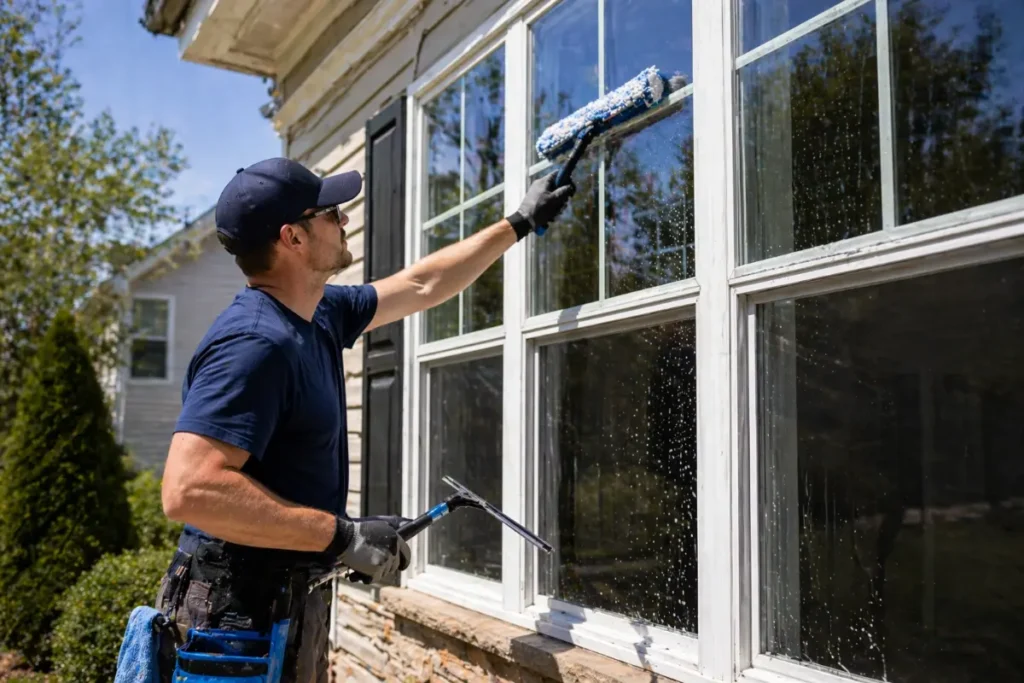
 How to Remove Hard Water Stains from Windows in Northern Virginia (And Why They Keep Coming Back)
You cleaned your windows last spring. Spent a Saturday afternoon with Windex and elbow grease. Maybe even hired someone. They looked great…
 Exterior Cleaning
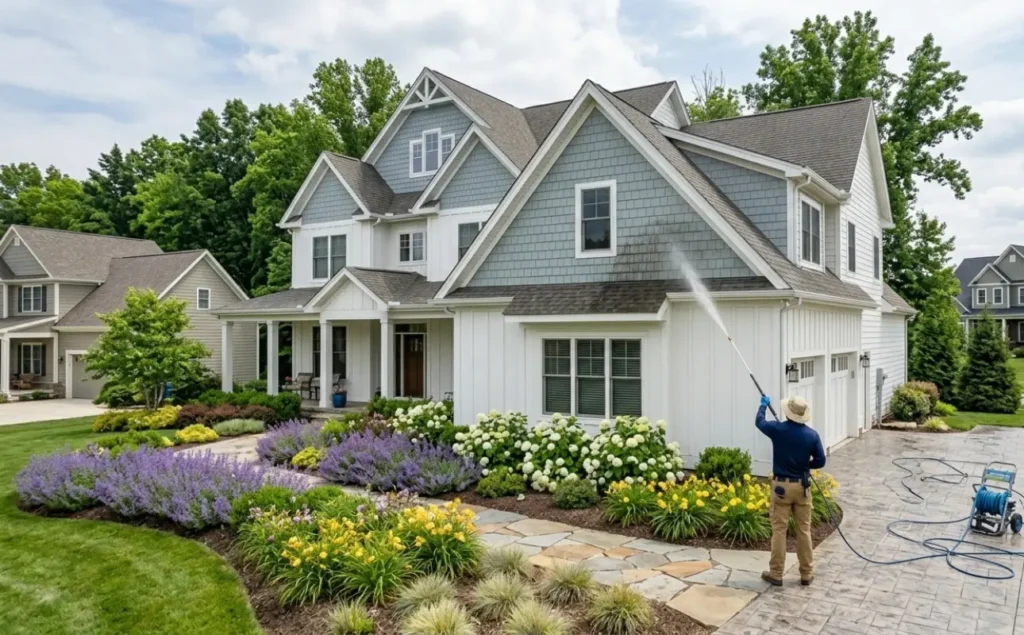
 Spring House Washing in Northern Virginia: Why Pollen Season Makes It Urgent
You wake up one Saturday morning in April, walk outside with your coffee, glance up at your house and stop dead in…
Want this handled by the crew that wrote the guide?
Veteran-owned. Licensed & insured. Free walkthroughs across Northern Virginia — quotes in 24–48 hours.
Get Your Free Estimate