
Winter in Northern Virginia can be tough on your lawn. Between freezing nights, snow, frost, and foot traffic, your grass takes a beating while you’re inside keeping warm. But here’s the good news: with the right winter lawn care in Northern Virginia, your grass doesn’t have to suffer it can rest, recover, and come back greener and stronger in spring.
At Lawn Theory, we know local lawns from Fairfax to Loudoun, Arlington, Alexandria, and beyond and we understand how Virginia’s mix of cold snaps and mild spells affects turf. So, instead of crossing your fingers and waiting for spring, let’s walk through how to actually protect your grass in winter and keep it healthy year-round.
What Makes Winter Lawn Care in Northern Virginia Different
Northern Virginia sits in a transition zone meaning we deal with both warm and cool-season grass varieties. This makes lawn care in winter a bit trickier than in colder or southern states.
- Cool-season grasses (like tall fescue, bluegrass, and rye) stay somewhat active during mild winter days.
- Warm-season grasses (like Bermuda or zoysia) go dormant and need protection from temperature swings and frost damage.
That’s why winter lawn care in Northern Virginia isn’t just about surviving winter it’s about setting your lawn up to thrive in spring. The right care now prevents bare patches, disease, and weak growth later.
Why Winter Lawn Care Matters
You might think, “The grass isn’t growing why bother?” But beneath that frosty surface, your lawn’s root system is still alive and working. The better you protect it now, the stronger your turf will rebound when temperatures warm up.
Here’s what happens when you skip winter lawn care:
- Soil compacts from snow and foot traffic.
- Grass blades break under ice and stress.
- Weeds sneak in early and outcompete weakened turf.
- Snow mold and disease can spread unseen until it’s too late.
That’s why Lawn Theory’s winter lawn protection plans focus on soil health, moisture management, and insulation all tuned to Northern Virginia’s unique conditions.
Step 1: Prep Your Lawn Before the First Freeze
Before winter hits full force, your lawn needs a strong foundation. The key? Fall preparation.
Late-Fall Fertilization
Feeding your lawn before dormancy helps the roots store energy for winter survival. Use a slow-release, nitrogen-rich fertilizer in late fall (around early November for Northern Virginia).
At Lawn Theory, we time our treatments precisely too early, and growth continues; too late, and nutrients go unused.
Final Mow
Lower your mowing height slightly (about 2.5–3 inches for tall fescue) before the first frost. This prevents the grass from matting under snow and developing mold while still leaving enough blade length for photosynthesis.
Remove Leaves and Debris
Don’t let leaves smother your lawn over winter. A thick layer traps moisture, breeds fungus, and blocks light. Rake, mulch, or blow them away regularly.
Step 2: Manage Foot Traffic and Ice Damage
One of the biggest killers of grass in winter isn’t cold it’s compaction.
When frozen turf is walked on, the blades break and the soil compresses, cutting off oxygen to the roots. Over time, this leads to dead patches and weak regrowth in spring.
Lawn Theory tip:
- Keep heavy foot traffic off frozen grass.
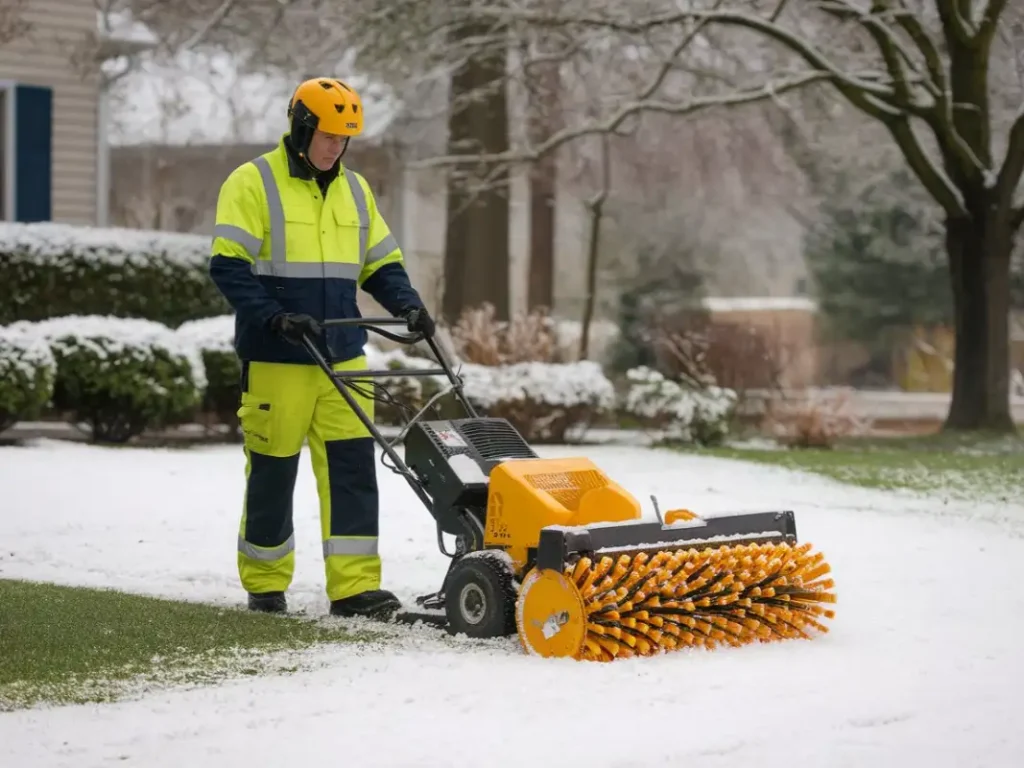
- Shovel walkways to divert movement.
- Use calcium chloride-based ice melt instead of rock salt it’s safer for lawns and pets.
In areas like Fairfax, Arlington, or Loudoun, where driveways and sidewalks border lawns, this small change prevents salt burns and long-term soil damage.
Step 3: Winter Watering – Yes, Sometimes You Still Need It
Most Northern Virginia lawns don’t need much water in winter, but dry, windy periods can still dehydrate your turf—especially when there’s no snow cover.
If we go more than 3 weeks without measurable precipitation, a light watering on mild (above-freezing) days helps prevent root desiccation.
Remember: you’re not trying to grow the grass you’re just keeping the soil moist enough to sustain roots through dormancy.
Step 4: Control Winter Weeds Before They Spread
Even in winter, weeds don’t rest. Annual invaders like chickweed, henbit, and bittercress germinate in late fall and spread under snow.
That’s why Lawn Theory’s winter treatment plans often include pre-emergent or selective weed control applications when needed. Targeting these weeds early prevents ugly patches from popping up in March when you least expect them.
Step 5: Protect Your Lawn from Snow Mold and Disease
If you’ve ever noticed gray or pink fuzzy spots in your lawn after snow melts, that’s snow mold a fungal disease that thrives under matted grass and snow cover.
To prevent it:
- Keep your grass short before winter.
- Avoid overfertilizing in late fall (too much nitrogen encourages soft growth).
- Rake lightly in spring to break up matted areas and improve airflow.
Lawn Theory’s winter lawn care service also includes disease prevention monitoring especially in shaded or damp areas common in Reston, McLean, and Falls Church properties.
Step 6: Winter Lawn Treatments and Packages by Lawn Theory
We build customized winter lawn treatment programs for homes across Northern Virginia. Each package focuses on your grass type, soil, and exposure to elements like snow, shade, or salt.
Basic Winter Lawn Protection – Starting at $199
- Fall pre-winter fertilization
- Leaf and debris clearing
- Winter weed control spot treatment
Complete Winter Turf Health Package – Starting at $349
- Pre-winter fertilizer + micronutrients
- Soil pH balancing
- Winter weed control
- Salt and compaction protection spray
- Disease prevention monitoring
Premium Seasonal Care Plan – Starting at $549
- All of the above, plus:
- Early-spring green-up treatment
- Core aeration scheduling
- Overseeding consultation for spring
Each package is available for lawns in Fairfax, Loudoun, Arlington, Prince William, Alexandria, and nearby areas, with guaranteed results and veteran-owned reliability from Lawn Theory.
Step 7: Get Ready for Spring – Without the Winter Damage
The beauty of investing in winter lawn care in Northern Virginia is that spring doesn’t sneak up on you with dead patches and weak grass.
Here’s what our clients typically notice by March:
- Thicker turf that greens up earlier
- Fewer weeds competing for nutrients
- No bare or muddy spots where ice piled up
- Stronger root systems ready for spring feeding
It’s like giving your lawn an off-season training plan.
Local Tips: How to Protect Grass in Winter (Northern Virginia Edition)
For Northern Virginia Homeowners:
- Avoid storing firewood or furniture directly on the grass it crushes dormant turf.
- Reroute downspouts to prevent pooling and freezing near lawn edges.
- Mulch garden beds to regulate soil temperature and moisture.
- Don’t rake frozen grass wait until thaw to avoid ripping blades.
- Monitor shaded spots they stay frozen longer and may need aeration in spring.
Lawn Theory’s team checks all these factors during your winter inspection visit to prevent small issues from turning into spring headaches.
FAQs: Winter Lawn Care in Northern Virginia
1. Should I fertilize my lawn in winter?
No, fertilize in late fall, just before dormancy. Winter feeding wastes product and can harm grass. Lawn Theory uses slow-release formulations designed to last through winter months.
2. Can I mow during winter?
Only if necessary. If mild weather causes growth, keep blades high and trim lightly to prevent matting. Avoid mowing when the grass is frozen.
3. Should I water my lawn in cold weather?
Only during extended dry spells when soil isn’t frozen. Water midday when temperatures rise above 40°F so it absorbs before freezing overnight.
4. How do I protect my lawn from frost damage?
Limit foot traffic and avoid covering grass with objects. Frosted blades are fragile stepping on them breaks the cell walls and leaves brown footprints.
5. What’s the best winter lawn treatment in Northern Virginia?
Lawn Theory’s Winter Turf Health Package it combines balanced fertilizer, weed control, disease prevention, and soil protection in one affordable plan.
Why Choose Lawn Theory for Winter Lawn Care in Northern Virginia?
- Veteran-Owned & Locally Operated — We understand the region’s soil, slopes, and seasonal swings.
- Custom Treatments for Every Lawn — We don’t use generic formulas your lawn gets what it actually needs.
- Eco-Friendly & Safe Methods — Family- and pet-safe products that still deliver strong results.
- Proven Results, Every Season — From summer green-ups to winter protection, our clients see consistent growth and fewer weeds.
At Lawn Theory, our goal isn’t just to maintain lawns it’s to protect them through every season.
Ready to Protect Your Lawn This Winter?
Don’t wait for frost to do the damage. Book your winter lawn care service in Northern Virginia with Lawn Theory today and keep your yard healthy, resilient, and spring-ready.
👉 Call (703) 650-5655 or request your free winter lawn inspection online.
Whether you’re in Fairfax, Loudoun, Arlington, Alexandria, Prince William, or Falls Church, we’ll keep your grass protected all season long. See us on Instagram & YouTube.
Because a beautiful spring lawn starts with the right winter protection and no one does that better than Lawn Theory.