
If you’ve ever looked at your lawn and thought, “I mow it, I water it… so why doesn’t it look great?” you’re not alone. The truth is, the best lawn care routine isn’t about doing more work. It’s about doing the right work at the right time.
In Northern Virginia, lawns face a unique mix of challenges. Clay-heavy soil, humid summers, unpredictable spring weather, heavy foot traffic, and long growing seasons all play a role. A generic national lawn schedule won’t cut it here. That’s why the best lawn care routine needs to be tailored to our region, our grass types, and our seasons.
At Lawn Theory, we manage lawns every day across Fairfax County, Loudoun County, Arlington, Alexandria, Prince William County, and Falls Church. What follows isn’t theory pulled from a product label. It’s a proven, real-world routine built for Northern Virginia lawns that actually works.
The Core Rule of the Best Lawn Care Routine
Before diving into timing and steps, here’s the most important principle most homeowners miss:
A great lawn is built from the soil up, not the mower down.
Mowing alone won’t fix compacted soil. Watering alone won’t beat weeds. Fertilizer alone won’t overcome poor timing. The best lawn care routine works because it balances five fundamentals:
- Soil health
- Weed prevention and control
- Proper mowing habits
- Smart watering
- Seasonal feeding and repair
Miss one, and the others struggle.

Understanding Northern Virginia Lawns Before You Start
Most lawns in Northern Virginia are cool-season grasses, primarily tall fescue blends. These grasses thrive in spring and fall, struggle in summer heat, and go dormant in winter. That alone changes the routine compared to warmer regions.
Add in compacted clay soil, shade from mature trees, and summer humidity, and the routine needs to be strategic. This is why cookie-cutter advice often fails here.
The best lawn care routine in this region focuses heavily on fall preparation, controlled spring growth, and stress management through summer.
A Simple Weekly Lawn Care Routine (Growing Season)
During the active growing months, consistency matters more than intensity.
Each week, your routine should include:
- Mowing regularly, never removing more than one-third of the grass blade
- Checking moisture levels instead of watering on autopilot
- Watching for early signs of weeds, disease, or thinning areas
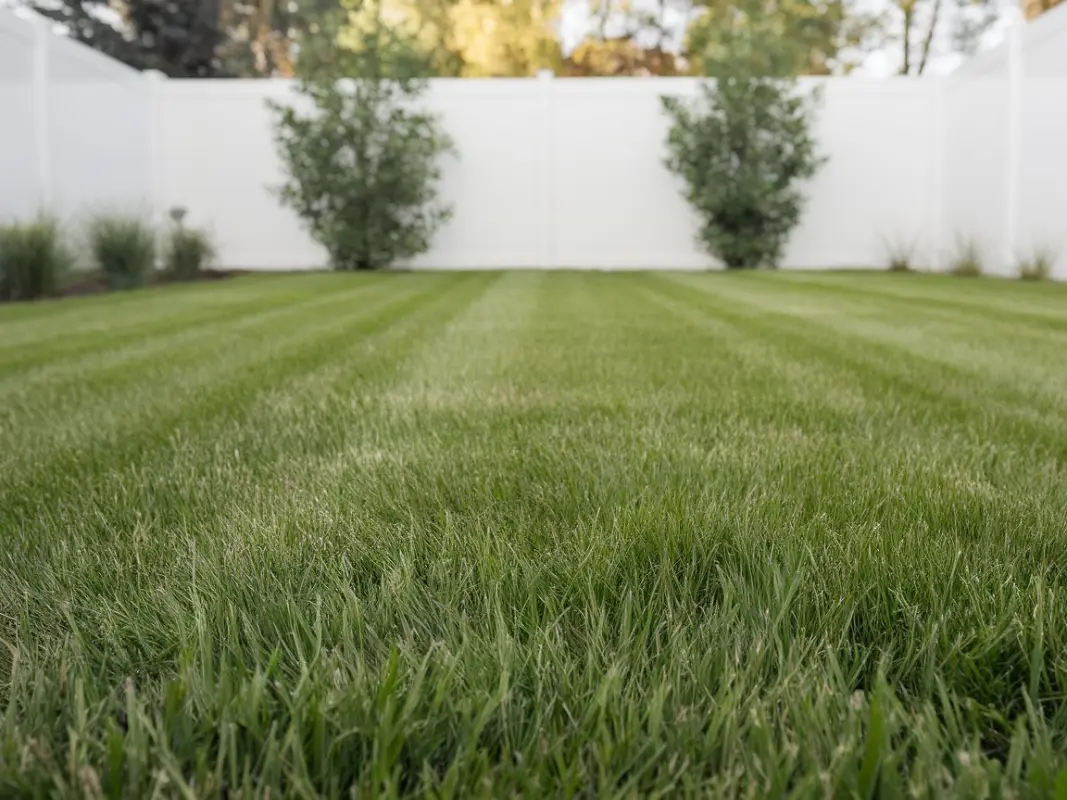
Mowing height is critical. Taller grass shades the soil, keeps roots cooler, and naturally suppresses weeds. Cutting too short is one of the fastest ways to ruin a lawn in Northern Virginia.
Watering should be deep and infrequent. Light daily watering trains shallow roots and invites stress. A healthy lawn wants about one inch of water per week, including rainfall.
The Spring Lawn Care Routine That Sets the Tone
Spring is when many lawns look okay on the surface but are quietly making mistakes that show up later.
The best lawn care routine in early spring starts with cleanup and prevention, not aggressive feeding.
You should begin by clearing debris and gently raking matted areas to improve airflow. Mowing should resume once growth starts, but blades should stay high. This isn’t the time for a short cut.
Pre-emergent weed control is one of the most important spring steps. Applied at the right soil temperature, it stops crabgrass and other weeds before they ever appear. Miss this window, and you’ll fight weeds all summer.
Fertilization in spring should be moderate. Too much nitrogen creates fast, weak growth that struggles in summer heat. The goal is steady green-up, not a growth explosion.
This is also the time to assess soil compaction. If water pools or runs off instead of soaking in, aeration should be scheduled.
The Summer Lawn Care Routine That Prevents Burnout
Summer is survival season for Northern Virginia lawns.
The best lawn care routine during summer focuses on protection, not perfection.
Grass should be kept taller to shade the soil. Mowing frequency may increase, but blade height should not decrease. Dull mower blades are especially damaging in summer, so sharp blades are a must.
Watering becomes critical, but more is not always better. Early morning watering is ideal. Evening watering increases disease risk, especially with humidity.
Weed control continues, but timing matters. Treating weeds during extreme heat can damage turf. Spot treatments and professional-grade applications are safer than blanket spraying.
Summer is also when fungal issues show up. Brown patch and other diseases thrive in heat and humidity. Proper watering, airflow, and nutrition help prevent outbreaks before chemicals are ever needed.
The Fall Lawn Care Routine That Makes the Biggest Difference
If there’s one season that defines the best lawn care routine in Northern Virginia, it’s fall.
Fall is when cool-season grasses naturally want to grow. Roots recover, soil biology improves, and lawns can actually repair themselves.
This is the ideal time for aeration, overseeding, and soil improvement. Core aeration relieves compaction and opens pathways for air, water, and nutrients. Overseeding thickens the lawn, fills bare spots, and improves density before winter.
Fertilization in fall focuses on root development, not top growth. This strengthens grass for winter and fuels an earlier, healthier green-up in spring.
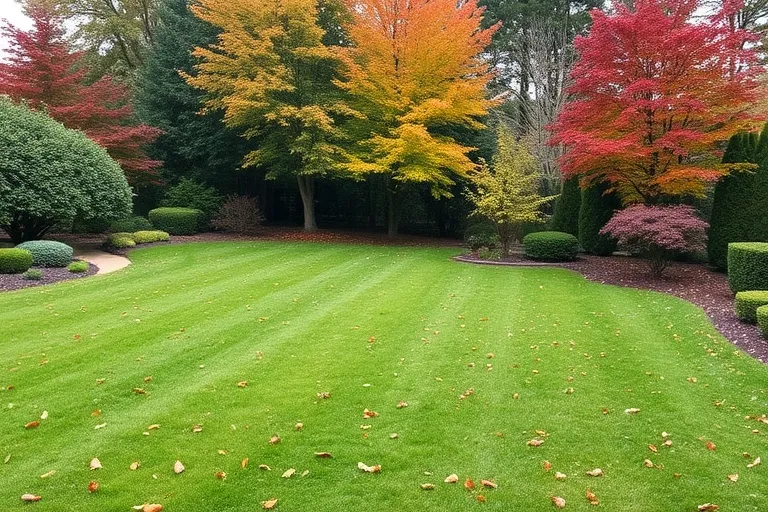
Leaves should be managed consistently. Mulching leaves back into the lawn adds organic matter, but heavy piles can smother turf.
Fall work is where homeowners see the biggest return, and it’s also where professional services make the biggest difference.
The Winter Lawn Care Routine Most People Ignore
Winter care is minimal, but it still matters.
Traffic should be limited on frozen grass. Repeated footpaths can damage dormant turf crowns. Snow piles should be placed consistently to avoid compaction and ice damage.
Ice melt products should be lawn-safe. Rock salt can damage turf and soil structure. Using safer alternatives protects grass edges and roots.
Winter is also planning season. Reviewing problem areas and scheduling spring services early ensures you don’t miss critical timing windows.
The Most Common Lawn Care Routine Mistakes
Even well-intentioned homeowners sabotage their lawns without realizing it.
Cutting grass too short is the most common issue we see at Lawn Theory. It weakens roots and invites weeds.
Overwatering is another big one. Watering every day feels productive, but it creates shallow roots and disease pressure.
Fertilizing at the wrong time or too heavily leads to stress, not strength.
Skipping aeration allows compaction to build year after year, slowly choking the lawn.
The best lawn care routine avoids extremes and focuses on consistency.
A Routine That Adjusts to Your Lawn, Not Just the Calendar
One thing competitors miss is adaptability.
A shaded lawn needs a different routine than a sunny one. High-traffic lawns need more recovery work. Clay-heavy soil needs regular aeration. Newly seeded lawns require different watering and mowing rules.
This is where Lawn Theory stands out across Northern Virginia. We don’t apply a one-size-fits-all plan. We adjust the routine based on soil conditions, grass response, and seasonal weather patterns specific to Fairfax, Loudoun, Arlington, Alexandria, Prince William, and Falls Church.
Why the Best Lawn Care Routine Often Includes Professional Help
A great routine doesn’t mean you do everything yourself.
Certain steps require professional equipment, timing precision, and experience. Aeration, overseeding, targeted weed control, and seasonal fertilization are far more effective when done correctly the first time.
The best lawn care routine combines smart homeowner habits with strategic professional services. That balance saves time, money, and frustration.
Why Homeowners Across Northern Virginia Trust Lawn Theory
Lawn Theory is built around practical results, not gimmicks. As a veteran-owned company serving Northern Virginia, we understand local lawns because we work on them every day.
Our lawn care and landscaping services are designed to fit naturally into the best lawn care routine, whether you want full service or help with specific steps.
From routine maintenance to seasonal recovery and long-term improvement, we help lawns look better and stay healthier year after year.
End Notes
A great lawn doesn’t come from doing everything. It comes from doing the right things at the right time, especially in Northern Virginia where soil, weather, and grass types all work differently than most national lawn guides assume. When your routine is built around seasonal timing, soil health, and smart maintenance, your lawn stops struggling and starts working with you.
If you’re tired of guessing, overcorrecting, or fighting the same lawn problems every year, Lawn Theory can help you put a routine in place that actually makes sense for your property. From spring green-up to fall recovery and everything in between, our team works across Fairfax, Loudoun, Arlington, Alexandria, Prince William, and Falls Church to keep lawns healthy, resilient, and consistently green.
When you’re ready to take the stress out of lawn care and see real, lasting results, Lawn Theory is ready to step in and handle it the right way. See us on Instagram & TikTok.
Reach out to Lawn Theory today and let’s turn your lawn into one you’re proud of across Fairfax, Loudoun, Arlington, Alexandria, Prince William, and Falls Church.