Winter is rough on driveways in Northern Virginia. One week it is freezing rain, the next week it is mild and muddy, then everything locks up in black ice overnight. Those constant freeze–thaw cycles quietly attack concrete and asphalt from the inside out. In this guide you would know that How to Prevent Driveway Damage in Winter in Northern Virginia.
The good news: you can absolutely protect your driveway if you use the right deicing driveway safe products, smart winter driveway care habits, and a simple maintenance plan. At Lawn Theory, we help homeowners across Fairfax, Loudoun, Arlington, Alexandria, Prince William, and Falls Church keep their driveways safe, clean, and intact all winter long.
Think of this guide as your winter survival manual for your driveway. We will walk through how to prevent driveway cracks in winter, the best ways to melt ice on driveway surfaces without ruining them, and how winter driveway maintenance in Virginia fits into your bigger exterior care plan.
Why Winter Destroys Driveways in Northern Virginia
Before we fix the problem, it helps to know what you are fighting. Winter driveway damage is usually caused by three things working together:
- Moisture gets into small pores and hairline cracks.
- Freezing temperatures cause that water to expand.
- Daily temperature swings create a constant moisture freeze–thaw cycle.
Over time that leads to:
- Surface flaking and concrete spalling in winter
- New cracks in asphalt or widening of existing cracks
- Potholes and low spots where water and ice collect
- Stains and corrosion from harsh deicers and rock salt
Northern Virginia is especially tough because we do not just get fluffy snow. We get heavy wet snow, sleet, freezing rain, and random warm days that melt everything, then refreeze it at night. Your driveway battles all of that non stop.
So the goal is simple:
- Keep water out of cracks as much as possible.
- Use deicers that do not destroy the surface.
- Use safe snow removal techniques that do not scrape and gouge the driveway.
- Keep the surface clean so salt, grime, and ice melt residue do not sit there all season.
Step 1: Start With a Clean, Healthy Driveway Before It Gets Cold
The best winter driveway care starts before the first hard freeze. If you want to stop winter freeze damage to your driveway, you need to give it a reset in late fall.
Deep cleaning and inspection
A dirty driveway hides problems. Before winter:
- Sweep or blow off leaves, acorns, branches, and loose gravel.
- Look for oil stains, rust marks, or dark patches that trap heat and moisture.
- Inspect for hairline cracks, flaking, or pitted areas.
This is where Lawn Theory’s exterior cleaning and driveway cleaning service in Northern Virginia becomes your secret weapon. A professional pressure wash paired with the right detergents can:
- Remove grime and old salt from past winters
- Lift stains that weaken the surface over time
- Clear out pores so sealers and treatments bond properly
A clean surface handles cold weather much better than one coated in dirt and chemicals.
Repair cracks before they grow
Those tiny lines in your concrete or asphalt are not “just cosmetic” in winter. They are direct channels for water. Once that water freezes inside, pressure builds and cracks expand.
Before the real cold hits:
- Fill small cracks with a quality concrete or asphalt crack filler.
- Touch up edges where the driveway meets walkways, steps, or garage slabs.
- Pay extra attention to low spots where water already pools.
This single step does more to prevent driveway cracks in winter than almost anything else you can do.
Step 2: Use Deicing Driveway Safe Products, Not Whatever Is On Sale
Here is where most driveways get wrecked: wrong deicer, wrong amount, wrong surface.
Your main goal: melt ice without eating your concrete or asphalt alive.
The problem with rock salt
Rock salt (sodium chloride) is cheap and everywhere, but it is brutal on:
- Concrete surfaces
- Rebar and metal edges
- Nearby lawn and landscaping
- Pets’ paws and soil health
Salt seeps into concrete, attracts more water, and accelerates the freeze–thaw damage cycle. If you want long term winter driveway protection, rock salt should be a last resort, not your go to.
Better options for driveway de-icer safe for concrete
Some better options when choosing ice melt options for homeowners:
- Calcium chloride
- Works at lower temperatures than rock salt
- Less damaging than sodium chloride but still needs moderation
- Magnesium chloride
- Gentler on concrete and vegetation
- Often considered one of the safest deicer options for concrete driveway use
- Calcium magnesium acetate (CMA)
- More eco friendly and non corrosive
- Great for winter driveway care Northern Virginia where you want minimum damage and runoff impact
Whichever product you choose, follow this rule:
Use the minimum amount needed to break the bond between ice and driveway, then mechanically remove it.
Dumping massive amounts of “ice melt” is how you end up with etched, crumbling surfaces by spring.
Eco friendly ice melt for driveways
If you care about your lawn and beds, keep an eye out for labels that mention:
- Low chloride content
- Safe for vegetation
- Safe for concrete when used as directed
You can also combine a gentler deicer with sand for icy driveways to add traction without constantly overloading the surface with chemicals.
Step 3: Safe Snow Removal Techniques That Do Not Destroy Your Driveway
You can use the safest deicer in the world and still ruin your driveway if you scrape it like you are attacking it. Winter driveway maintenance Virginia style has to factor in the tools you use.
Choose the right shovel or snow pusher
For concrete and asphalt driveways:
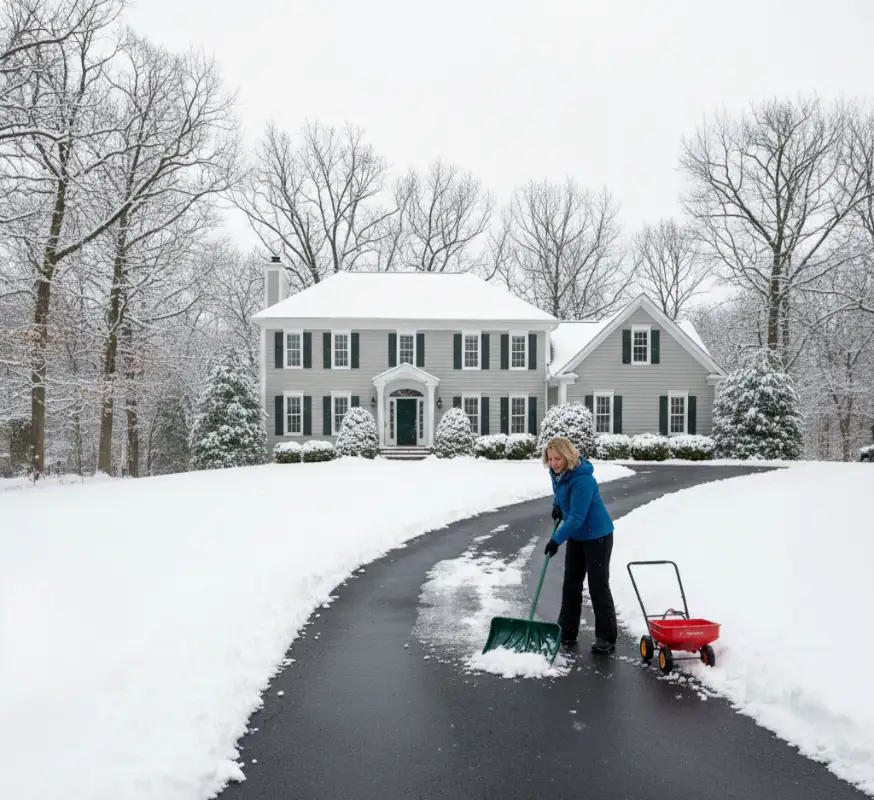
- Use plastic shovels or shovels with rubber edges.
- Avoid metal blades or corner “ice choppers” that dig into the surface.
- Push snow instead of chopping and hacking at packed spots.
Tips for using snow blowers
Snow blowers are great, but they can:
- Catch on heaved edges or small lips in concrete
- Chip corners and expansion joints
- Throw salt-laden snow back onto your lawn
Set the skids high enough so the blade does not grind the surface. If your driveway already has cracks or exposed aggregate, go slow and avoid aggressive passes.
How to remove ice without damaging driveway surfaces
When dealing with stubborn patches, black ice, or compacted snow:
- Apply a small amount of appropriate deicer and wait for it to soften.
- Use a rubber edged scraper to lift the softened layer.
- Add sand or gravel for traction instead of more chemicals.
Avoid swinging metal picks or crowbars at ice. Short term, you might break the ice. Long term, you are breaking your driveway.
Step 4: How to Keep Driveway From Freezing Overnight
You cannot control Northern Virginia temperatures, but you can control how your driveway reacts to them.
Here are practical ways to stop ice from forming on driveway surfaces or at least reduce it:
- Clear snow early, before it melts and refreezes overnight.
- Keep gutter downspouts pointed away from the driveway.
- Check for roof runoff that drips directly onto one area.
- Use a small amount of deicer ahead of a freeze on known problem spots.
- Keep the surface clean so water runs off instead of clinging to dirt and debris.
If water consistently flows over a certain section and then freezes, that is both a safety issue and a structural one. That is exactly the type of thing Lawn Theory flags during exterior cleaning and winter home exterior maintenance in Northern Virginia.
Step 5: Asphalt vs Concrete – Different Driveways, Different Risks
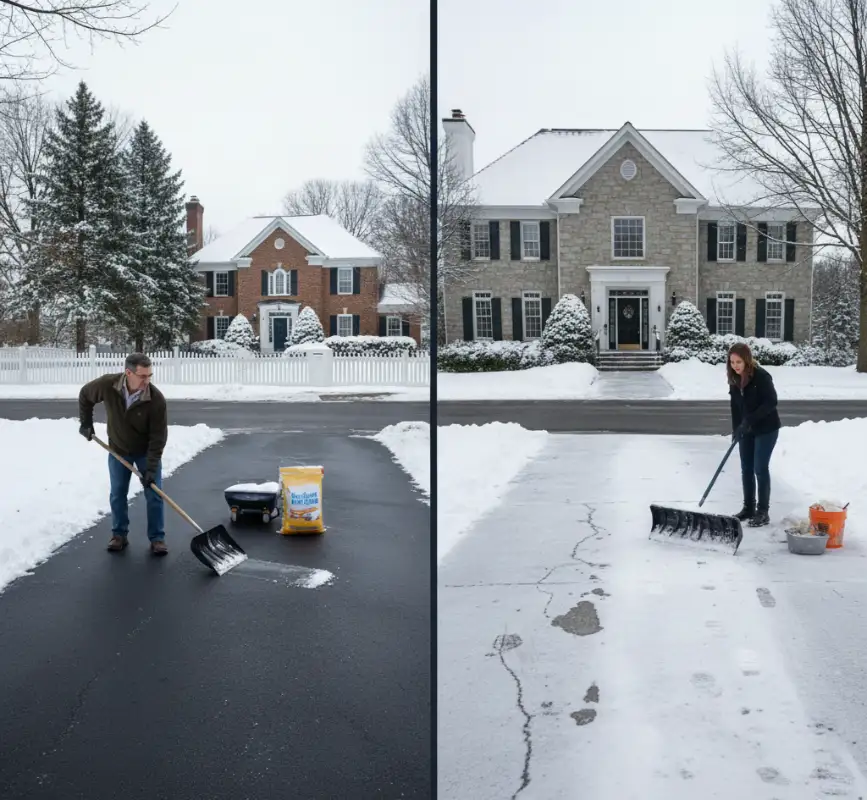
Not all driveways react to winter the same way. Your winter driveway care plan should match your material.
Concrete driveway winter care
Concrete is strong but vulnerable to moisture and certain chemicals. In winter it faces:
- Surface scaling from repeated freeze–thaw
- Concrete spalling in winter if water sits in pores
- Flaking or chipping from aggressive rock salt use
To protect concrete in winter:
- Seal it before winter if it has never been sealed or is overdue.
- Use concrete safe or non corrosive deicers.
- Avoid pushing heavy metal blades across the surface.
- Deal with small chips and cracks early.
Asphalt driveway winter care
Asphalt is more flexible, but:
- It softens in heat and tightens in cold.
- Cracks spread quickly if water gets inside.
- Oil and chemical stains can accelerate breakdown.
To keep an asphalt driveway from freezing and failing:
- Fill cracks before winter.
- Avoid parking extremely heavy vehicles in the same spot when the ground is soft.
- Keep it clean so deicer and chemicals do not sit there all season.
If your asphalt already shows significant cracking or alligatoring, winter is about stabilizing it until a more permanent repair or resurface can be scheduled in warmer months.
Step 6: Use Winter Driveway Care To Protect Curb Appeal And Safety
A damaged driveway does more than annoy you when you shovel. It:
- Lowers curb appeal in winter when everything else looks bare.
- Creates tripping hazards and uneven surfaces.
- Makes snow removal harder every storm.
- Can impact property value during resale.
In Northern Virginia, driveways are a big part of that first impression. Keeping yours smooth, clean, and damage free through winter is an easy way to stand out in a neighborhood where most driveways look tired by March.
This is where pairing winter driveway maintenance Virginia with Lawn Theory’s exterior cleaning and pressure washing services makes sense. We help keep surfaces bright, safe, and ready to handle the rest of the season.
Step 7: Spring Follow Up – Winter Driveway Repair Tips
Even with perfect winter habits, your driveway will need a spring checkup. This is where you lock in long term protection.
Once the weather warms up:
- Walk the full length of the driveway and mark new cracks or low spots.
- Clean off leftover deicer, grime, and sand.
- Patch holes before they grow under summer traffic.
- Consider sealing if the surface looks dry, chalky, or worn.
Think of it as your reset button before you do it all again next winter. Lawn Theory can integrate this into your broader seasonal plan that includes lawn care, landscaping, and exterior cleaning so your property moves smoothly from winter survival into spring refresh.
When To Call A Pro Instead Of Going DIY
Here is when it makes sense to bring in a professional like Lawn Theory instead of trying to do everything yourself:
- You see repeated black ice in the same areas.
- There is visible cracking, spalling, or surface flaking.
- Water pools or drains across your driveway from gutters or grading.
- You are not sure which deicing products are safe for your driveway type.
- You want your winter driveway care combined with full exterior cleaning and protection.
Professionals can spot issues you will not see until they are expensive. We look at the whole system: roof runoff, gutters, grading, driveway material, traffic patterns, and local weather patterns in your exact Northern Virginia area.
How Lawn Theory Helps Protect Your Driveway All Winter
Lawn Theory is more than “just” lawn care. We are your partner in keeping your entire property looking sharp and holding up to Virginia weather. For driveways, that means:
- Seasonal exterior cleaning to remove grime, salt, and buildup
- Driveway cleaning service in Northern Virginia tailored to your material
- Recommendations on safe deicing driveway products for your concrete or asphalt
- Identifying drainage and runoff issues that cause winter damage
- Integrating winter driveway care with broader winter home maintenance across Fairfax, Loudoun, Arlington, Alexandria, Prince William, and nearby communities
When your lawn, landscaping, and driveway all work together, your home looks better, feels safer, and lasts longer.
Quick Winter Driveway Protection Checklist
Here is a fast summary you can literally print or save:
- Clean driveway in late fall.
- Fix small cracks before first freeze.
- Avoid rock salt whenever possible.
- Use deicing driveway safe products approved for your surface.
- Shovel early and often using plastic shovels or rubber edged tools.
- Add sand for traction instead of piling on more chemicals.
- Watch for recurring ice patches and pooling water.
- Plan a spring inspection and cleaning with Lawn Theory.
Follow that, and winter will be a lot less stressful for your driveway.
FAQs for Lawn Theory – Winter Driveway Protection
How do I protect my driveway from snow in winter?
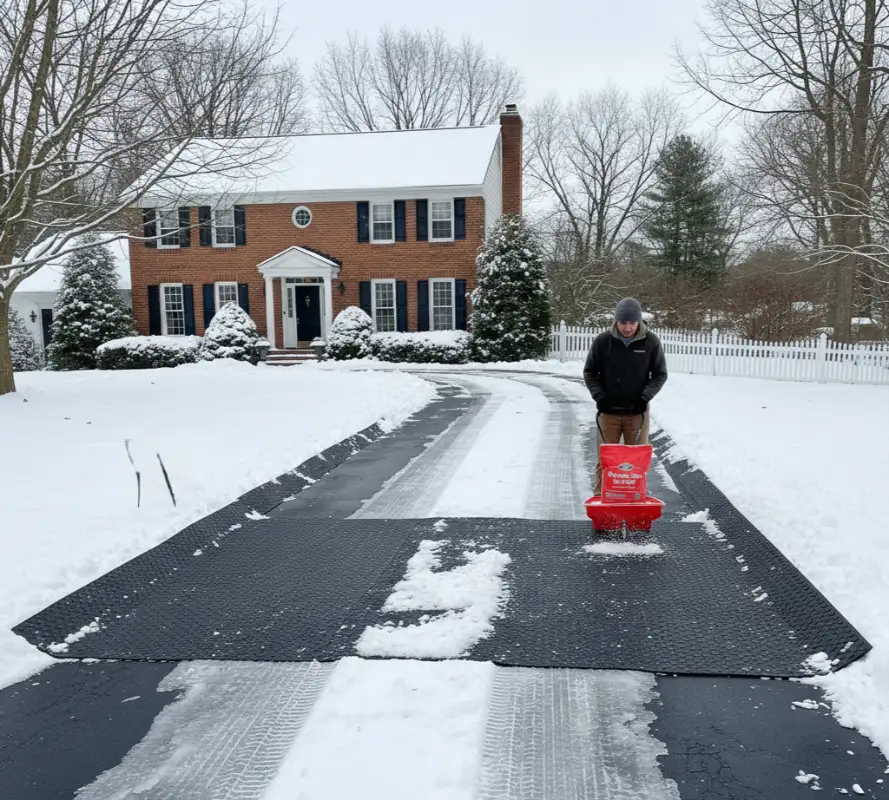
The safest way to protect your driveway from snow is to prevent ice from bonding to the surface in the first place. In Northern Virginia, many homeowners use a plastic tarp or snow barrier before a storm. After the snowfall, you simply pull the tarp away and remove most of the snow without heavy scraping.
Pair this with gentle, plastic-edged shovels, early snow removal, and concrete-safe deicers to reduce surface wear. Lawn Theory also helps keep driveways safer with professional winter exterior cleaning that removes grime and prevents long-term freeze damage.
Can I seal my driveway in winter?
Sealing a driveway in winter is not recommended. Sealants need consistent temperatures above 50°F to cure properly. If temperatures drop toward freezing, the sealant can peel, bubble, or separate.
In Northern Virginia, the best time to seal your driveway is late spring through early fall. Winter sealing will almost always fail due to rapid freeze–thaw cycles. If your driveway needs protection, Lawn Theory can inspect it during winter and schedule sealing during the correct season.
How can I protect concrete from winter damage?
Concrete is especially vulnerable to Virginia’s freeze–thaw cycles. To protect it:
- Keep the surface as dry as possible
- Use insulating blankets during extreme cold
- Avoid rock salt, which breaks down concrete faster
- Seal concrete every 2–3 years (but not in winter)
- Keep snow and slush cleared before refreezing
- Repair cracks before freezing temperatures arrive
Lawn Theory’s winter driveway cleaning also helps remove ice-melt residue and moisture pockets that damage concrete over time.
How do I keep my driveway from freezing?
The best way to keep a driveway from freezing is to prevent ice from bonding to the surface. Applying a liquid anti-icer before a storm creates a thin barrier that makes ice easier to remove.
Other tips include:
- Redirecting gutter runoff away from the driveway
- Removing snow before it melts and refreezes
- Using concrete-safe deicing products
- Improving drainage in low spots
If you consistently see ice forming in the same areas, Lawn Theory can inspect the surface and identify underlying issues.
What temperature is too cold for driveway sealing?
Anything below 50°F is too cold for driveway sealing. Sealants will not cure properly, and any overnight freeze will cause the coating to crack or detach.
In Northern Virginia, the sealing season typically ends once nighttime temperatures drop into the 40s. Always wait for steady warm weather before applying sealant.
How should I prep my driveway for winter?
A winter-ready driveway begins with simple steps:
- Inspect for cracks and repair them before the first freeze.
- Clean the surface to remove dirt, oils, and old deicer residue.
- Clear gutters and downspouts so melting snow doesn’t refreeze on the driveway.
- Trim overhanging branches that drop heavy snow.
- Stock up on concrete-safe deicing products.
Lawn Theory offers seasonal exterior cleaning that helps prevent winter damage before it starts.
Does salt help when used before snow?
Salt can help prevent snow from bonding to the driveway, but traditional rock salt is harsh on concrete and landscaping. It also contributes to long-term surface erosion.
For Northern Virginia winters, it’s safer to use:
- Magnesium chloride
- Calcium magnesium acetate
- Eco-friendly deicers
These provide traction and melting power with less damage to your driveway, lawn, and pets.
Ready To Protect Your Driveway This Winter?
If you live in Northern Virginia and want your driveway to survive winter without cracking, flaking, or turning into an ice rink every other day, you do not have to guess your way through it.
Lawn Theory helps homeowners across Fairfax, Loudoun, Arlington, Alexandria, Prince William, and surrounding areas protect their driveways and their curb appeal with smart winter driveway care, exterior cleaning, and practical, real world advice. See us on Instagram & YouTube.
If you want a driveway that still looks good when spring finally shows up, it starts with one simple step:
Reach out to Lawn Theory today to schedule your winter driveway care and exterior cleaning consultation, and let us help protect your home before the next freeze hits.