
Leaf Removal and Seasonal Cleanup in Northern Virginia: Why Skipping It Is the Most Expensive Mistake You Can Make
Here is a fun autumn ritual: you admire the red and orange canopy over your Aldie neighborhood, take approximately three photos for social media, and then do absolutely nothing about the 50 to 100 pounds of leaves each of your oak trees is about to dump directly onto your lawn.
No judgment. Life is busy. The kids have soccer. Work has meetings. And the lawn is going dormant anyway, so what is the harm in leaving the leaves until spring, right?
Here is the harm: according to research cited by Simply Lawn’s 2026 national leaf removal study, spring repair from skipped fall leaf removal, including reseeding dead patches, treating fungal disease, and repairing vole damage, routinely costs 5 to 10 times what the fall cleanup would have cost in the first place. In Northern Virginia, where mature oak, maple, and cherry tree canopies blanket communities from Brambleton to Falls Church, that math hits especially hard.
At Lawn Theory, a veteran-owned lawn care and landscaping company serving Aldie, Ashburn, Brambleton, Loudoun County, Fairfax, Arlington, Chantilly, Herndon, Stone Ridge, Sterling, and Falls Church, our leaf removal and seasonal cleanup service is one of the most important things we do for Northern Virginia homeowners every fall. Not because raking leaves is glamorous work (it is not), but because what happens to your lawn under an undisturbed leaf mat over a Northern Virginia winter is genuinely destructive.
This guide gives you the full picture: what leaf accumulation actually does to your turf, why Northern Virginia’s specific tree canopy and climate make this problem worse than most of the country, what a professional seasonal cleanup actually includes, and exactly when to schedule for maximum protection.
What Leaf Removal and Seasonal Cleanup Actually Means for Northern Virginia Properties
Leaf removal and seasonal cleanup is the professional clearing of fallen leaves, yard debris, dead plant material, and organic accumulation from your lawn, landscape beds, hardscape surfaces, and property perimeter before winter sets in. In Northern Virginia, this is not a single weekend task. Our region’s mixed deciduous and evergreen canopy creates a staggered leaf-drop pattern that begins in October and does not fully complete until late November or early December for late-dropping species like oak.
A complete seasonal cleanup in Northern Virginia includes:
Leaf removal and hauling from lawn areas, landscape beds, walkways, and hardscapes. Bed edging and cleanup of dead perennial material. Pruning and cutting back of ornamental grasses and perennial stems. Clearing debris from gutters where leaf accumulation blocks drainage. Blowing and clearing of patios, driveways, and outdoor living surfaces. Inspection of irrigation systems before winterization.
This is the difference between a professional seasonal cleanup and a neighbor’s kid doing a quick rake. Every element of the service protects a specific part of your property from a specific winter damage mechanism.
Why Northern Virginia Has One of the Most Intense Leaf Removal Challenges in the Mid-Atlantic
Not all regions deal with leaf removal equally. Northern Virginia has several specific characteristics that make fall cleanup more demanding here than in most of the surrounding Mid-Atlantic area.
The Oak-Heavy Tree Canopy Problem
Communities throughout Loudoun County, Ashburn, Brambleton, Stone Ridge, Aldie, and Herndon were developed with deliberate preservation of mature tree canopy. The dominant species in most Northern Virginia residential neighborhoods are oaks, maples, sweet gums, and cherry trees. Oaks are the most problematic for lawn care because they are late-dropping trees. While maple leaves fall in October, most oak leaves do not complete their drop until November and into early December.
A single mature oak tree can drop 50 to 100 pounds of leaves in a single season. Many Northern Virginia properties have multiple mature oaks. That is a significant organic load landing on your turf during the period when the lawn is least able to shed it naturally. And unlike maple leaves, oak leaves have a waxy, slow-decomposing surface that creates a dense, water-resistant mat rather than breaking down quickly into the turf.
Northern Virginia Winters Create the Perfect Snow Mold Incubator
This is the biological mechanism that most homeowners do not know about, and it is the single most compelling reason to complete fall leaf removal before the first sustained frost.
Snow mold is a fungal lawn disease caused by two organisms: Microdochium nivale (pink snow mold) and Typhula incarnata (gray snow mold). According to Virginia Tech Cooperative Extension, the Virginia Tech turfgrass team receives widespread reports of snow mold damage across the Northern Virginia region following winters with persistent snow cover or extended cold-wet conditions. The University of Maryland Extension specifically recommends removing fallen leaves from the lawn if the layer is thick, because thick layers mat down turf and trap moisture that directly enables snow mold development.
Here is exactly how the damage cycle works in a Northern Virginia yard:
A wet leaf mat forms over dormant tall fescue in November. The leaf layer blocks air circulation at the soil surface. Moisture trapped under the mat creates the high-humidity microclimate at near-freezing temperatures that snow mold fungi require to activate. The fungi spread through the leaf mat and into the turfgrass leaf tissue over winter. When snow melts in February or March, homeowners discover circular patches of pink, tan, or gray matted dead grass where healthy turf existed in October.
Preventing this progression costs nothing if fall leaf cleanup is completed on schedule. Treating it in spring requires fungicide application, mechanical disruption of matted areas, fertilization for recovery, and potentially aeration and overseeding of severely damaged patches.
The Vole Damage Factor Nobody Warns You About
Here is the less-discussed winter lawn damage mechanism that a persistent leaf mat enables: voles.
Voles are small mouse-like rodents that live in lawns throughout Northern Virginia and create extensive tunnel networks at the soil surface. They are active year-round but do their most significant damage under snow and leaf cover during winter, when they are hidden from predators and can move freely through the landscape. Thick leaf mats are ideal vole habitat because they provide complete concealment and thermal insulation while the animals tunnel and chew through turf root systems.
Vole damage appears in spring as networks of narrow channels worn through the grass, often combined with areas of completely grazed turf where the root systems have been consumed. The repair required ranges from simple lawn fertilization and aeration and overseeding for moderate damage to full sod installation and lawn renovation for severely impacted areas. Eliminating the leaf mat eliminates the primary habitat that enables vole population buildup over winter.
The Fairfax County Vacuum Leaf Service Reality Check
Many Fairfax County homeowners have historically relied on the county’s vacuum leaf collection service as a backup option for leaf disposal. A recent Fairfax County proposal to permanently eliminate this service was paused, but the service remains under review and impacts approximately 25,000 homes in areas including Seven Corners, McLean, Falls Church, and Lake Barcroft. Relying on the county service as your primary leaf management strategy in 2026 is a meaningful risk. Professional leaf removal and hauling by Lawn Theory eliminates this dependency entirely.
The 5 Things a Leaf Mat Does to Your Northern Virginia Lawn Over Winter
Let us be specific about the damage mechanisms, because understanding each one makes the investment in professional cleanup feel very different from a simple cosmetic service.
1. Smothering and photosynthesis blockage. Even a dormant cool-season lawn continues limited photosynthetic activity during mild winter days when temperatures are above 40 degrees Fahrenheit. A dense leaf mat eliminates all light penetration to the turf below, shutting down this limited winter activity and weakening root energy reserves that the grass depends on for spring recovery.
2. Snow mold incubation. As explained above, the high-moisture, low-airflow environment under a wet leaf mat is the ideal incubator for Microdochium nivale and Typhula incarnata, the two snow mold pathogens most active in Northern Virginia’s climate.
3. Vole habitat creation. Dense leaf cover provides the concealment and insulation voles need to operate through winter, enabling destructive tunneling and grazing activities that damage turf root systems across large areas.
4. Fungal disease persistence in landscape beds. Leaf accumulation in landscape beds over winter harbors fungal spores, insect eggs, and disease organisms that overwinter in the organic debris and attack plants, perennials, and shrubs the following season. A thorough bed cleanup removes this reservoir before spring activation.
5. Hardscape and outdoor living surface degradation. Wet leaves left on concrete, pavers, natural stone, and wood decking surfaces over winter cause accelerated staining, surface damage, and algae development. Tannins from decomposing leaves stain concrete and pavers with dark brown residue that requires professional cleaning to remove. On wood decking, trapped moisture under leaf accumulation accelerates surface degradation.
What Lawn Theory’s Seasonal Cleanup Includes: The Complete Northern Virginia Property Reset
When our team arrives for a fall leaf removal and seasonal cleanup appointment, we do not just blow leaves to the curb and call it done. Our seasonal cleanup is a comprehensive property reset that protects every element of your outdoor investment before winter.
Lawn Leaf Removal and Hauling
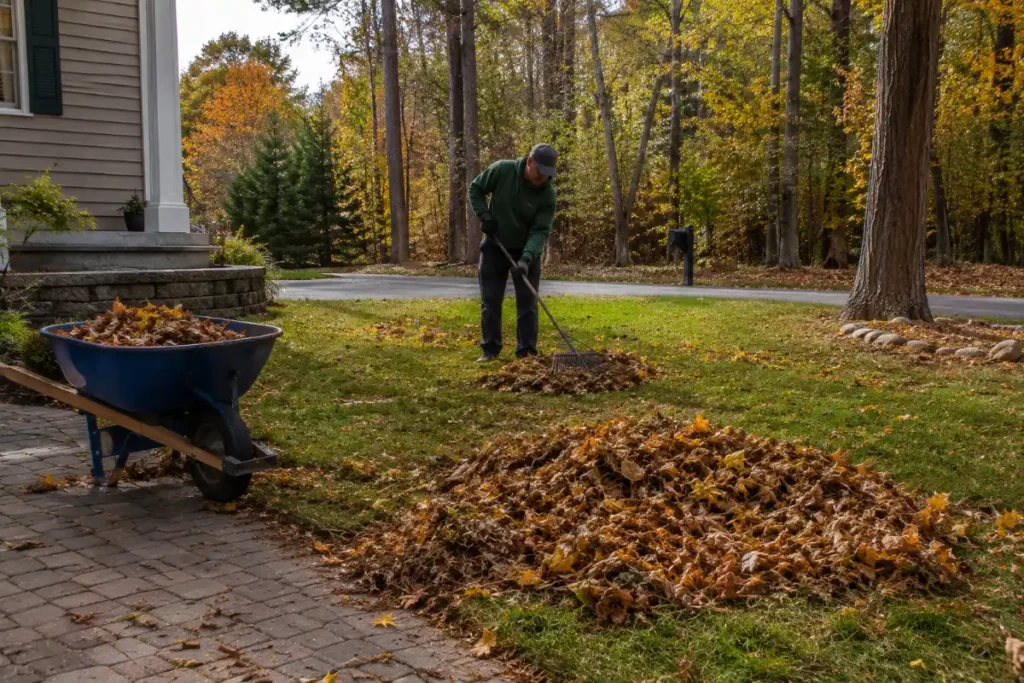
We clear all leaf accumulation from turf areas using commercial-grade blowers and vacuum collection equipment, then haul all material off the property. We do not blow leaves into beds or push them to the street edge. Complete removal is the objective because partial leaf management creates the same smothering risk in the areas where material accumulates.
Landscape Bed Cleanup
Landscape beds accumulate their own seasonal debris, including fallen leaves, dead annual material, deteriorated mulch, and wind-blown organic matter. Our mulching and bed maintenance team clears beds to clean soil, cuts back dead perennial material to the appropriate height for each species, edges bed borders cleanly, and prepares the bed for optional fresh mulch application that protects root systems and controls winter weeds.
Ornamental Grass and Perennial Cutback
Northern Virginia’s ornamental grasses, including Miscanthus, Pennisetum, and native switchgrass varieties common in Loudoun County landscape designs, require cutback to 4 to 6 inches in late fall before winter. Leaving them standing through winter is a design preference for some homeowners who enjoy the winter texture, but cutting them back as part of seasonal cleanup prevents the heavy crown of dead material from collapsing under snow and ice and creating an additional smothering layer on adjacent turf.
Mow at Winter Height Before Cleanup
Heading into winter with tall fescue at the correct height, approximately 2.5 to 3 inches rather than the 3.5 to 4 inch summer height, reduces the risk of matting under leaf accumulation and snow. Make this final height-adjusted pass before the leaves come down, so the cleanup crew is working over turf that is ready for winter.
Hardscape and Outdoor Living Surface Clearing
Patios, driveways, walkways, pool decks, and outdoor entertaining areas all accumulate fall debris that causes winter surface damage if left in place. We clear all hardscape surfaces connected to your property, removing organic material that would otherwise trap moisture and create staining, ice hazards, and biological growth through the winter months. If your patio and hardscape investment includes natural stone or pavers, fall clearing is critical to protecting the surface finish through freeze-thaw cycles.
Our walkways and pathways, driveways and entrances, pool patios and surrounds, and any outdoor kitchen or pergola and pavilion areas are cleared as part of a comprehensive seasonal cleanup that treats the entire outdoor property as a connected investment.
Gutter Clearing
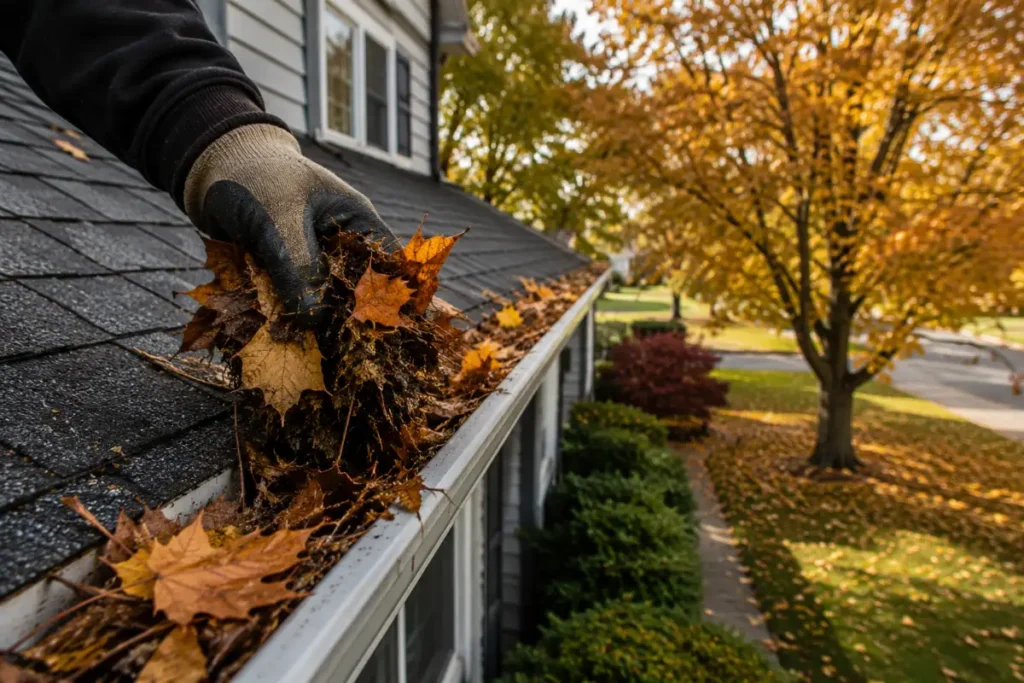
Gutters choked with fall leaf accumulation cause fascia rot, ice dam formation, and foundation drainage problems throughout Northern Virginia winters. Our gutter cleaning and brightening service is one of the most popular seasonal cleanup add-ons precisely because the consequences of blocked gutters in a Northern Virginia winter are expensive and sometimes structural. We clear all gutter channels, flush downspouts, and verify that drainage is directing water away from the foundation before we leave.
The Northern Virginia Seasonal Cleanup Calendar: When to Schedule and Why Timing Matters
Timing your fall cleanup correctly in Northern Virginia requires understanding our staggered leaf-drop pattern and the specific weather events that trigger maximum accumulation.
First cleanup: Mid to late October. This pass addresses early-dropping species including maple, cherry, and sweet gum. Getting early leaf accumulation off the lawn before it begins to mat and trap moisture sets the foundation for the later, heavier oak drop. Homeowners with heavy maple coverage in neighborhoods throughout Brambleton, Ashburn Village, and South Riding benefit most from this earlier pass.
Second cleanup: Mid to late November. This is the primary seasonal cleanup for most Northern Virginia properties. By mid-November, the majority of oak leaf drop is complete in Loudoun County and Fairfax County, and this pass removes the bulk of the season’s accumulation before sustained cold weather arrives. Scheduling this window is critical because it is the most in-demand period for professional lawn crews across the region. Waiting until December means reduced availability and the risk of leaf accumulation extending into freeze events.
Third cleanup (optional): Early December. Properties with heavy late-dropping oak coverage in areas like Great Falls, McLean, Stone Ridge, and Aldie may benefit from a final light clearing in early December to capture the last oak leaves before the ground freezes. This pass also provides an opportunity to clear any debris blown back into beds and hardscape areas after the November cleanup.
The booking reality: Lawn Theory’s fall cleanup schedule fills significantly in October. Northern Virginia homeowners who wait until November to schedule typically find limited availability for their preferred cleanup dates. Booking your fall cleanup in September or early October guarantees your place in the schedule during the optimal treatment window.
How Seasonal Cleanup Connects to the Full Lawn Theory Outdoor Property Program
Leaf removal and seasonal cleanup is not a standalone service. It is the foundation of a complete fall-to-spring outdoor property program that sets your lawn, landscape, and outdoor living space up for the best possible spring condition.
The seasonal cleanup connects directly to:
Aeration and overseeding. If you completed aeration and overseeding in September or October, fall leaf removal protects the newly germinated grass from smothering during its most vulnerable establishment period. New seedlings require light and airflow through their first winter.
Lawn fertilization program. Our lawn fertilization and weed control fall fertilization pass, applied after leaf cleanup when the soil is accessible, delivers the slow-release nitrogen that builds root reserves through winter and positions your tall fescue for strong spring green-up.
Lawn pest and disease protection. Removing the organic debris reservoir that harbors fungal spores, insect eggs, and disease organisms from your lawn and beds is a direct disease prevention measure. Our lawn pest and disease control program integrates with seasonal cleanup timing to ensure the organic disease reservoir is removed before winter activation.
Landscape planting protection. New landscape plantings installed through the fall by our landscape design and installation team require cleared beds and properly applied winter mulch to protect root systems through Northern Virginia’s freeze-thaw cycle. Seasonal cleanup ensures these plantings enter winter properly protected.
Spring outdoor living readiness. Every surface we clear in fall, from patios and pool decks to walkways and outdoor entertaining areas, enters spring in significantly better condition than surfaces left under leaf accumulation through winter. When your outdoor living space is clean and protected through winter, it is ready to use from the first warm weekend in March rather than needing a major spring restoration before you can enjoy it.
The full outdoor property program at Lawn Theory also includes tree and shrub care for winterization of ornamental plantings, irrigation and sprinkler systems winterization to protect against freeze damage, and spring leaf removal and seasonal cleanup to address winter debris before the growing season begins.
What Does Leaf Removal and Seasonal Cleanup Cost in Northern Virginia?
Actual pricing based on market data from 114 completed projects in the Fairfax area shows leaf removal costs starting at $250 for standard residential properties. Lawn Theory’s seasonal cleanup pricing reflects the full scope of service, not just a leaf blowing pass.
Factors that influence total pricing include:
Property size and tree density. A quarter-acre property with light tree coverage requires significantly less time and equipment than a half-acre property surrounded by mature oaks. Properties in heavily wooded sections of Aldie, Stone Ridge, and Great Falls Falls typically fall at the higher end of the range.
Number of cleanup visits. Single-visit cleanups during the November peak window are less expensive than multi-visit programs that capture the full staggered drop across October, November, and early December.
Bed cleanup scope. Basic leaf removal from lawn areas is the baseline. Adding bed cleanup, perennial cutback, and fresh mulch application expands the scope and the investment proportionally.
Add-on services. Gutter clearing and hardscape blowing are the most common add-ons for Lawn Theory seasonal cleanup clients.
The consistent reality across every pricing scenario: the cost of professional leaf removal and seasonal cleanup is a fraction of the cost of spring remediation for lawns damaged by smothering, snow mold, vole activity, and fungal disease that allowed leaf accumulation enables.
Frequently Asked Questions: Leaf Removal and Seasonal Cleanup in Northern Virginia
Q1: When is the best time to schedule leaf removal in Northern Virginia?
The primary leaf removal window for most Northern Virginia properties is mid to late November, after the majority of oak leaf drop is complete. However, properties with heavy early-dropping species like maple and sweet gum benefit from a first pass in mid to late October to prevent early accumulation from matting. Booking your cleanup in September or early October guarantees availability during the optimal November window, which fills quickly for professional crews across Loudoun County and Fairfax County.
Q2: What happens if I leave leaves on my lawn in Northern Virginia over winter?
Leaving a thick layer of leaves on a Northern Virginia lawn through winter creates several overlapping damage mechanisms. The leaf mat smothers dormant grass by blocking light and airflow. It creates the high-humidity, low-temperature microclimate that activates snow mold fungi, specifically Microdochium nivale and Typhula incarnata, which damage cool-season tall fescue during extended cold-wet periods. Dense leaf cover also provides ideal habitat for voles, which tunnel and graze turf root systems under the protection of the leaf mat. Spring repair from these combined damage mechanisms typically costs 5 to 10 times what fall cleanup would have.
Q3: Does mulching leaves into the lawn eliminate the need for professional removal?
Mulching mower passes work effectively for light to moderate leaf coverage on properties with limited tree canopy. A thin, finely chopped layer of leaves incorporated into the turf breaks down and adds organic matter beneficially. However, for Northern Virginia properties with heavy oak canopy, the volume of leaves produced significantly exceeds what mulch mowing can process. Dense, wet leaves that are mulched rather than removed create a matted layer of partially chopped material that causes the same smothering risk as whole leaves. For most Loudoun County and Fairfax properties with mature tree coverage, mulching alone is not adequate and professional removal is the appropriate solution.
Q4: How much does professional leaf removal cost in Northern Virginia?
Professional leaf removal in Northern Virginia starts at $250 for standard residential properties based on actual project data from the Fairfax market. The total depends on property size, tree density, number of cleanup visits, and whether the service includes bed cleanup, perennial cutback, gutter clearing, and hardscape blowing. Lawn Theory provides transparent, detailed quotes that break down each service element so homeowners understand exactly what is included in their seasonal cleanup investment.
Q5: Does fall leaf cleanup affect my spring lawn recovery?
Significantly. Fall leaf cleanup directly determines the condition of your lawn when it emerges from dormancy in March. A lawn that enters spring without the smothering, fungal, and vole damage that uncovered leaf accumulation enables recovers faster, requires less remediation, and is ready for the growing season earlier. Conversely, a lawn that spent winter under a dense, wet leaf mat typically shows dead patches requiring reseeding, fungal disease symptoms requiring treatment, and potentially vole damage requiring more extensive renovation.
Q6: What is included in Lawn Theory’s seasonal cleanup service?
Lawn Theory’s seasonal cleanup includes complete leaf removal and hauling from turf areas and landscape beds, bed edging and perennial cutback, ornamental grass trimming as needed, clearing of hardscape surfaces including patios, driveways, walkways, and outdoor living areas, and optional gutter clearing. The service is designed as a complete property reset before winter, not a single-element leaf blowing service.
Q7: Do I need leaf removal if Fairfax County provides vacuum leaf collection?
Fairfax County’s vacuum leaf collection service, while available in some areas, operates on county-determined schedules that may not align with your property’s peak leaf drop timing. The service is also currently under review for potential elimination, having recently been paused from a proposal that would have ended it and impacted approximately 25,000 homes. Professional leaf removal by Lawn Theory is scheduled to match your specific property’s leaf-drop pattern and is not dependent on county scheduling or service continuity.
Q8: Can I schedule leaf removal and outdoor living surface cleaning together?
Yes, and most Lawn Theory clients in Northern Virginia combine seasonal cleanup with hardscape clearing, gutter cleaning, and exterior cleaning services in the same fall appointment. Addressing leaf removal and hardscape maintenance together in one coordinated visit is more cost-efficient than scheduling separately and ensures every surface on the property enters winter in protected condition.
Q9: How does fall leaf removal affect my landscape beds?
Landscape beds accumulate leaf debris that harbors fungal spores, insect eggs, and disease organisms through winter. Removing this organic reservoir as part of seasonal cleanup directly reduces the disease pressure that activates in spring when soil temperatures warm. Beds cleared of debris in fall and topped with a fresh 2 to 3 inch layer of mulch provide better root insulation, reduced winter weed germination, and improved moisture retention for spring plant performance compared to beds left with accumulated organic debris.
Q10: Does Lawn Theory offer multi-visit fall cleanup programs?
Yes. For properties with staggered leaf drop from multiple tree species, including the early-dropping maples followed by the late-dropping oaks common throughout Aldie, Stone Ridge, Brambleton, and Herndon, Lawn Theory offers structured multi-visit programs that capture each phase of leaf drop at the optimal removal timing. These programs are booked in early fall and guaranteed placement in the schedule. They represent the most effective approach to leaf management for heavily wooded Northern Virginia properties.
Ready to Protect Your Northern Virginia Property This Fall? Let Lawn Theory Handle It.
Autumn in Northern Virginia is genuinely beautiful. The red oaks in Brambleton, the sweet gums in Ashburn, the maples lining the older streets of Falls Church and Herndon. Enjoy all of it. Take the photos. Just let Lawn Theory handle what comes after.
Our veteran-owned team delivers the complete seasonal cleanup that protects your lawn from snow mold, vole damage, and smothering, preserves your landscape bed investments through winter, and ensures your outdoor living surfaces enter spring in the best possible condition. Military precision. No shortcuts. Complete property protection. See us on Instagram & Linkedin.
We serve homeowners across: Aldie, Ashburn, Brambleton, Loudoun County, Fairfax, Arlington, Chantilly, Herndon, Stone Ridge, Sterling, Falls Church, and all of Northern Virginia.
Book your fall cleanup before our schedule fills:
- Explore our leaf removal and seasonal cleanup service
- See our full lawn care and landscaping program
- Add gutter cleaning to your fall appointment
- Protect your outdoor living investment this winter
- Request your free seasonal cleanup quote
Call Lawn Theory: (703) 650-5655
Fall is short. Protect your lawn before it is gone.
Keep Reading: Lawn Care
 Lawn Care
 Sprinkler System Winterization in Northern Virginia: Timing, Methods, and What Goes Wrong
Sprinkler winterization in Northern Virginia is about timing, not a fixed date. How to pick your shutdown week, how the three drainage…
 Lawn Care
 Fall Planting in Northern Virginia: Trees, Shrubs, and Mulch Done Right
Fall is the best time to plant trees and shrubs in Northern Virginia, but most failures trace to the first twenty minutes…
 Lawn Care
 The Fall Lawn Renovation Calendar for Northern Virginia: Dates, Seeding Rates, and Soil Temperature
Virginia Cooperative Extension puts the Northern Virginia seeding window at the last week of August through mid-September. Here are the exact dates,…
Want this handled by the crew that wrote the guide?
Veteran-owned. Licensed & insured. Free walkthroughs across Northern Virginia — quotes in 24–48 hours.
Get Your Free Estimate