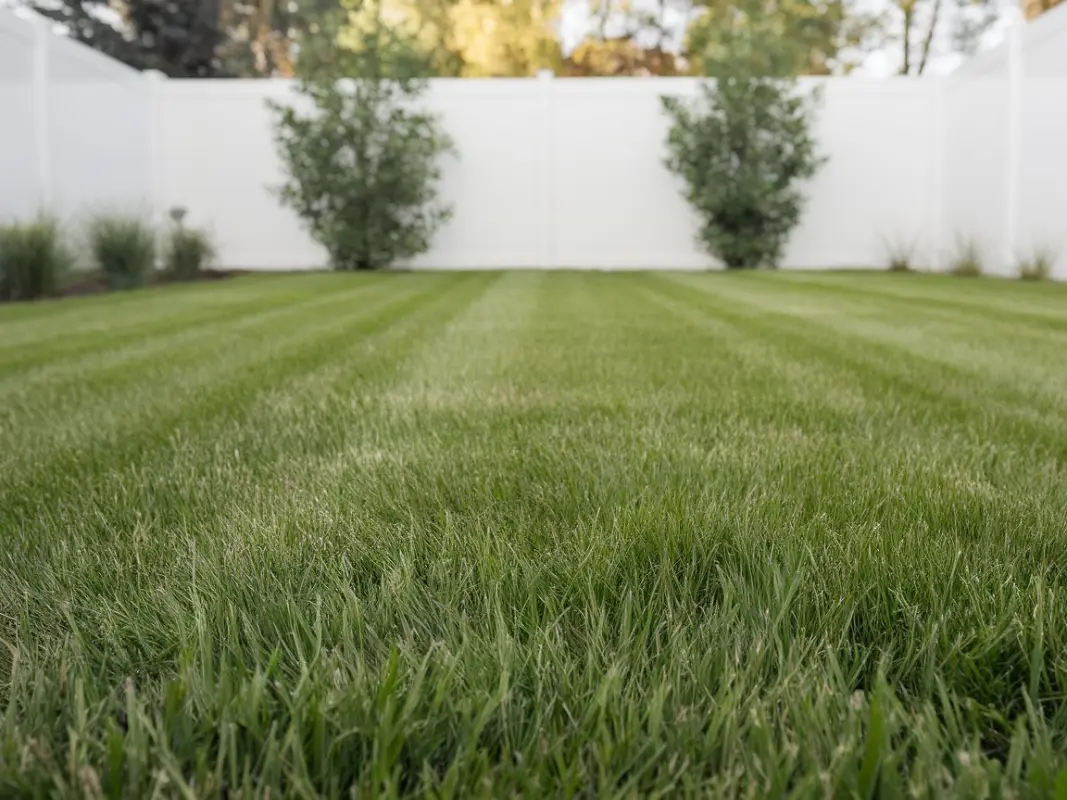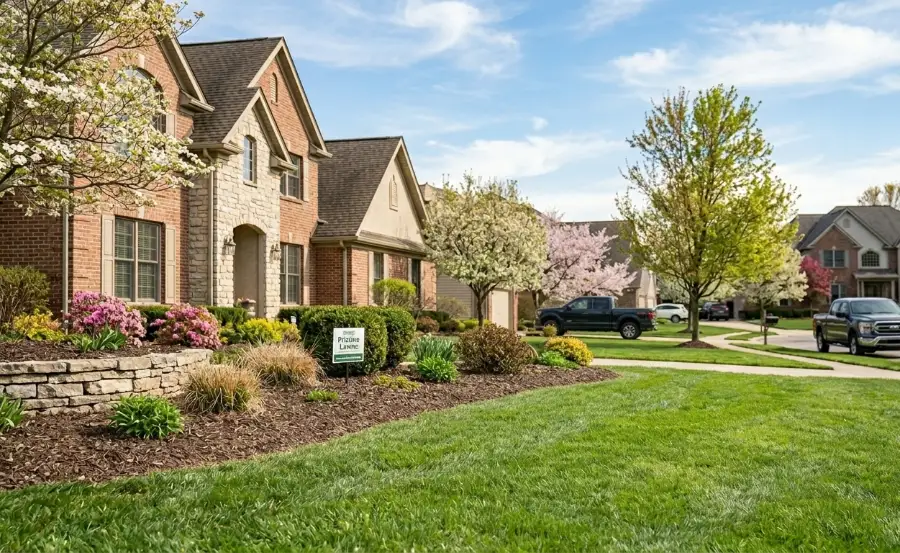
Chemical-Free Weed Control sounds simple on paper: no harsh herbicides, no mystery sprays, no worrying about what the dog just rolled in. In real life, though, it works only when you stop treating weeds like the main problem and start treating them like a symptom.
That is the big difference.
At Lawn Theory, we look at weeds in Northern Virginia the same way a good doctor looks at a cough. Sometimes the cough is the issue. More often, it is telling you something bigger is off. Thin turf, compacted soil, weak roots, too much shade, bad mowing habits, stressed grass, poor drainage, or bare patches are usually what gave the weeds their opening in the first place. Virginia Tech says the lawn itself controls far more weeds than any chemical ever will when it is dense and healthy.
So if you want a cleaner, safer, lower-chemical approach, this guide will show you how to build a lawn that naturally resists weeds, plus where manual and natural treatments actually make sense. It is written for homeowners in Fairfax, Loudoun County, Arlington, Alexandria, Prince William County, Falls Church, Reston, Burke, McLean, Leesburg, Gainesville, Haymarket, and surrounding Northern Virginia communities who want weed control that is smart, practical, and easier on the yard.
What Chemical-Free Weed Control Actually Means
Chemical-free weed control does not mean doing one magic trick and calling it a day. It means combining manual, mechanical, cultural, and physical methods to prevent weeds from taking over. The Soil Association defines chemical-free weed control as managing weeds without synthetic herbicides through methods like mechanical removal, manual removal, and cultural prevention. The Royal Horticultural Society also recommends non-chemical weed control using hand removal, trimming, smothering, and barriers rather than relying first on weedkiller.
That matters because the best chemical-free strategy is usually a stack of small wins:
- a denser lawn
- better mowing height
- less bare soil
- less compaction
- smarter watering
- quick removal before weeds seed out
- mulch or barriers where turf is not the right answer
In other words, if you want fewer weeds without synthetic herbicides, you need fewer opportunities for weeds to germinate in the first place.
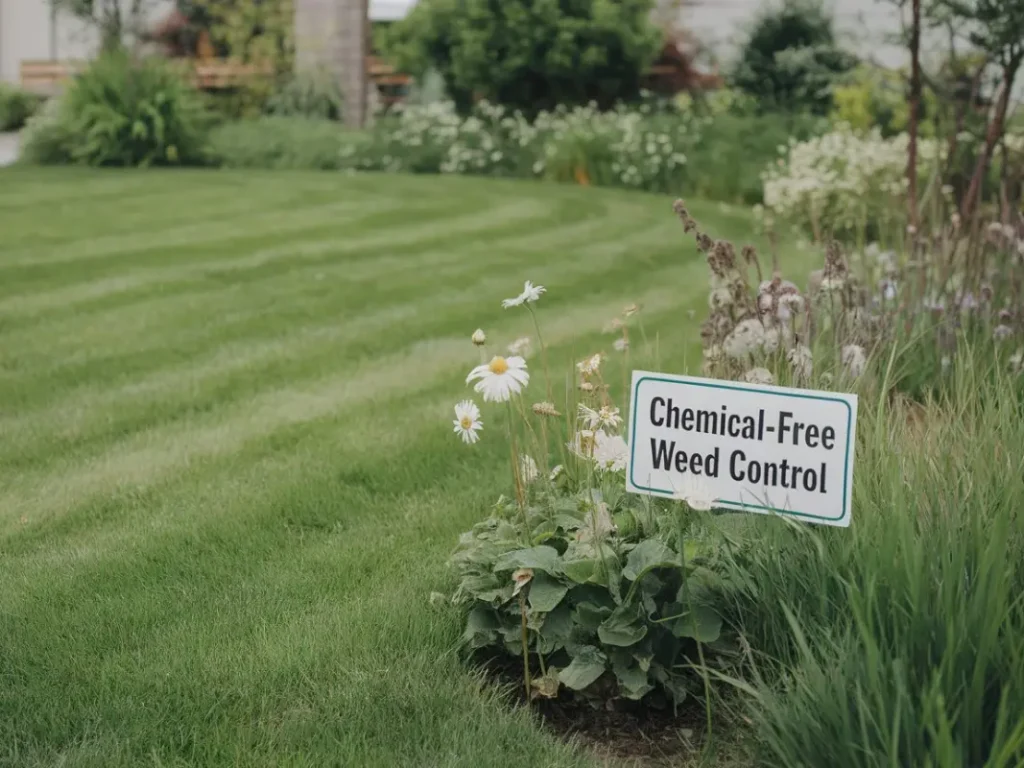
The Main Reason Weeds Take Over Northern Virginia Lawns
Northern Virginia lawns are often cool-season turf, usually tall fescue blends, growing in clay-heavy soil with hot, humid summers and uneven shade. That combination creates the exact conditions weeds love when the lawn gets stressed.
Common triggers include:
- compacted soil from foot traffic
- mowing too short
- weak turf density
- drainage problems
- thin areas from summer stress
- too much shade
- overwatering or poor watering timing
Virginia Tech notes that a dense turf canopy does more to control weeds than chemicals because it leaves less open space for weed seedlings to establish.
That is why Chemical-Free Weed Control starts with turf health, not a spray bottle.
The Best Chemical-Free Weed Control Method for Lawns: Grow More Grass
This is the part people skip because it is not flashy. But it is the most effective.
A thick lawn naturally suppresses weeds by blocking light, competing for water, and crowding out new seedlings. Corn gluten meal is often marketed as a natural pre-emergent, but even Iowa State points out that one of its main benefits is that it feeds the lawn and helps it grow thicker, leaving fewer places for weeds to establish. Washington State also notes corn gluten meal has potential pre-emergent activity, but it does not affect established weeds and its practical value can be inconsistent.
So the real win is not “sprinkle one product and relax.” The real win is building healthier turf through:
- correct mowing height
- proper feeding
- aeration when needed
- overseeding thin areas
- smarter watering
- soil improvement
That is why Lawn Theory treats weed control as part of overall lawn care and landscaping, not a separate panic response.
Hand Removal Still Works, and It Works Better Than People Think
For scattered weeds, hand pulling is still one of the best chemical-free methods. The RHS recommends hand removal when soil is moist so you can get more of the root system out cleanly. Hoeing is also effective for young weeds, especially when used on warm, dry days so exposed roots dry out.
This works especially well for:
- dandelions
- plantain
- clover clusters in small patches
- weeds in flower beds
- weeds in cracks along patios and walkways
A few tips make hand weeding far more effective:
- pull after rain or after irrigation, when soil is softer
- use a narrow weeding tool for taproot weeds
- remove weeds before they flower and seed
- fill the gap afterward by overseeding or mulching
If you pull weeds and leave bare soil behind, congratulations, you just made room for their cousins.
Smothering and Mulching: One of the Safest Weed Control Moves You Can Make
For landscape beds, tree rings, side yards, and non-turf spaces, smothering is one of the simplest non-chemical options. The RHS specifically recommends smothering weeds and using weed barriers to block light and suppress growth.
This works great in areas where grass is not performing anyway. Think:
- under dense shade
- around shrubs
- behind sheds
- side-yard strips
- spots where mulch makes more sense than mowing
A layered approach works best:
- remove existing weeds
- add cardboard or heavy paper where needed
- top with mulch
- keep replenishing the mulch layer as it breaks down
This is also where good build and outdoor living design helps. Sometimes the best chemical-free weed control is shrinking hard-to-maintain turf areas and replacing them with clean mulch beds, paths, or patios that fit how you actually use the yard.
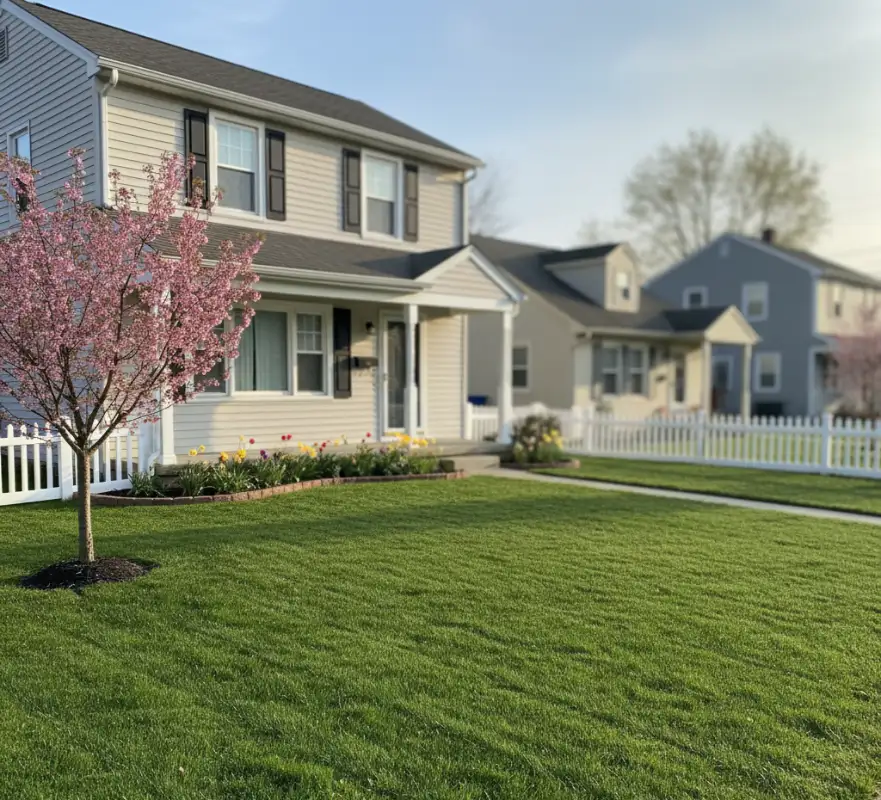
Boiling Water, Vinegar, and “Natural Sprays”: Where They Work and Where They Don’t
A lot of online advice jumps straight to vinegar and boiling water. These tools can work, but only in the right places.
RHS and other non-chemical guides emphasize physical and manual control first. Natural contact killers like vinegar and boiling water are non-selective, meaning they damage whatever they touch, including desirable plants and turf. Better Homes & Gardens also notes horticultural vinegar and boiling water can be effective, but require careful application and may need repeated use.
So here is the practical version:
Use boiling water or vinegar-based spot treatment on:
- driveway cracks
- sidewalk joints
- gravel paths
- patio edges
- fence lines where no desirable plants are present
Do not use them broadly on lawns unless you are fine killing grass too.
This is one of the biggest mistakes homeowners make with “natural” weed control. Just because it is homemade does not mean it is lawn-safe.
Corn Gluten Meal: Helpful, But Not Magic
Corn gluten meal gets mentioned constantly in chemical-free weed control discussions, and yes, it has some legitimate use as a natural pre-emergent. Iowa State says it can help control germinating weeds in established lawns and also acts as a slow-release nitrogen source that supports thicker turf. But Washington State cautions that its real-world weed control performance can be inconsistent, and it does not affect established weeds.
That means corn gluten meal makes sense if:
- your lawn is already established
- you are trying to prevent some new germination
- you are not seeding at the same time
- you understand it is part of a system, not a solo fix
It is not a silver bullet, but it can support a broader Chemical-Free Weed Control program.
Mowing Height Is One of the Strongest Weed Control Tools You Own
This one is not exciting, but it is powerful.
When you mow too short, you weaken grass and let more sunlight hit the soil surface. That creates a better germination zone for weeds. Taller grass shades the soil, cools roots, and makes it harder for weed seedlings to establish.
For most cool-season lawns in Northern Virginia, keeping mowing height around the taller end of the recommended range usually helps the lawn stay denser and more competitive. It also reduces stress during summer, which matters because weak summer turf becomes next spring’s weed problem.
If your mower is basically a weed invitation machine, no amount of “natural weed control” is going to save you.
Aeration and Overseeding: The Secret Weapon for Chemical-Free Weed Control
If your lawn is thin, compacted, or patchy, one of the best non-chemical approaches is to make the lawn thicker on purpose.
Virginia Tech’s crabgrass guidance is blunt: when a lawn is sparse, you may be better off focusing on establishing more grass because the best weed control comes from the grass itself, not the chemicals applied.
That is why Lawn Theory often recommends:
- core aeration to relieve compaction
- overseeding to fill thin areas
- soil improvement to support stronger root development
This is especially valuable in Northern Virginia where clay soil and heavy traffic cause chronic compaction. A lawn that is thin in spring and stressed in summer becomes a wide-open door for weeds by fall and the following spring.
Watering Smarter So You Feed Grass, Not Weeds

Overhead watering every day might make you feel productive, but it often favors shallow roots and more weed pressure.
A better rule:
- water deeply
- water less often
- water early in the day
- avoid constantly damp surfaces
Targeted watering methods like drip or soaker-style irrigation are also recommended in non-chemical weed strategies because they direct water to desired plants instead of creating ideal moisture conditions everywhere.
Healthy, deeply rooted turf competes better. Weak, thirsty grass does not.
The Best Chemical-Free Weed Control Plan by Area
Different parts of your property need different tactics.
For lawns
- mow taller
- aerate compacted soil
- overseed thin spots
- hand-pull isolated weeds
- consider corn gluten meal only as a supporting option
For flower beds
- hand weed after rain
- mulch deeply
- use cardboard or paper barriers under fresh mulch where needed
For driveways, pavers, and patio cracks
- boiling water or careful vinegar-based spot treatments
- manual scraping
- joint maintenance to reduce places where weeds establish
For shaded, low-performance turf
- stop forcing grass where it hates life
- convert some areas to mulch beds, shade-tolerant plantings, or hardscape
That last one matters. Sometimes the most effective chemical-free weed control is changing the area so it is no longer an ideal weed nursery.
What the Top-Ranking Advice Misses
A lot of the content ranking right now gives homeowners a mixed bag of hand weeding, boiling water, vinegar, and salt. The problem is it often treats all weeds and all spaces the same.
That is not how good lawn care works.
For example:
- boiling water is useful in cracks, not on your turf
- vinegar can damage desirable plants just as fast as weeds
- salt may suppress growth, but it can also create long-term soil issues and is a bad choice around planting zones
The stronger strategy, and the more sustainable one, is to reduce weed pressure by changing the conditions that let weeds dominate in the first place. That is where Lawn Theory’s integrated lawn care, landscaping, and outdoor-living mindset gives homeowners an edge.
Is Chemical-Free Weed Control Worth It?
Yes, if you are realistic about what it takes.
Chemical-free weed control is not about zero work. It is about more targeted work, better prevention, and smarter lawn management. It usually works best when:
- weed pressure is light to moderate
- you are willing to stay consistent
- you are focused on strengthening turf and beds over time
If your goal is a cleaner yard, safer approach around kids and pets, and less dependence on synthetic herbicides, it absolutely makes sense.
Lawn Theory’s Chemical-Free Weed Control Approach in Northern Virginia
At Lawn Theory, we help homeowners across Northern Virginia build lawns and landscapes that naturally resist weeds through better structure, stronger turf, healthier beds, and more thoughtful maintenance.
That can include:
- turf density improvement
- mowing guidance
- aeration and overseeding
- bed cleanup and mulch refreshes
- manual and mechanical control
- smarter landscape planning that reduces high-weed zones
Because the best Chemical-Free Weed Control plan is not a one-time “treatment.” It is a property strategy.
Final Take
If you want to control weeds without harsh herbicides, start by asking a better question.
Not: “What can I spray on this?”
Ask: “Why are weeds winning here?”
Once you answer that, the solution gets much clearer.
And if you want help building a lawn and landscape that crowd weeds out naturally, Lawn Theory is ready to help homeowners in Fairfax, Loudoun, Arlington, Alexandria, Prince William, Falls Church, and nearby Northern Virginia communities create a cleaner, healthier outdoor space with less chemical dependence and better long-term results.
A stronger lawn is the best weed control. The rest is support work. See us on Instagram & TikTok.