Can you water your lawn in winter? Yes, you can water your lawn in winter. But only if you follow one simple rule that most homeowners miss. Break that rule, and you risk ice damage, weak turf, and a rough start to spring.
If you live in Northern Virginia, winter lawn care is not about doing more. It’s about doing less, but doing it correctly. Lawns here deal with temperature swings, dry cold snaps, clay-heavy soil, and surprise warm days that trick homeowners into watering at the wrong time.
This guide breaks it down clearly. No fluff. No guesswork. Just real-world winter watering advice that actually works in Fairfax, Loudoun, Arlington, Alexandria, Prince William, and Falls Church.
And if you want your lawn to wake up green and strong in spring, this matters more than you think.
Call us (703) 650-5655 , or request a Lawn care today.
The Simple Rule for Freezing Nights
Here it is. Save it. Screenshot it.
Only water your lawn in winter when daytime temperatures stay above 40°F and the soil has time to absorb moisture before nightfall.
That’s it.
Everything else you read about winter watering is just a variation of this rule.
Why it matters:
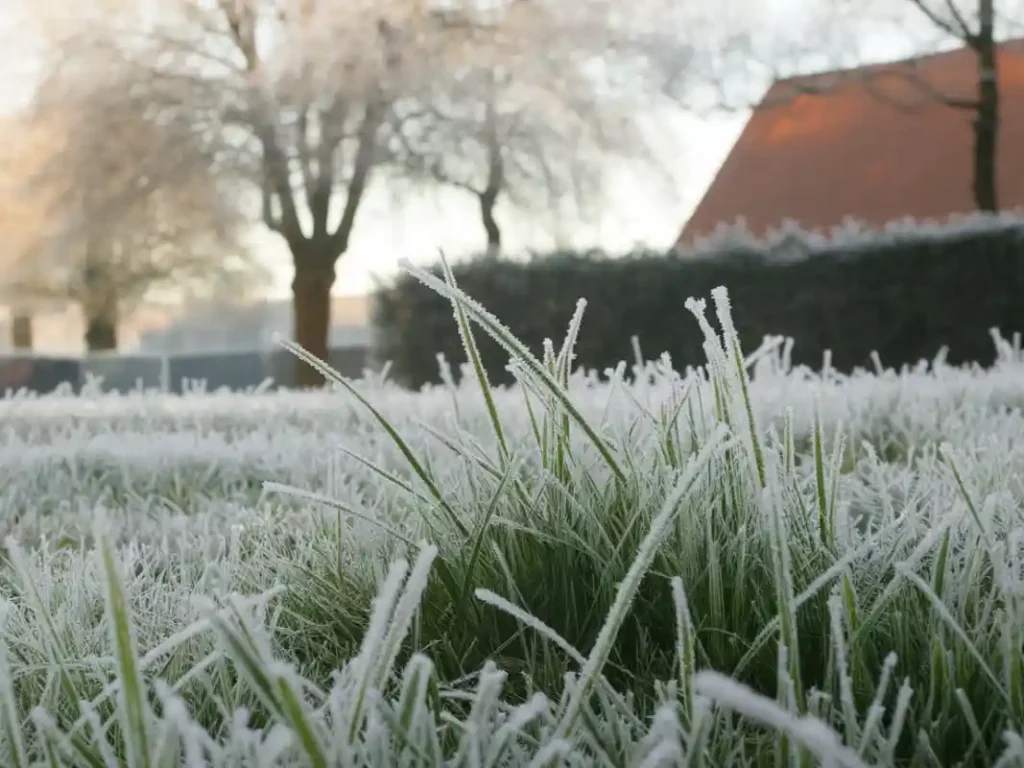
- Water sitting on grass blades can freeze overnight
- Frozen blades can suffocate turf and stress crowns
- Ice buildup increases disease risk once temperatures bounce back
- Compacted, frozen soil cannot absorb water anyway
If the water can’t soak in and dry before temperatures drop, don’t water. Period.
What Your Lawn Is Actually Doing in Winter
A common myth is that grass “does nothing” in winter. That’s not true.
In Northern Virginia, most lawns are cool-season grasses. Even when top growth slows, roots still need basic moisture to survive dry spells.
What changes in winter:
- Growth slows dramatically
- Water demand drops sharply
- Roots still need hydration to avoid stress
- Soil dries out faster during cold, windy weeks
This is why winter watering is about survival, not growth. You’re not trying to green up the lawn. You’re preventing root dehydration so spring growth doesn’t start from behind.
When Winter Watering Is Actually Necessary
Most winters, rainfall handles the job. But not always.
You should consider winter watering if:
- There has been little to no precipitation for 2–3 weeks
- You’re experiencing dry, windy conditions
- The soil feels dry several inches down
- You see turf looking dull, brittle, or grayish instead of flexible
In areas like Loudoun and Prince William, exposed lawns can dry out faster during cold snaps than homeowners expect. Shady lawns hold moisture longer. Sunny slopes dry out first.
One size never fits all.
The Best Time of Day to Water in Winter
Timing is everything in winter lawn care.
Best window:
- Mid-morning to early afternoon
- After frost has melted
- Before temperatures drop toward evening
Why this window works:
- Sun helps warm the soil slightly
- Water has time to soak in
- Excess moisture evaporates before freezing
- Grass blades dry before nightfall
Avoid early mornings if frost is still present. Avoid late afternoons or evenings at all costs.
If you’re checking the forecast and see overnight lows near freezing, only water if you’re confident the lawn will dry completely beforehand.
How Much Water Does a Lawn Need in Winter?

Less. Much less.
Dormant or semi-dormant grass typically needs about half an inch of water per week, and only during dry periods.
Compare that to summer, when lawns often need 1 to 1.5 inches weekly.
Overwatering in winter causes more harm than underwatering.
Too much winter moisture can lead to:
- Fungal issues
- Weak root systems
- Soil compaction
- Increased disease pressure in early spring
The goal is light, infrequent hydration, not saturation.
The Simple Winter Soil Moisture Test
Before you touch the sprinkler, do this.
Step outside.
Walk across your lawn.
Turn around and look.
What you see matters:
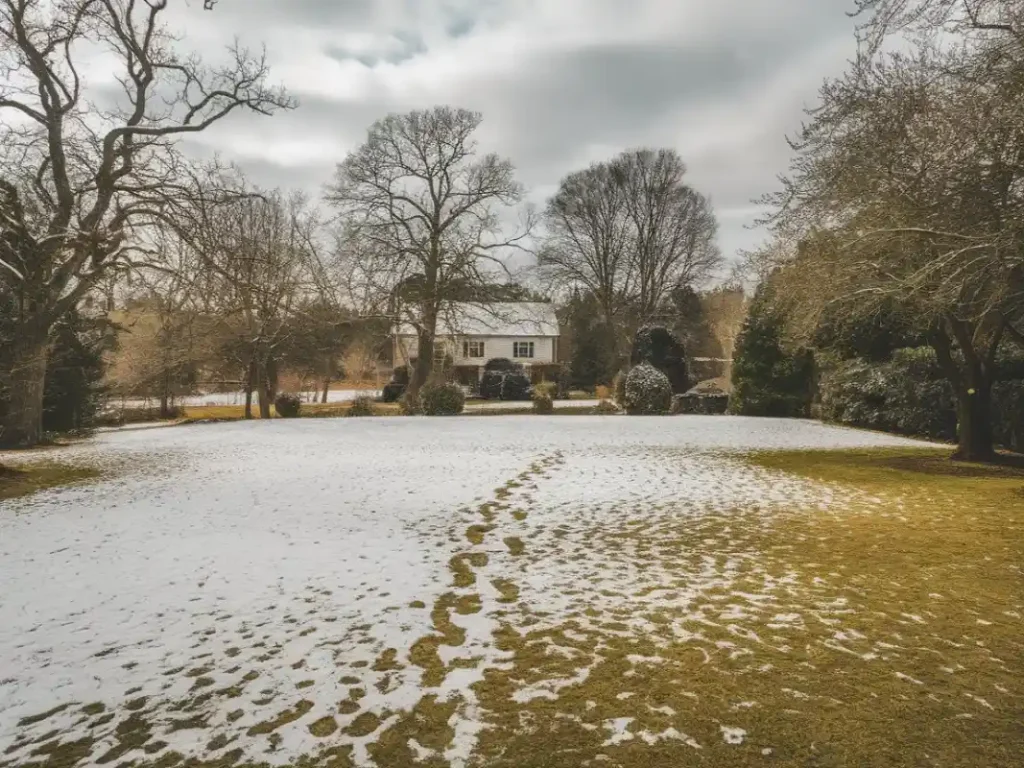
- If footprints disappear quickly, moisture is fine
- If footprints linger but soil isn’t muddy, light watering may help
- If the lawn looks boggy or squishy, do not water
You can also use the screwdriver test. Push a screwdriver into the soil. If it slides in easily a few inches, moisture is adequate. If it’s hard as concrete, and temperatures allow, a light watering can help.
What Happens If You Water at the Wrong Time
This is where winter lawn damage sneaks in.
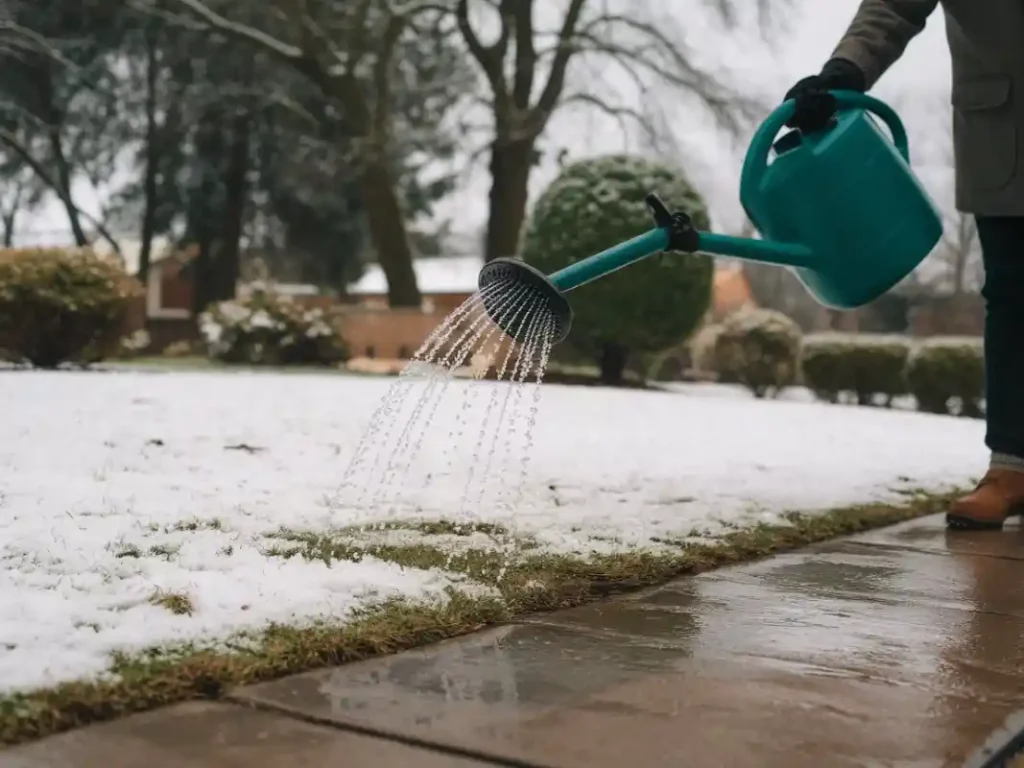
Watering when temperatures drop below freezing can:
- Freeze grass blades together
- Trap ice at the crown
- Restrict airflow
- Stress roots already under cold pressure
Repeated freeze-thaw cycles on wet turf can weaken lawns and invite disease once spring moisture returns.
That’s why Lawn Theory always emphasizes timing over frequency when advising winter watering in Northern Virginia.
Special Considerations for Northern Virginia Lawns
Our region has quirks that generic lawn advice ignores.
Clay-heavy soil:
- Absorbs water slowly
- Holds moisture longer
- Can become slick and compacted when wet
Freeze-thaw cycles:
- Expand and contract soil
- Stress roots if moisture levels swing wildly
Urban lawns in Arlington and Alexandria:
- Often bordered by sidewalks and salt exposure
- Dry unevenly
- Experience more foot traffic in winter
Suburban lawns in Fairfax and Loudoun:
- Larger areas
- More exposure to wind
- Drainage variations across the same property
This is why winter lawn care should always be adjusted locally, not copied from national blogs.
Protecting Your Equipment After Winter Watering
One detail homeowners forget and pay for later.
After winter watering:
- Disconnect hoses
- Drain hoses completely
- Shut off exterior spigots if possible
- Store sprinklers indoors
Frozen hoses and burst pipes cause more winter damage than dry lawns ever will.
Should You Water Newly Seeded or Newly Sodded Lawns in Winter?
This is different.
If you had late fall seeding:
- Monitor moisture closely during dry spells
- Light watering may be needed on warm winter days
If you installed sod late in the season:
- Roots may still be establishing
- Soil moisture matters more
- Water only when temperatures allow proper absorption
Never water new turf if freezing is expected that night.
Common Winter Watering Mistakes We See Every Year
These mistakes show up across Northern Virginia every winter.
- Watering on impulse during a warm afternoon without checking the overnight forecast
- Using the same watering schedule as fall
- Overwatering shaded areas that already hold moisture
- Ignoring dry, sunny slopes that actually need attention
- Leaving sprinklers connected and frozen
Avoid these, and your lawn is already ahead of most neighbors.
How Lawn Theory Helps Homeowners Get Winter Lawn Care Right
At Lawn Theory, winter lawn care is about protecting spring results.
We help homeowners across Fairfax, Loudoun, Arlington, Alexandria, Prince William, and Falls Church by:
- Evaluating soil moisture and turf condition
- Advising on safe winter watering windows
- Preventing compaction and salt damage
- Planning spring lawn care before the rush hits
We don’t push unnecessary treatments. We focus on timing, soil health, and smart seasonal transitions.
Because the best lawns in spring are built quietly in winter.
Synopsis
Can you water your lawn in winter? Yes. But only when you respect freezing nights, soil conditions, and timing.
Water lightly.
Water only on warm days.
Water early enough for drying.
And don’t water at all if the ground can’t absorb it.
If you’re unsure whether your lawn actually needs winter watering or you want a spring-ready plan tailored to Northern Virginia conditions, Lawn Theory is here to help. See us on Instagram & YouTube.
A healthy spring lawn doesn’t start in April.
It starts with smart winter decisions.