
Liquid Aeration vs. Core Aeration in Northern Virginia
If you’ve ever stared at your patchy, compacted lawn wondering which aeration method actually works Liquid Aeration vs Core Aeration you’re not alone. Homeowners across Northern Virginia ask this every fall, and it’s one of the most common questions we get at Lawn Theory.
The truth? Both work but for very different reasons. And if you’re dealing with that thick red Virginia clay soil found in Fairfax, Loudoun, Arlington, Alexandria, Prince William, and Falls Church, you can’t treat your turf like a flat Midwestern lawn. You need an approach that loosens the soil, improves root growth, and builds long-term turf health not just a quick fix.
This guide breaks it all down: the science behind aeration, what actually works in our region, local pricing ranges, and how Lawn Theory helps homeowners get deeper roots, fewer weeds, and greener lawns.
What Aeration Really Does for Your Lawn
Aeration is like a deep breath for your grass. Over time, lawns get compacted especially here in Northern Virginia, where clay-heavy soil traps water and chokes roots. Compaction blocks oxygen, nutrients, and moisture from reaching the soil where roots live.
Aeration fixes that by breaking up the soil, improving drainage, and letting your grass roots grow deep and strong. The result?
- Better water absorption
- Stronger, more resilient turf
- Healthier roots
- Fewer bare or brown patches
Without aeration, you’re basically trying to grow grass on concrete.
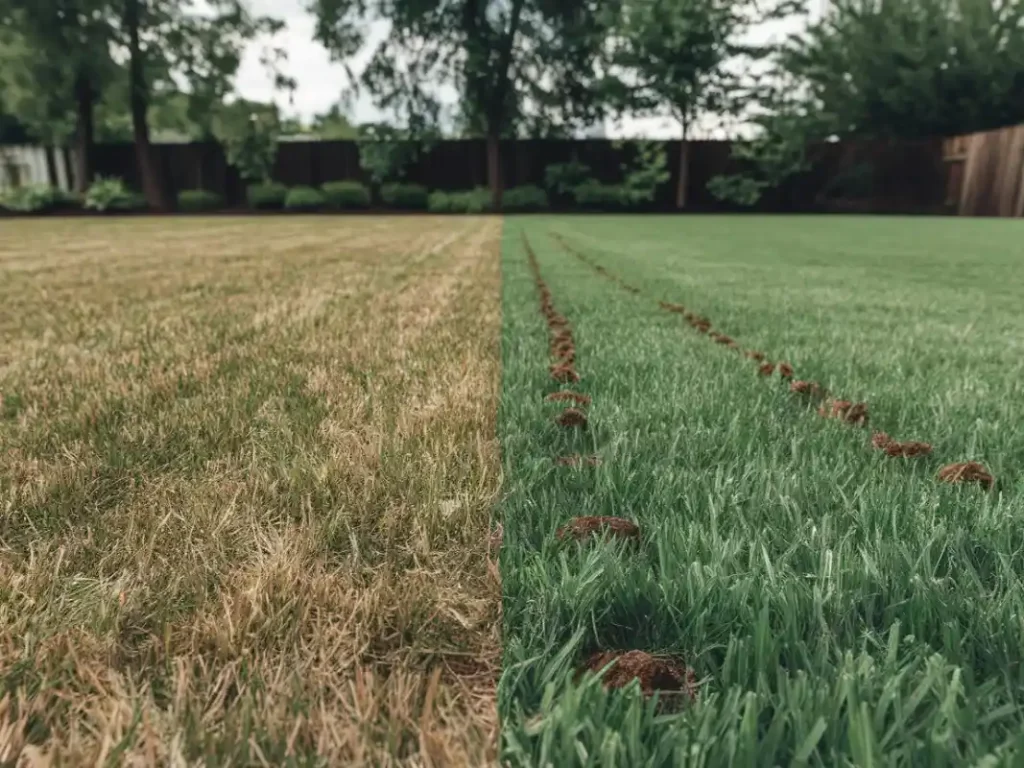
Liquid Aeration vs Core Aeration: Side-by-Side Comparison
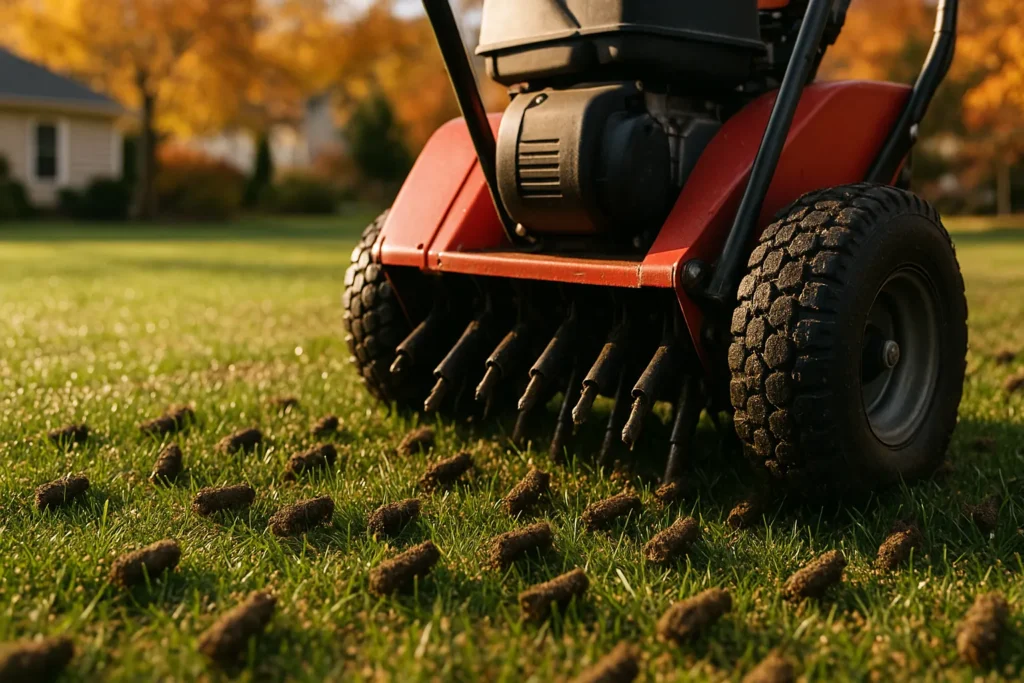
| Feature | Core Aeration | Liquid Aeration |
|---|---|---|
| How it works | Removes plugs (cores) of soil to relieve compaction and allow air/water flow | Uses liquid solutions (humates, enzymes, wetting agents) to break up soil at a microscopic level |
| Depth of impact | 2–3 inches (mechanical) | 4–6 inches (chemical + biological) |
| Best for | Compacted soil, high-traffic areas, thick thatch (>½ inch) | Improving soil structure, microbial life, and water movement |
| Timing | Spring or fall (when soil is moist) | Any season (avoid heavy rain/freeze) |
| Overseeding compatibility | Excellent immediately after | Great as pre-treatment for better seed germination |
| Visible plugs | Yes (messy for a week or two) | None—no disruption |
| Lawn downtime | 7–14 days for plugs to break down | None—safe to walk and mow same day |
| Longevity | Quick results, short-term benefits | Slower results, longer-term soil health |
| Ideal combo | Core + Liquid for compact clay or neglected lawns | Core + Liquid for maximum root depth |
Why Aeration Matters So Much in Northern Virginia
Northern Virginia’s clay soil is dense. If your yard puddles after rain, feels hard underfoot, or struggles with weak grass despite regular watering and fertilizer it’s compacted.
That’s why aeration isn’t optional here. It’s essential.
Lawn Theory focuses on the local balance of cool- and warm-season grasses. In this region, most homes have tall fescue or Kentucky bluegrass, which love deep, breathable soil. Without annual aeration, roots stay shallow and weeds creep in.
We’ve seen lawns in Ashburn, Fairfax, and Arlington transform from dull and patchy to lush and green after a single aeration + overseeding cycle.
When to Aerate in Northern Virginia
Timing is everything.
Cool-Season Lawns (Fescue, Bluegrass, Rye)
- Best window: Late August through October
- Secondary window: Early spring (March–April)
Cool-season grasses recover quickly from coring during mild temps and absorb nutrients better before dormancy.
Warm-Season Lawns (Bermuda, Zoysia)
- Best window: Late May through June
Warm-season grasses go dormant in fall, so aerate once the lawn is fully greened up.
Avoid aerating during summer heat or frozen winter conditions it stresses the turf instead of helping it.
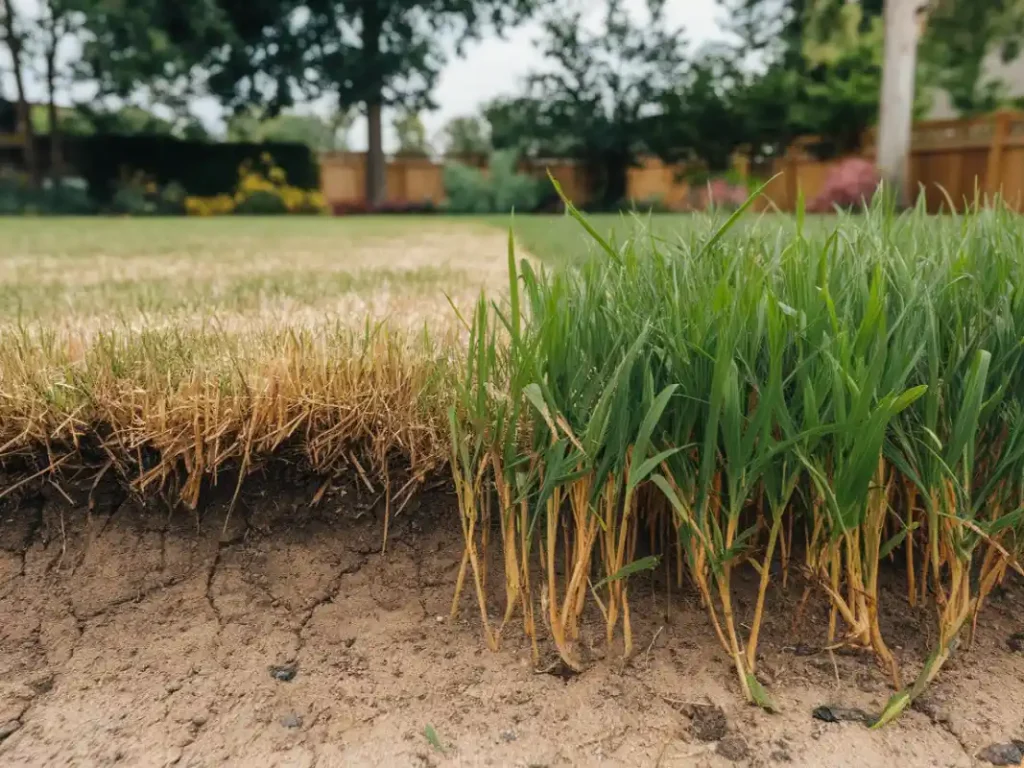
Can You Combine Liquid and Core Aeration?
Absolutely and it’s actually what we recommend for most Fairfax and Loudoun County lawns.
Here’s why:
- Core aeration breaks the surface barrier and relieves compaction.
- Liquid aeration seeps into the holes, working deeper to condition soil and feed microbes.
It’s the perfect one-two punch. Core for immediate relief, liquid for long-term health.
At Lawn Theory, we apply liquid aeration right after mechanical coring to maximize penetration and microbial activity. This combo keeps soil looser, improves root structure, and helps with long-term moisture balance—crucial for Virginia’s alternating wet springs and dry summers.
Lawn Theory’s Aeration Packages & Local Pricing
Transparent pricing builds trust, so here’s what you can expect across Northern Virginia neighborhoods:
Core Aeration Only – Quoted by Lot Size
- Final price depends on lot size and access
- Professional coring + debris cleanup
Aeration + Overseeding – Starts at $250
- Deep-soil penetration using humic acid & enzymes
- No mess, safe for kids and pets
- Final price depends on lot size
Combo Core + Liquid Aeration Package – Custom Quote
- Full core + liquid application
- Overseeding optional add-on
- Designed for compact clay soils in Fairfax, Loudoun, Arlington, and Prince William
📞 Call Lawn Theory at (703) 650-5655 for a free soil assessment or quote.
Overseeding After Aeration – The Secret to a Thicker Lawn
If your lawn looks thin or patchy, aeration + overseeding is your best friend. The holes from core aeration give seeds the perfect place to grow protected from wind, birds, and washout.
Lawn Theory’s overseeding service uses premium turf-type tall fescue blends that thrive in our region’s humidity and soil. We often follow up with a liquid fertilizer and biostimulant to jumpstart germination.
Pro tip: Keep the soil moist (not soaked) for the first 10–14 days. Mow only when the new grass reaches 3–3.5 inches.
Our Process – How Lawn Theory Does It Right
- Soil & Thatch Assessment – We measure compaction depth and thatch thickness.
- Utility Marking & Prep – Safety first. We flag irrigation heads and cable lines.
- Core Aeration Pass – We pull 2–3″ plugs evenly across the lawn.
- Liquid Aeration Application – A humate-rich formula applied post-core for deeper penetration.
- Optional Overseeding – Blended seed for your grass type and sunlight exposure.
- Aftercare Guidance – Watering plan, mowing schedule, and seasonal reminders.
We also follow up via text and email to ensure your lawn’s progressing as planned.
FAQs: Liquid Aeration vs. Core Aeration
1. Does liquid aeration actually work?
Yes when applied correctly and consistently. It doesn’t physically remove plugs but uses natural compounds to break up dense clay and improve soil structure over time.
2. Should I do both liquid and core aeration?
For Northern Virginia’s dense soils, yes. Combining both gives the best short- and long-term results.
3. Is it safe for kids and pets?
All Lawn Theory liquid applications are eco-safe and pet-friendly once dry (usually within an hour).
4. How often should I aerate my lawn?
At least once per year—twice for compacted or high-traffic lawns. Pair it with overseeding for the strongest results.
5. What’s better before overseeding liquid or core aeration?
Core aeration first. It opens up the ground for seeds. Then, liquid aeration helps sustain growth and soil conditioning afterward.
6. How soon will I see results?
Core aeration shows results in 2–3 weeks; liquid aeration builds over several months. Together, you’ll notice thicker, greener grass in a single season.
Why Homeowners Across Northern Virginia Trust Lawn Theory
- Veteran-Owned & Operated – We take pride in precision, service, and reliability.
- Local Expertise – We understand Northern Virginia’s soils and seasons.
- Custom Plans – Every property is unique, and so is our approach.
- Eco-Friendly Methods – Safe products that build soil biology naturally.
- Guaranteed Results – If you don’t love your lawn, we’ll make it right.
Ready to Breathe New Life Into Your Lawn?
Your grass deserves more than another round of fertilizer. The right aeration plan can completely change how your lawn grows, drinks, and thrives.
📞 (703) 650-5655 | Get a Free Estimate | Veteran-Owned & Trusted in Northern Virginia
Because in the battle of liquid aeration vs. core aeration, the winner is simple your lawn, when Lawn Theory handles it. See us on Instagram & YouTube.
Keep Reading: Lawn Care
 Lawn Care
 Sprinkler System Winterization in Northern Virginia: Timing, Methods, and What Goes Wrong
Sprinkler winterization in Northern Virginia is about timing, not a fixed date. How to pick your shutdown week, how the three drainage…
 Lawn Care
 Fall Planting in Northern Virginia: Trees, Shrubs, and Mulch Done Right
Fall is the best time to plant trees and shrubs in Northern Virginia, but most failures trace to the first twenty minutes…
 Lawn Care
 The Fall Lawn Renovation Calendar for Northern Virginia: Dates, Seeding Rates, and Soil Temperature
Virginia Cooperative Extension puts the Northern Virginia seeding window at the last week of August through mid-September. Here are the exact dates,…
Want this handled by the crew that wrote the guide?
Veteran-owned. Licensed & insured. Free walkthroughs across Northern Virginia — quotes in 24–48 hours.
Get Your Free Estimate